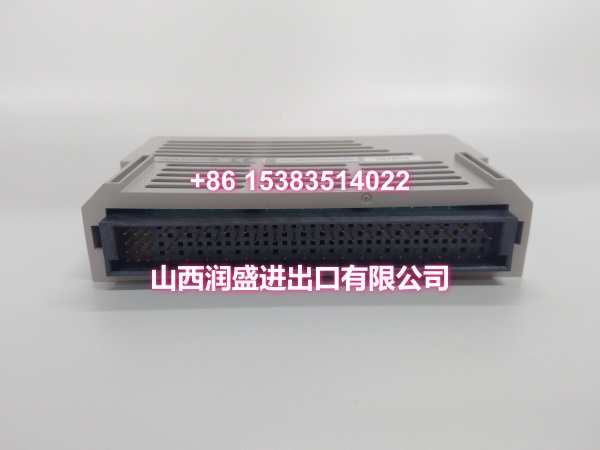
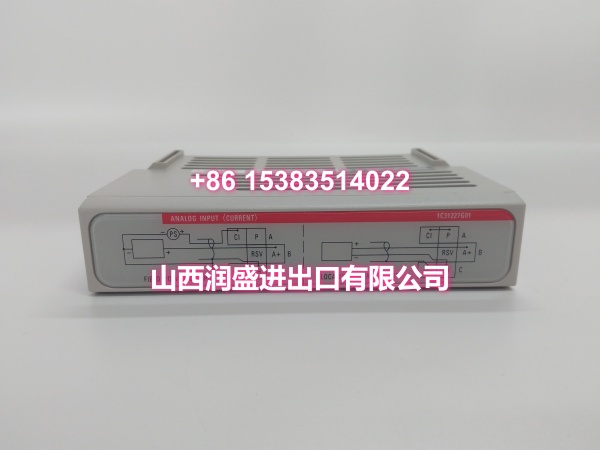
Description
Product Core Brief
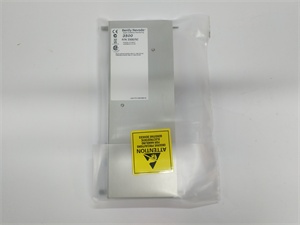
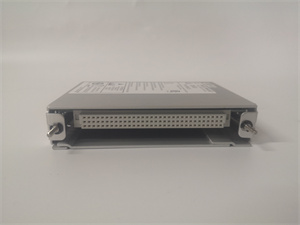
- Part: 1C31227G01
- Brand: Westinghouse / Emerson Ovation
- Most consistent identification: Analog current input personality module, listed as providing 4 to 20mA current input for the Ovation analog input subsystem
- Common pairing: Frequently listed with 1C31224G01 as the analog input card pair, and also shown as PM for EM 1C31224G01 on spare lists
- Also listed as: 8 channel analog input personality module, 14 bit, field or local powered
- Core function: Terminates and conditions the field current loop so the electronic module and controller can read pressure, temperature, flow, and level correctly
- Condition: New Surplus / New Old Stock, varies by lot
Big correction before you spend budget. Reseller pages describe this part in several conflicting ways. One page claims 24VDC power, minus 40 to 85C range, Exia explosion protection, aluminum housing, RS-485 and Modbus communication, and M12 connectors, which reads like a copied generic remote I/O spec rather than an Ovation personality module. Another page lists 16 bit resolution, 24VDC auxiliary power, and 13.5V minimum for two wire transmitters, which may belong to an analog input electronic module rather than the PMOD itself. Another pastes Schneider Quantum and Modicon backplate text under this part number, which is completely unrelated hardware. One document also groups 1C31227G01 with high speed analog input electronic modules such as 5X00070G01 for 4 to 20mA, while 1C31227G02 covers voltage ranges, so the exact host stack matters. Confirm against your own Ovation I/O reference manual, rack BOM, and installed base before ordering.
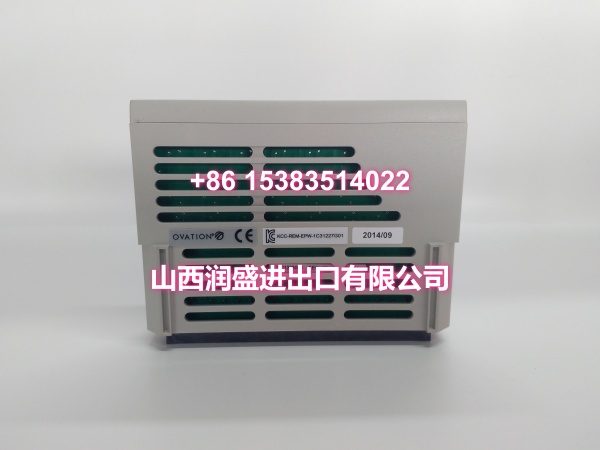
Product Introduction
Westinghouse 1C31227G01 sits between the field loop and the Ovation electronics. The transmitter pushes current, the personality module terminates and conditions it, and the electronic module converts it for control logic. When it fails, the controller often keeps running happily against a frozen or shifted value, and the trend looks clean while the process is not.
For system integrators, that is the real risk. A stuck drum level or header pressure signal can hold a control valve in the wrong position, and a flat flow reading can hide a pump that already lost prime. Crews usually blame the transmitter first, then the wiring, then the logic, and often miss a cracked PMOD terminal, a bad shield termination, or a missing loop supply. Holding the correct EMOD plus matching PMOD and base turns a long blind trace into a planned swap during an outage window.
Key Technical Specifications
| Parameter | Value |
|---|---|
| Function | Analog current input personality module |
| Host System | Ovation DCS, power, water, steel, metallurgy applications |
| Signal Range | 4 to 20mA current input on Ovation personality module lists |
| Paired EMOD | Commonly listed with 1C31224G01, also grouped with high speed analog input electronic modules |
| Sibling PMOD | 1C31227G02 for voltage input ranges |
| Channel Count | 8 channels on several reseller listings |
| Resolution | 14 bit on some listings, 16 bit on others, verify against manual |
| Loop Power | Field or local powered depending on build and wiring |
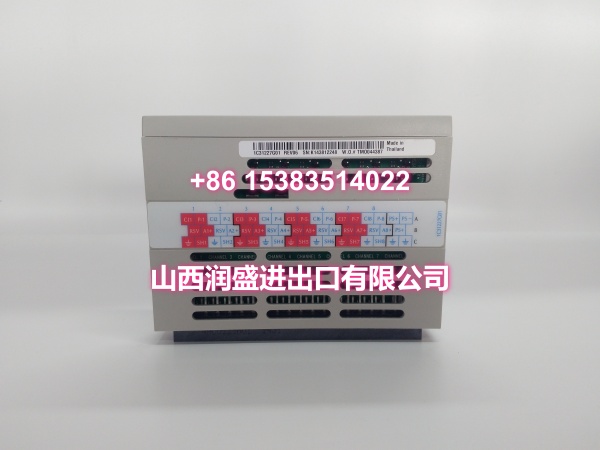
| Wiring | Internal powered AI short P to CI and SH to ground, external powered AI keep shield grounded at field side per common Ovation wiring practice |
| Mounting | Ovation I/O base with matched electronic module |
| Environment | 0 to 60C and 0 to 95 percent non condensing on one listing |
| Documentation | Ovation I/O reference manual, module combination list, rack BOM |
| Sourcing Risk | Legacy part, revision, host EMOD and base pairing vary widely |
Do not trust copied specs claiming Exia intrinsic safety, M12 connectors, aluminum housing, standalone Modbus or RS-485 communication, DIN rail plug in use, or Schneider Quantum backplate compatibility for this part. Those come from unrelated listings.
Quality Control Process
Analog loops get blamed on transmitters, so testing covers the full signal chain instead of just the board.
- Documentation cross check. We confirm EMOD to PMOD pairing and base against Ovation documentation instead of trusting a reseller spare list.
- Label and revision audit. Silk screen, revision, and date code must match, and refurbished stickers get rejected.
- Terminal and solder inspection. Cracked terminals and cold joints cause intermittent bad quality flags that look like a controller problem. Checked under magnification.
- Rail short check. A Fluke multimeter confirms no short across supply and field paths before power up.
- Mate test with known good EMOD. We install with the confirmed host electronic module and correct base, then verify the stack reports healthy instead of fault.
- Process calibrator sweep. We inject 4 to 20mA with a Fluke 712 style calibrator across the full span and confirm the controller reads matching engineering values with no offset or scaling error.
- Internal and external power verification. We confirm whether the loop is DCS powered or field powered and check the P to CI and SH to ground arrangement matches the design.
- Open loop and short test. We open and short the input to confirm the module flags bad quality instead of holding a frozen value.
- Channel by channel check. Every channel is exercised because one dead channel often goes unnoticed for months.
- ESD and moisture packaging. Anti-static shielding bag, desiccant, humidity indicator, rigid box.
Replacement Pitfall Guide
❗ Buying only the PMOD. A missing or mismatched electronic module keeps the loop dead or reading wrong no matter how good the personality module is.
❗ Confusing current and voltage PMODs. 1C31227G01 covers 4 to 20mA current input while 1C31227G02 covers voltage ranges, so swapping by number alone breaks the loop.
❗ Ignoring loop power design. If the transmitter is DCS powered and P is not shorted to CI, or if the loop is field powered and wired as internal, the signal reads flat or out of range.
❗ Skipping shield and grounding review. Wrong shield grounding creates noise and drift that looks like a failing card, and common Ovation practice grounds shield at the DCS side except for externally powered AI split shield at field side.
❗ Assuming it fits a TC or RTD build. Thermocouple and RTD builds use different personality modules and cold junction handling, so a current input PMOD will not fix a temperature loop.
❗ Forgetting bad quality handling in logic. If protection logic ignores bad quality, a frozen input can keep a machine running under a false condition. Confirm the logic fails safe.
❗ Overlooking calibration and scaling after a swap. Range, engineering units, and filtering usually need verification after a card or PMOD change, otherwise the controller regulates against a shifted curve.
❗ Trusting generic blog specs. Pages claiming Exia, M12, Modbus, IP65, or Schneider Quantum compatibility under this part number are unreliable and should not drive your purchase.
Compatibility Matrix & Benchmarks
| Original Setup | Replacement Option | Compatibility Level | Migration Notes |
|---|---|---|---|
| 1C31227G01 | Same part, later date code | Direct | Confirm revision, base, and host EMOD |
| 1C31224G01 with 1C31227G01 | Same pair | Direct | Verify terminal layout, loop power, scaling |
| High speed analog input build with 5X00070G01 | 1C31227G01 | Needs Verification | Confirm host stack per Ovation documentation |
| 4 to 20mA build | 1C31227G02 | Not Recommended | Voltage input range, not current |
| TC or RTD loop | 1C31116G04 or 5X00121G01 group | Needs Verification | Different sensor interface and cold junction handling |
| Aging Ovation rack with hard to find spares | Remote I/O node or smart HART transmitter migration on critical points | Needs Adaptation | Phased cutover, loop power, bad quality logic review |
- Real analog reliability depends on transmitter health, loop power, shielding, grounding, and how logic handles bad quality far more than on the PMOD part number.
- If your rack is obsolete and analog spares keep getting harder to find, moving critical measurements to smart transmitters with HART diagnostics plus bad quality interlocks usually costs less than years of surplus hunting plus a false stable reading on a protection loop.