Description
Product Core Brief
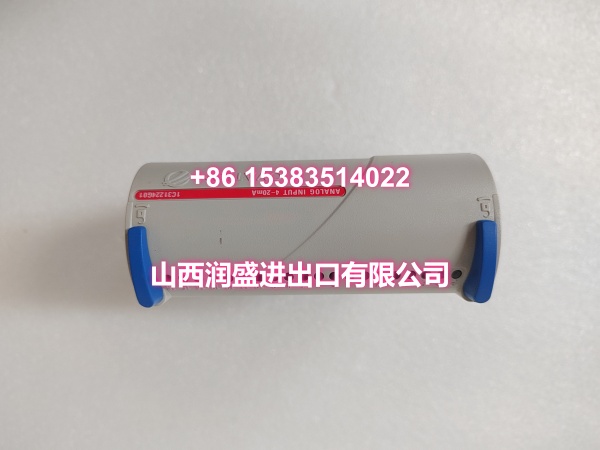
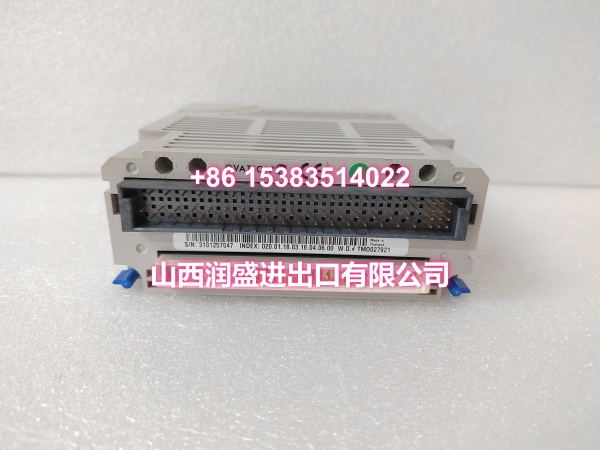
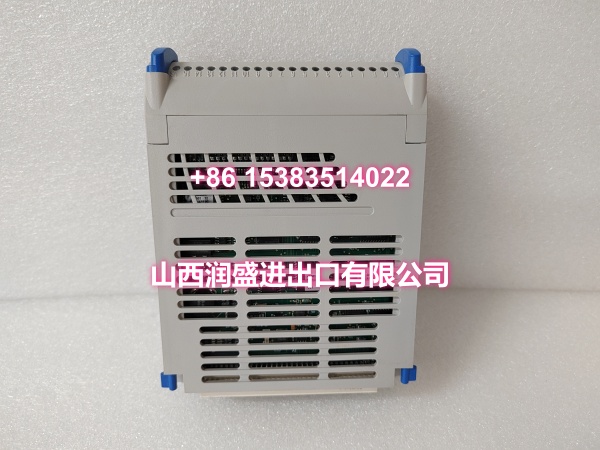
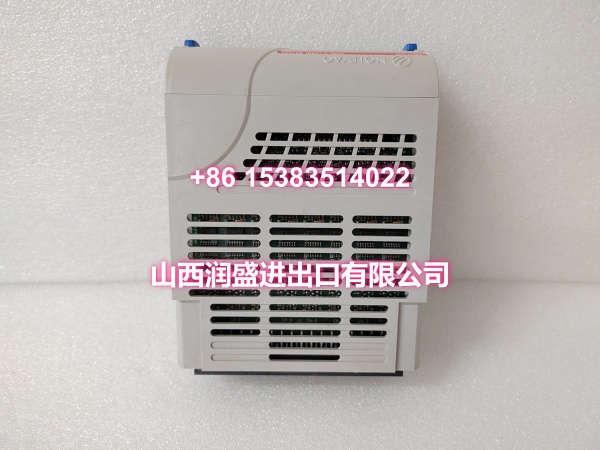
- Part: 1C31224G01
- Brand: Westinghouse / Emerson Ovation
- Most consistent identification: Analog input electronic module, commonly listed as 模拟量输入电子模件 0 to 20mA with diagnostics, paired with the 1C31227G01 analog input personality module 0 to 20mA with diagnostics
- Also listed as: Ovation analog input mA card, 8 points per module, system powered
- Core function: Conditions and converts field current loop signals from pressure, temperature, flow, and level transmitters so the Ovation controller can run regulation, protection, and logic on real process data
- Condition: New Surplus / New Old Stock, varies by lot
Big correction before you spend budget. Reseller pages describe this part in several conflicting ways. One calls it a Westinghouse Ovation PLC relay output base, which is a completely different card family. One pastes a 24VDC IP65 Modbus ladder diagram hot swap relay block spec under a related part, which is generic filler and does not match Ovation I/O hardware. Several pages only repeat that it is an analog input module for power plants, water plants, steel, and metallurgy without any pairing data. Some list 8 channels, 14 bit resolution, and 4 to 20mA input, while others say 14 bit resolution with 4 to 20mA signal processing for temperature, pressure, flow, and level. The most consistent grouping across Ovation card lists is 1C31224G01 as the analog input electronic module with 1C31227G01 as the matching personality module. Confirm against your own Ovation I/O reference manual and rack BOM before ordering.
Product Introduction
Westinghouse 1C31224G01 sits on the sensing side of an Ovation loop. The transmitter makes the current, the personality module terminates and conditions it, and the electronic module converts it for the controller. When it fails, the controller usually does not scream. It keeps regulating against a frozen or drifted value, and the operator sees a stable trend that is completely wrong.
For system integrators, that is the dangerous part. A stuck pressure reading can hold a control valve open while the real vessel drains, and a flat flow signal can hide a pump that already lost prime. Crews blame the transmitter first, then the loop wiring, then the logic, and often miss a dead input stage, a cracked PMOD terminal, or a surge path that shorted after a lightning event. Holding the correct EMOD plus matching PMOD and base turns a long blind trace into a planned swap during an outage window.
Key Technical Specifications
| Parameter | Value |
|---|---|
| Function | Analog input electronic module |
| Host System | Ovation DCS, power, water, steel, metallurgy applications |
| Paired PMOD | 1C31227G01 analog input personality module 0 to 20mA with diagnostics on common lists |
| Signal Type | Current loop, listed as 0 to 20mA with diagnostics and also as 4 to 20mA on reseller pages |
| Channel Count | 8 points per module on one Ovation card list |
| Resolution | 14 bit on several reseller listings |
| Power | System powered per Ovation card list |
| Typical Use | Pressure, temperature, flow, level acquisition into regulation and protection logic |
| Mounting | Ovation I/O base with matched personality module |
| Status Indication | Module LEDs plus controller bad quality and out of range flags where configured |
| Environment | Conditioned control room cabinet, low dust, non condensing, around 0 to 60C operating on one listing |
| Documentation | Ovation I/O reference manual, module combination list, rack BOM |
| Sourcing Risk | Legacy part, revision and PMOD pairing vary widely |
Do not trust copied specs claiming IP65 enclosure, standalone Modbus communication, ladder diagram programming, 30mm by 24mm size, relay output duty, or DIN rail mounting for this part. Those come from unrelated listings.
Quality Control Process
Analog loops get blamed on transmitters, so testing covers the full signal chain instead of just the board.
- Documentation cross check. We confirm EMOD to PMOD pairing and base against Ovation documentation instead of trusting a reseller spare list.
- Label and revision audit. Silk screen, revision, and date code must match, and refurbished stickers get rejected.
- Edge connector and pin inspection. Pushed or corroded pins cause intermittent bad quality flags that look like a controller problem. Checked under magnification.
- Rail short check. A Fluke multimeter confirms no short across supply paths before power up.
- Mate test with known good PMOD. We install with a confirmed 1C31227G01 and correct base, then verify the stack reports healthy instead of fault.
- Process calibrator sweep. We inject 4 to 20mA with a Fluke 712 style calibrator across the full span and confirm the controller reads matching engineering values with no offset or scaling error.
- Open loop and short test. We open and short the input to confirm the module flags bad quality instead of holding a frozen value.
- Channel by channel check. Every channel is exercised because a single dead channel often goes unnoticed for months.
- ESD and moisture packaging. Anti-static shielding bag, desiccant, humidity indicator, rigid box.
Replacement Pitfall Guide
❗ Buying only the EMOD. A missing or mismatched 1C31227 personality module keeps the loop dead or reads wrong no matter how good the electronic module is.
❗ Assuming 0 to 20mA and 4 to 20mA are the same thing. Scaling and live zero detection differ, and a wrong assumption hides a broken transmitter as a valid low reading.
❗ Ignoring transmitter loop power. If the transmitter is loop powered from the card or an external supply, a missing supply gives a flat signal that looks exactly like a failed input card.
❗ Skipping surge and isolation path review. A blown surge element or a grounded shield can short the loop and drag down every channel on the shared PMOD.
❗ Forgetting bad quality handling in logic. If protection logic does not react to bad quality, a frozen input can keep a machine running under a false condition. Confirm the logic fails safe.
❗ Overlooking calibration and scaling after a swap. Engineering unit scaling, range, and filtering usually need verification after a card change, otherwise the controller regulates against a shifted curve.
❗ Assuming hot swap is safe. Many legacy Ovation racks are not designed for live card pulls on every I/O type, and a bad swap can drop a whole panel of points.
❗ Trusting relay or PLC base descriptions. Pages calling this a relay output base, an IP65 Modbus block, or a programmable logic module are unreliable and should not drive your purchase.
Compatibility Matrix & Benchmarks
| Original Setup | Replacement Option | Compatibility Level | Migration Notes |
|---|---|---|---|
| 1C31224G01 | Same part, later date code | Direct | Confirm revision, base, and paired PMOD |
| 1C31224G01 with 1C31227G01 | Same pair | Direct | Verify terminal layout, scaling, and diagnostics |
| 1C31224G01 | 1C31113 series analog input EMOD | Not Recommended | Different signal range and conditioning |
| mA analog input build | 5X00070G04 TC or 5X00119G01 RTD input cards | Not Recommended | Different sensor interface and cold junction handling |
| mA analog input build | HART analog input module such as 5X00059G01 | Needs Verification | Confirm host support, diagnostics, and configuration tools |
| Aging Ovation rack with hard to find spares | Remote I/O node or wireless and smart transmitter migration on critical points | Needs Adaptation | Phased cutover, loop power, and bad quality logic review |
- Real analog reliability depends on transmitter health, loop power, shielding, grounding, and how logic handles bad quality far more than on the EMOD part number.
- If your rack is obsolete and analog spares keep getting harder to find, moving critical measurements to smart transmitters with HART diagnostics plus bad quality interlocks usually costs less than years of surplus hunting plus a false stable reading on a protection loop.