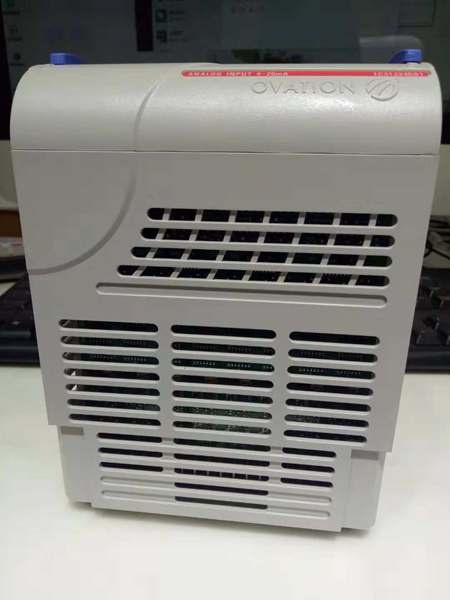
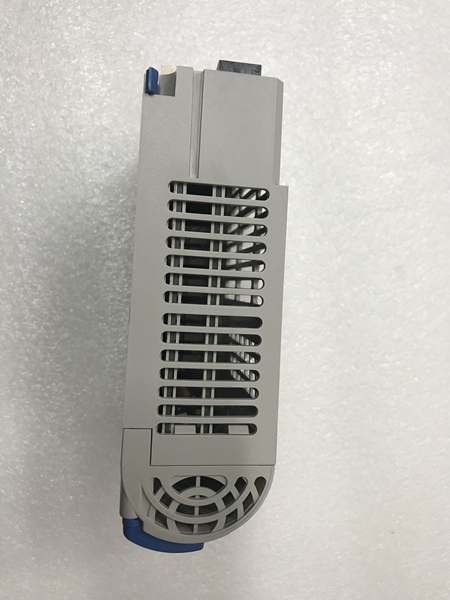
Description
Key Technical Specifications
-
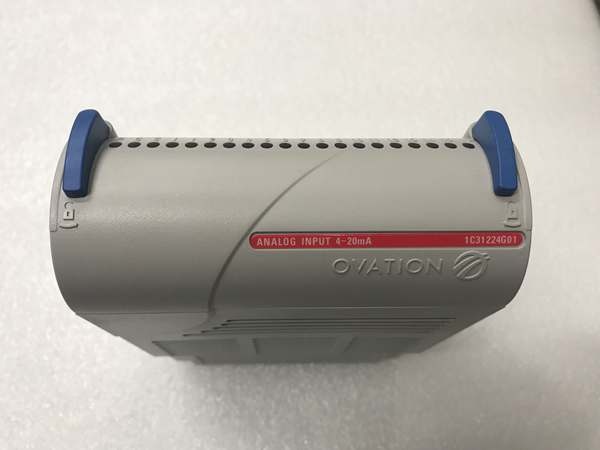
Model Number: 1C31224G01
-
Manufacturer: Emerson (formerly Westinghouse)
-
Channels: 8 isolated differential analog inputs
-
Input Types: 4-20 mA, 0-20 mA, 0-5 V, 0-10 V, ±5 V, ±10 V (software-selectable)
-
Resolution: 16-bit ADC
-
Accuracy: ±0.1 % full scale
-
Sampling Rate: Per-channel independent (rate set by Ovation controller)
-
Input Impedance: >1 MΩ (voltage), 250 Ω (current)
-
Isolation: 2 kV channel-to-bus; channel-to-channel isolated
-
Power Supply: 24 VDC via Ovation back-plane
-
Operating Temperature: –20…+70 °C (module)
-
Dimensions / Weight: 121 × 52 × 166 mm, 0.56 kg
-
Mounting: Ovation back-plane plug-in (with personality module)
-
Status: Factory discontinued – new & tested spares available

1C31224G01
Field Application & Problem Solved
In the field the biggest headache is landing eight analog signals—RTDs, pressure transmitters, vibration probes—without running individual 4-20 mA loops all the way back to the main rack. The 1C31224G01 solves that by living in a remote node: it excites the sensor, digitizes at 16-bit resolution, and shoves the data onto the Ovation bus over a single RS-485 pair. You’ll typically find one per remote pump house or cooling-tower skid on Frame-7/9 peakers—swap time is under two minutes with the unit on turning gear. Core value: it collapses eight isolated ADCs, anti-alias filters, surge clamps, and auto-zero logic into one 0.56 kg plug-in card you can bolt to the skid without pulling new cable.
In the field the biggest headache is landing eight analog signals—RTDs, pressure transmitters, vibration probes—without running individual 4-20 mA loops all the way back to the main rack. The 1C31224G01 solves that by living in a remote node: it excites the sensor, digitizes at 16-bit resolution, and shoves the data onto the Ovation bus over a single RS-485 pair. You’ll typically find one per remote pump house or cooling-tower skid on Frame-7/9 peakers—swap time is under two minutes with the unit on turning gear. Core value: it collapses eight isolated ADCs, anti-alias filters, surge clamps, and auto-zero logic into one 0.56 kg plug-in card you can bolt to the skid without pulling new cable.
Installation & Maintenance Pitfalls (Expert Tips)
Sensor Wiring Must Be Shielded – Ground at Module Only
The 50 kHz carrier rides on the raw pick-up. Run unshielded pair and you’ll pick up VFD noise that shows up as ±0.1 % drift. Use shielded twisted pair, ground the shield at the module end only, and keep the run under 100 m or you’ll chase phantom drift.
The 50 kHz carrier rides on the raw pick-up. Run unshielded pair and you’ll pick up VFD noise that shows up as ±0.1 % drift. Use shielded twisted pair, ground the shield at the module end only, and keep the run under 100 m or you’ll chase phantom drift.
24 V Polarity Reversed = Dead Node
The module is protected but will not start if +/– are swapped. Always meter before you land the power leads; reverse polarity blows the on-board fuse and the node never comes online.
The module is protected but will not start if +/– are swapped. Always meter before you land the power leads; reverse polarity blows the on-board fuse and the node never comes online.
Modbus Address Must Match Host – Or You’ll Scan Air
The RTU address is set by dipswitches on the base. If you replace the base and forget the address the master polls nothing and you’ll chase “comm-loss” that isn’t there. Photo the old switch settings before you pull the module.
The RTU address is set by dipswitches on the base. If you replace the base and forget the address the master polls nothing and you’ll chase “comm-loss” that isn’t there. Photo the old switch settings before you pull the module.
Spare Lead-Time Is 6-8 Weeks – Keep One on the Shelf
Factory stock is gone; new & tested spares are available but not overnight. If you crack a layer or burn the RS-485 transceiver you’ll be down until the part arrives—keep one in stores or you’ll discover the weakness during the next grid event.
Factory stock is gone; new & tested spares are available but not overnight. If you crack a layer or burn the RS-485 transceiver you’ll be down until the part arrives—keep one in stores or you’ll discover the weakness during the next grid event.
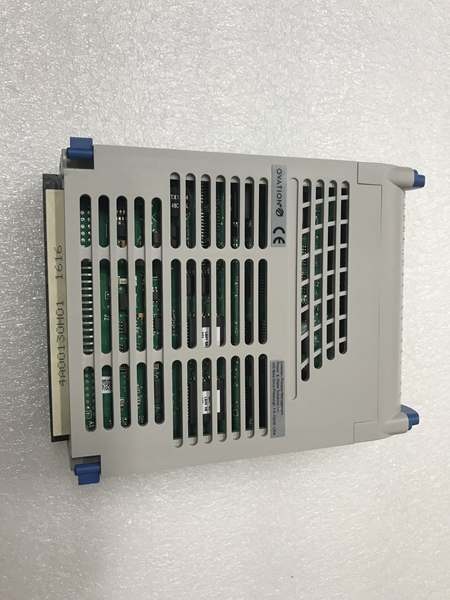
1C31224G01
Technical Deep Dive & Overview
Internally the module is a 16-bit SAR ADC bolted to a 2 kV isolation barrier. The front end conditions the raw signal (current or voltage), the DSP calculates engineering units every 2 ms, and the DAC drives the 4-20 mA loop while the Modbus chip pushes the digital word. No firmware to reload—pure hardware—so you can hot-swap it: unplug the old module, land the sensor and bus cables exactly where they came from, snap the DIN-rail latch, and the DCS sees all eight channels again in under ten seconds.
Internally the module is a 16-bit SAR ADC bolted to a 2 kV isolation barrier. The front end conditions the raw signal (current or voltage), the DSP calculates engineering units every 2 ms, and the DAC drives the 4-20 mA loop while the Modbus chip pushes the digital word. No firmware to reload—pure hardware—so you can hot-swap it: unplug the old module, land the sensor and bus cables exactly where they came from, snap the DIN-rail latch, and the DCS sees all eight channels again in under ten seconds.