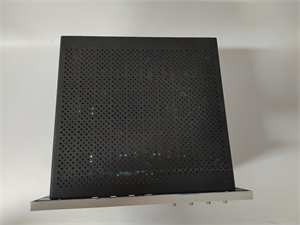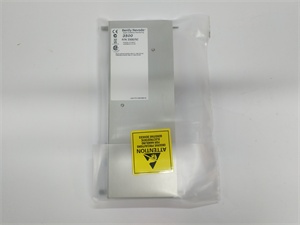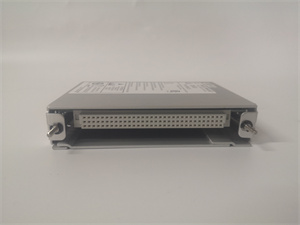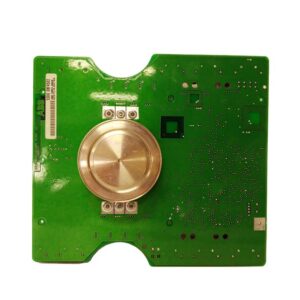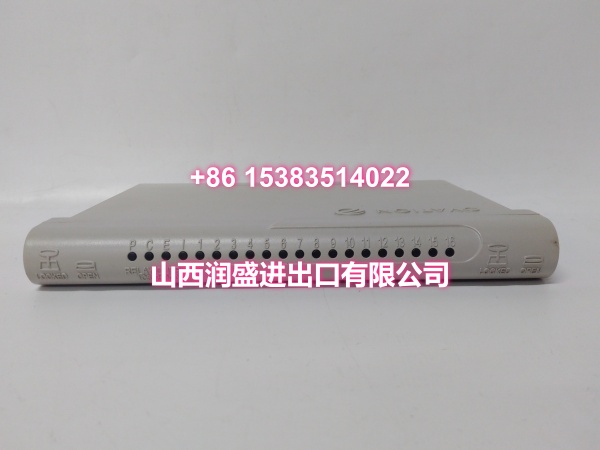
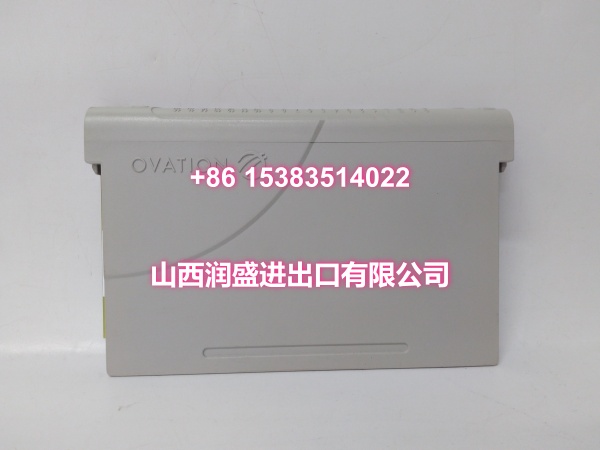
Description
Product Core Brief
- Part: 1C31219G01
- Brand: Westinghouse / Emerson Ovation
- Most consistent identification: Relay output logic module, commonly listed as the Ovation relay output electronic module paired with relay output PMODs
- Common pairing: 1C31223G01 for relay output Form C around 250VAC, and 1C31222G01 for relay output Form X around 150VDC high power, often shown as combined two card part groups with 1C31219G01
- Core function: Takes controller digital commands and drives relay outputs that switch solenoids, motor starters, alarms, and interlock circuits
- Condition: New Surplus / New Old Stock, varies by lot
Big correction before you spend budget. Several reseller pages describe this part as a standalone 24VDC relay logic block with IP65 housing, Modbus communication, ladder diagram programming, hot swap, and dimensions around 30mm by 24mm by 7.5mm, which reads like a copied generic relay module spec rather than real Ovation hardware data. Other pages just repeat that it converts digital signals to relay outputs for valves, motors, lights and heaters without any pairing information. Some list it as supporting digital input, analog input, analog output and high speed data transfer, which is filler text that does not match an Ovation relay output card. The more consistent references group 1C31219G01 with relay output PMODs such as 1C31222G01 and 1C31223G01 for Form C and Form X relay duty. Confirm against your own Ovation I/O reference manual and rack BOM before ordering.
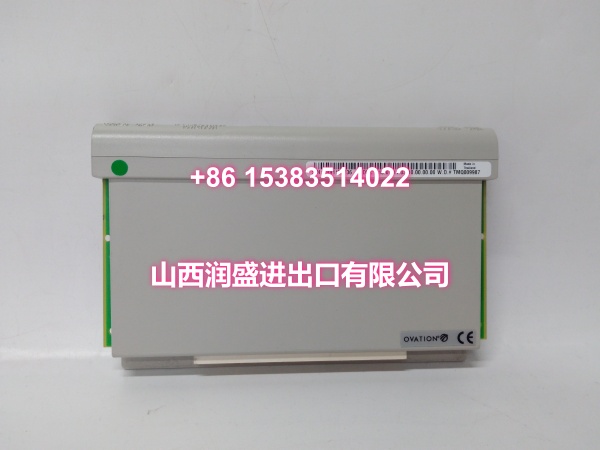
Product Introduction
Westinghouse 1C31219G01 sits on the command side of an Ovation digital loop. The controller decides, the electronic module drives, and the personality module carries the load to the relay and field wiring. When it fails, the worst case is not a noisy alarm. It is a trip solenoid that never picks up, or an interlock that drops a running machine for no process reason.
For system integrators, relay output failures are easy to misdiagnose because the controller often shows the command as issued while nothing happens in the field. Crews test the solenoid, check the fuse, review the logic, and still miss a dead driver stage or a cracked PMOD terminal. Holding the correct EMOD plus the matching relay PMOD and base turns that into a planned swap during an outage window instead of a blind run on a protection loop.
Key Technical Specifications
| Parameter | Value |
|---|---|
| Function | Relay output logic or electronic module |
| Host System | Ovation DCS, power, petrochemical, water applications |
| Paired PMOD | 1C31223G01 Form C relay output and 1C31222G01 Form X high power relay output on common lists |
| Typical Form C Duty | Around 250VAC relay output on relay output listings |
| Typical Form X Duty | Around 150VDC at 10A relay output on relay output listings |
| Typical Use | Trip solenoid drive, motor start command, alarm drive, interlock switching |
| Mounting | Ovation I/O base with matched relay PMOD |
| Status Indication | Module LEDs plus controller command and feedback diagnostics where configured |
| Power Source | Rack auxiliary or backplane supply depending on cabinet design |
| Environment | Conditioned control room cabinet, low dust, non condensing |
| Documentation | Ovation I/O reference manual, module combination list, rack BOM |
| Sourcing Risk | Legacy part, revision and PMOD pairing vary widely |
Do not trust copied specs claiming IP65 enclosure, standalone Modbus communication, ladder diagram programming, 30mm by 24mm size, built in analog input or analog output, or true hot swap without rack support for this part. Those come from unrelated listings.
Quality Control Process
Relay loops get blamed on solenoids and fuses, so testing covers the whole drive chain.
- Documentation cross check. We confirm EMOD to PMOD pairing and base against Ovation documentation instead of trusting a reseller spare list.
- Label and revision audit. Silk screen, revision, and date code must match, and refurbished stickers get rejected.
- Edge connector and pin inspection. Pushed or corroded pins cause intermittent output loss that looks like a controller problem. Checked under magnification.
- Rail short check. A Fluke multimeter confirms no short across supply paths before power up.
- Mate test with known good PMOD. We install with a confirmed 1C31223G01 or 1C31222G01 and correct base, then verify the stack reports healthy instead of fault.
- Drive test per channel. We command every channel and confirm the relay actually clicks and changes contact state, not just that an LED lights.
- Contact continuity and resistance check. We measure contact resistance to catch welded or carbonized contacts that pass a visual check but fail under load.
- Command loss test. We drop the link to confirm the output goes to the configured fail state instead of latching in the last position.
- ESD and moisture packaging. Anti-static shielding bag, desiccant, humidity indicator, rigid box.
Replacement Pitfall Guide
❗ Buying only the EMOD. A missing or wrong relay PMOD keeps the loop dead, and Form C and Form X hardware are not interchangeable because voltage and current duty differ.
❗ Assuming Form C fits a DC trip solenoid. Switching AC rated relay hardware into a DC inductive load can weld contacts fast, which turns a single failure into a stuck output.
❗ Ignoring welded contacts. A welded relay passes a board test but never opens, so a protection loop silently fails. Test contact continuity under load, not just coil click.
❗ Skipping fuse and power cabling review. Blown cabinet fuses, loose power cabling, and bad grounds produce the same dead output as a failed module.
❗ Overlooking fail state configuration. Confirm whether the output holds, drops, or drives on module loss and communication loss. A latched trip output on a running unit is far worse than a clean shutdown.
❗ Forgetting interlock logic review. If the relay drives an interlock, confirm the logic does not mask a real fault just because the command still shows as issued in the controller.
❗ Assuming hot swap is safe. Many legacy Ovation racks are not designed for live card pulls on every I/O type, and a bad swap can drop a whole panel of points.
❗ Trusting generic blog descriptions. Pages calling this a programmable Modbus relay block, an IP65 transmitter style device, or a mixed analog and digital module are unreliable and should not drive your purchase.
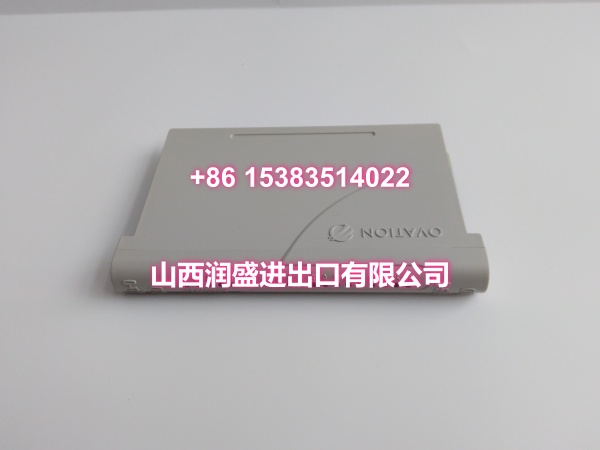
Compatibility Matrix & Benchmarks
| Original Setup | Replacement Option | Compatibility Level | Migration Notes |
|---|---|---|---|
| 1C31219G01 | Same part, later date code | Direct | Confirm revision, base, and paired PMOD |
| 1C31219G01 with 1C31223G01 | Same pair | Direct | Verify Form C AC rating and contact wiring |
| 1C31219G01 with 1C31222G01 | Same pair | Direct | Verify Form X DC high power rating and load |
| Form C build | Form X PMOD build | Not Recommended | Different voltage and current duty, contact risk |
| Relay driven trip solenoid | 1C31122G01 with 1C31125G02 switch output set | Needs Verification | Different output architecture and drive capability |
| Aging Ovation rack with hard to find relay spares | External relay panel with monitored driver and independent protection relay | Needs Adaptation | Fail state, supervision, and trip review |
- Real relay reliability depends on contact condition, load type, inductive kickback suppression, and configured fail behavior far more than on the EMOD part number.
- If your rack is obsolete and relay spares keep getting harder to find, moving critical trip functions to a certified independent protection relay with supervised outputs usually costs less than years of surplus hunting plus a failed trip.