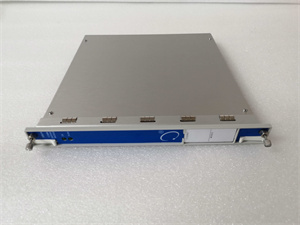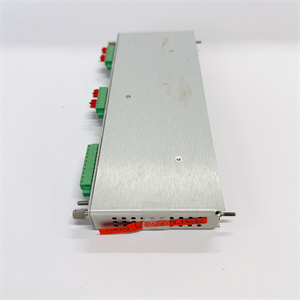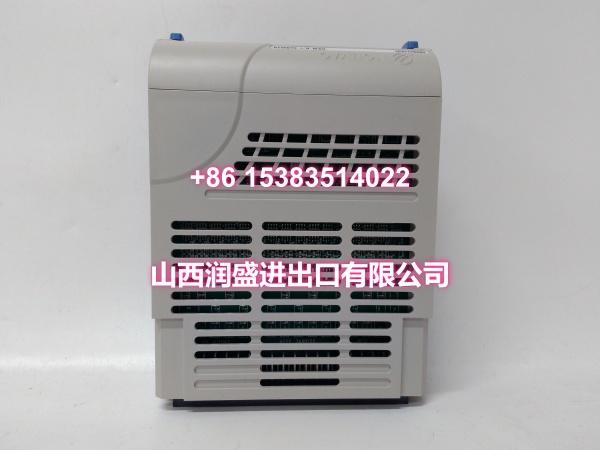
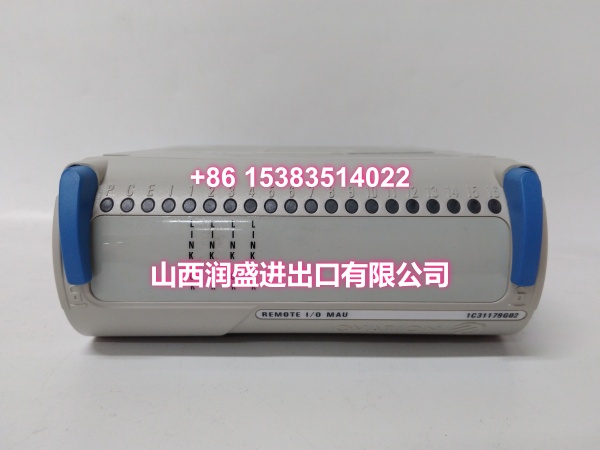
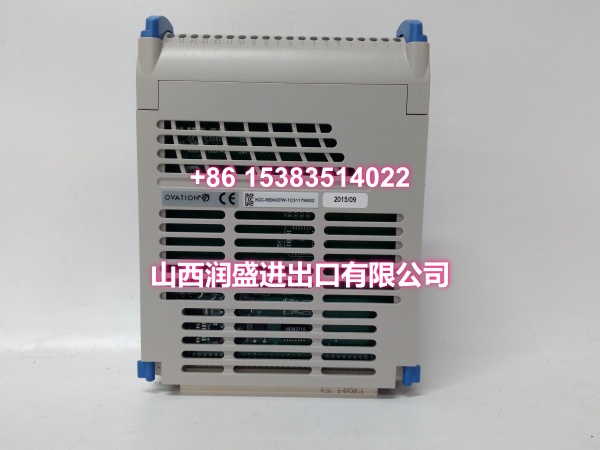
Description
Product Core Brief
- Model: 1C31179G02
- Brand: Westinghouse / Emerson Ovation lineage, with Ovation being the non safety related platform used for plant control while Common Q covers the 1E safety level
- Most Likely Class: Communication or network interface module in the Ovation I/O family, commonly listed by Chinese traders as a network communication module
- Confirmed Reality: No supplier or manufacturer page publishes a verified factory datasheet for this number, and the descriptions floating around contradict each other hard
- Not A Controller: Despite some listings calling it an Ovation card controller, it does not run control logic like a CPU
- Not DeltaV Analog Input: Several pages claim it is a DeltaV eight channel analog input module with 16 bit resolution, which belongs to a different product line entirely
- Condition: New Original / New Surplus / Refurbished, demand clear nameplate photos
Product Introduction
1C31179G02 is one of those part numbers where the internet is mostly wrong, and it costs plants real money when purchasing trusts it.
The most common description calls it a network communication module used for data exchange, monitoring and remote control in industrial automation, with Ethernet or serial interfaces and support for protocols like Modbus, Profibus and Ethernet/IP. That sounds plausible for an Ovation serial link path, because Ovation does use dedicated serial link hardware, with 1C31166G01 listed as an LC EMOD serial link controller and 1C31169G02 listed as the LC PMOD for 485 wiring. If your loop is a serial link to a meter, a breaker, a governor or an external gateway, that pairing is the one worth checking first.
Then there is the DeltaV story. Multiple pages describe 1C31179G02 as a DeltaV module with eight channels of analog input, 16 bit resolution, 50 samples per second per channel, ±0.1% full scale accuracy, 1500Vrms isolation and hot swap. That is recycled generic analog input marketing and does not match Ovation hardware naming.
And there is the remote I/O story, where the part is described as a remote node connected to a central controller through a redundant network, doing signal conditioning, linearization, range conversion and fault preprocessing, then outputting 4 to 20mA to actuators. That is a generic remote I/O narrative pasted onto the number.
Treat the part as unverified until someone shows you a nameplate and a valid Ovation module combination. The fastest way is the Ovation Mobile Help app from Emerson, which lets you scan or look up an Ovation electronic module part number and returns module descriptions, valid module combinations, wiring diagrams, diagnostic LED information and component specifications.
Key Technical Specifications
| Parameter | Value |
|---|---|
| Part Number | 1C31179G02 |
| Platform | Ovation DCS, Westinghouse and Emerson heritage, Ovation used for plant control rather than 1E safety functions |
| Commonly Claimed Class | Network or communication module for data exchange and remote monitoring |
| Possible Serial Link Pairing | 1C31166G01 LC EMOD serial link controller with 1C31169G02 LC PMOD for 485 wiring |
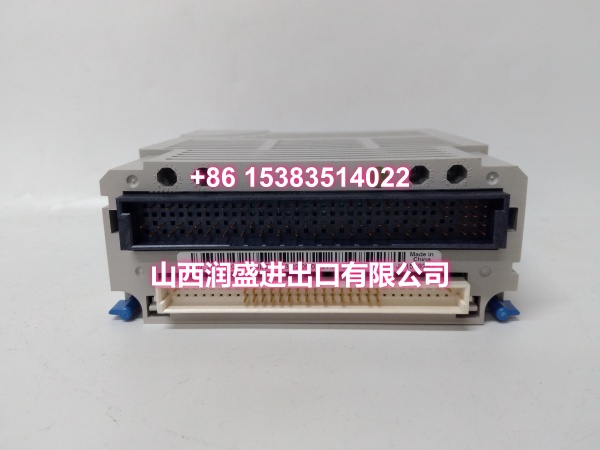
| Backplane Claims | Some sellers claim backplane powered low voltage DC, front insertion into an Ovation rack or carrier, and no external comm ports on the module face |
| Unverified Claims | DeltaV eight channel analog input, 16 bit, 50 samples per second, 1500Vrms isolation, hot swap |
| Typical Failure Mode | Dead channel, intermittent link loss, corrupted data from bad shielding, ground loop on serial runs, wrong PMOD under a healthy EMOD, corroded base terminal |
| Handling | Anti-static bag with desiccant, store flat, keep away from conductive dust and humidity |
| Verification Method | Confirm function and valid combination through Ovation hardware documentation or the Ovation Mobile Help app, not a trading page |
Quality Control Process
A communication path gets link testing, not a quick power up glance.
- Nameplate photo first. Confirm the G02 suffix and the printed description, and refuse listings that only show a stock photo.
- Pairing confirmation. If the loop is serial link, confirm whether 1C31166G01 and 1C31169G02 are the real EMOD and PMOD in that slot rather than guessing.
- Protocol and baud check. Confirm parity, baud, station address and protocol against the field device, since most link faults are configuration rather than hardware.
- Termination and bias check. On 485 runs, verify termination at both ends and correct biasing, because missing termination causes random garbage frames.
- Shield and ground loop check. Confirm the shield lands at one end only, since a ground loop mimics a failing card.
- Frame capture with a sniffer. Log the bus while cycling the device and confirm frames actually arrive and match expected addresses.
- Continuity and insulation test. Use a Fluke multimeter for continuity and a Megger for insulation to cabinet ground.
- Heat and vibration soak. Run the link warm and wiggle the harness while watching the trend, since intermittent faults show up fast.
I once watched a team buy three communication cards for a link dropping every few hours. The cards were fine. A technician had removed the 485 terminator during a panel rework, and the bus was reading reflections as noise.
Replacement Pitfall Guide
Buying it as a DeltaV analog input card. Pages claiming eight channels, 16 bit resolution, 50 samples per second and 1500Vrms isolation are describing generic analog input hardware, not verified Ovation hardware for this number
Buying it as a CPU. Some listings push 5X00105G07 as a central CPU module for Ovation reliability and fast control execution alongside this part, which shows how loosely these sellers mix part numbers
Believing Modbus is built in on the card face. One listing states a Modbus communication interface, while another states the module uses the Ovation backplane bus with no separate external comm ports on the module face, so the two claims cancel each other out
Assuming hot swap is always safe. Sellers advertise hot swap replacement with minimal downtime when the rack supports online maintenance, but on loops feeding protection, turbine control or bypass you still need points out of service and scanning stopped
Ignoring the base and carrier. A cracked or corroded base makes a healthy EMOD and PMOD both look dead, and it is usually the cheapest part nobody buys.
Confusing it with relay output hardware. 1C31219G01 is a relay output logic module and 1C31222G01 is a high power relay output DO PMOD, which is a completely different path
Trusting random pricing. One listing shows around 2216 USD per unit with a 365 day warranty and one week lead time if in stock, while Chinese trading pages list it at 1 RMB as a placeholder with no datasheet available. Treat all of it as unverified.
Keep these in mind and you’ll cut most rework time.
Compatibility Matrix & Benchmarks
| Original Model | Replacement / Alternative | Compatibility Level | Migration Notes |
|---|---|---|---|
| 1C31179G02 | Refurbished same part | Needs Verification | Confirm nameplate, valid combination and base before installing |
| 1C31179G02 | 1C31179G01 | Needs Verification | Same number family, confirm function difference and pairing before ordering |
| 1C31179G02 | 1C31166G01 with 1C31169G02 | Needs Verification | Serial link EMOD and 485 PMOD path, check whether this is your actual loop |
| 1C31179G02 | 5X00105G07 | Not Compatible | Sold as a central CPU module for Ovation, different function |
| 1C31179G02 | 1C31219G01 with 1C31222G01 | Not Compatible | Relay output logic module and high power relay DO PMOD |
| 1C31179G02 | Third party protocol gateway | Needs Adaptation | Adds a conversion layer, loses native Ovation diagnostics, needs testing for scan and alarm behavior |
Benchmark references
- Acceptance criterion: zero dropped frames over a four hour bus capture at real plant traffic.
- Latency target: round trip response to the field device stays within your loop requirement under full bus load.
- Stability target: no link loss during a two minute harness wiggle and a warm cabinet soak.
Procurement Notes
Push for five things before paying: a clear nameplate photo showing G02, a written statement from the seller on what the module actually does, the EMOD, PMOD and base they believe it pairs with, an Ovation hardware document or Mobile Help lookup confirming the valid combination, and customs paperwork if it is claimed as imported original stock.
If a seller describes it as a DeltaV eight channel analog input, a CPU, a Modbus card with external ports, or a remote I/O node that outputs 4 to 20mA, treat the listing as unverified and move on. When four different stories exist for one part number, the office selling it has almost certainly never opened the cabinet.
Want me to build an Ovation communication and serial link selection sheet mapping Modbus RTU, 485, Ethernet gateway and remote I/O setups to the right EMOD, PMOD and base, plus a dropped link troubleshooting checklist covering termination, bias, shielding and ground loops, so your team stops buying cards on a wiring fault?