Description
System Role and Integration
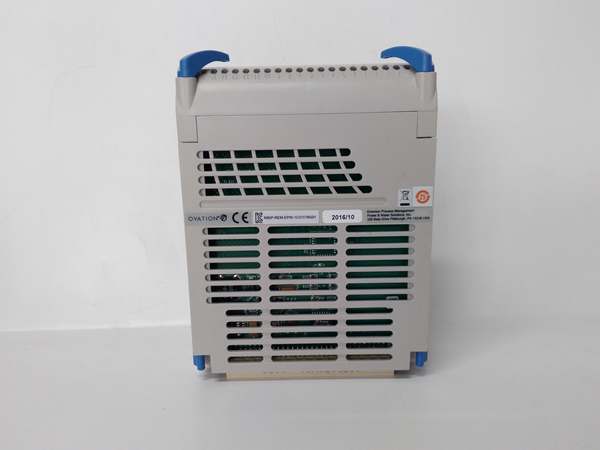
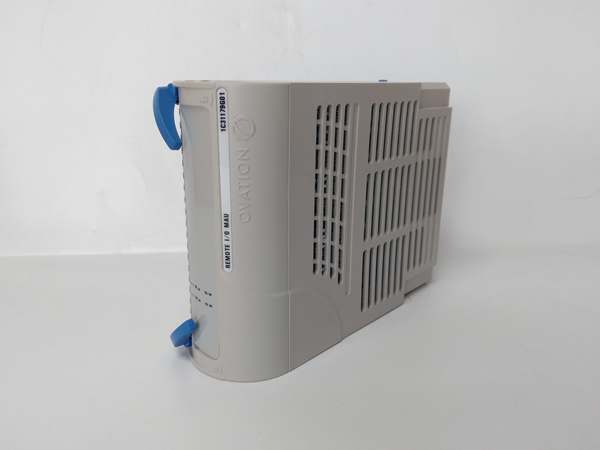
The 1C31179G01 serves as the critical communication bridge within the Ovation Distributed Control System architecture, functioning as a Media Attachment Unit (MAU) that extends the controller’s I/O bus to remote locations via fiber optic cabling. As a Remote I/O Master Attachment Unit, it mounts in the controller cabinet and interfaces with the Processor Communication and Resource Router (PCRR) through an AUI (Attachment Unit Interface) cable, converting electrical I/O bus signals to optical signals for transmission to remote I/O nodes.
This module occupies a pivotal position in distributed Ovation architectures, enabling the physical separation of I/O modules from the central controller processor. By converting the I/O bus to fiber optics, the 1C31179G01 eliminates electrical noise susceptibility and ground potential differences that plague long-distance copper wiring, while extending the reach of the control system to remote process areas, turbine auxiliaries, or geographically dispersed equipment.
Core Functionality and Signal Handling
The module provides two independent fiber optic channels for communication with remote I/O drops, supporting either 850 nm multimode fiber (standard distance) or 1300 nm single-mode fiber (extended distance) depending on the installed personality module configuration. The 1C31179G01 operates as the master unit, initiating communication with remote I/O slave nodes and managing the data exchange between the central controller and distributed field devices.
The AUI cable interface connects the MAU to the PCRR or controller backplane, receiving the parallel I/O bus signals and converting them to serial optical transmission. The module handles the protocol timing, error checking, and signal regeneration necessary for reliable communication over fiber distances up to 2 kilometers with 850 nm optics (using 1C31181G01 personality module) or up to 4 kilometers with 1300 nm optics (using 1C31181G03 personality module). The 1C31179G02 variant provides 4-channel capability for higher-density remote I/O requirements.
Platform Heritage and Operational Benefits
As a core component of the Westinghouse Ovation platform now maintained within Emerson’s automation portfolio, the 1C31179G01 reflects the distributed control philosophy that enables Ovation systems to scale from single-unit controls to plant-wide automation networks. The fiber optic architecture provides inherent immunity to electromagnetic interference (EMI) and radio frequency interference (RFI) common in power generation switchyards and industrial process environments.
The modular design allows mixing of 850 nm and 1300 nm optics within the same controller cabinet by selecting appropriate personality modules (1C31181 series), though all remote nodes on a single MAU must utilize the same optical wavelength. The hot-swappable design (when properly configured) enables replacement of the electronics module without disturbing fiber connections, minimizing downtime during maintenance. Integration with the 1C31206 MAU Base provides mechanical stability, +24V power distribution, and local I/O bus termination.

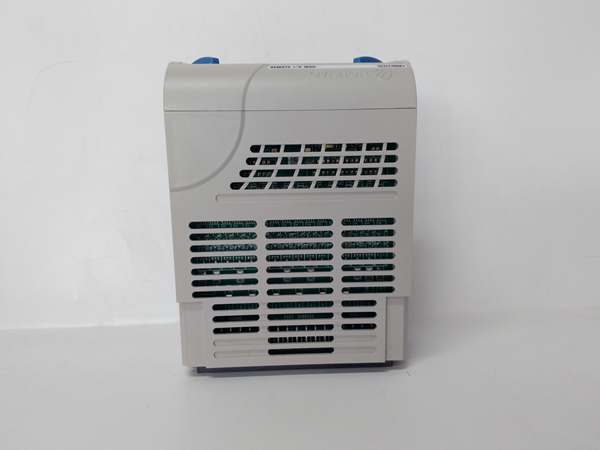
1C31179G01
Part 4: Technical Specifications
-
Model Number: 1C31179G01
-
Manufacturer: Westinghouse Electric Corporation (Emerson Ovation product line)
-
Product Type: Remote I/O Master Attachment Unit (MAU) / Media Attachment Unit
-
Number of Fiber Channels: 2 optical channels
-
Optical Wavelength Options: 850 nm (multimode) or 1300 nm (single-mode) – determined by personality module
-
Maximum Optical Link Distance:
-
2 km (6,560 ft) with 850 nm optics (1C31181G01 PMOD)
-
4 km (13,120 ft) with 1300 nm optics (1C31181G03 PMOD)
-
-
Recommended Maximum Distance: 3.7 km (to avoid extended PCRR timeout requirements)
-
Interface to Controller: AUI (Attachment Unit Interface) cable
-
Compatible Personality Modules:
-
1C31181G01 (850 nm, 2-channel)
-
1C31181G03 (1300 nm, 2-channel)
-
-
Mounting Base: 1C31206 Media Attachment Unit Base (holds up to 2 MAU modules)
-
Power Supply: +24 VDC (supplied via MAU Base from controller backplane)
-
Optical Connectors: Standard fiber optic connectors (ST or equivalent, per configuration)
-
Data Rate: Ovation I/O bus rate (synchronized with controller)
-
Operating Temperature: 0°C to 60°C (32°F to 140°F)
-
Storage Temperature: -40°C to +85°C (-40°F to +185°F)
-
Humidity: 0% to 95% RH (non-condensing)
-
Dimensions: Approximately 12.1 cm × 2.5 cm × 7.0 cm (4.8 in × 1.0 in × 2.8 in)
-
Weight: 0.27 kg to 0.60 kg (0.6 lbs to 1.3 lbs) depending on configuration
-
Related Models: 1C31179G02 (4-channel variant)
-
Status: Legacy component; available via secondary market
Part 5: Core Features & Customer Value
Fiber Optic Noise Immunity: The optical communication path provides complete galvanic isolation between the controller cabinet and remote I/O drops, eliminating ground loop currents and electromagnetic interference that can corrupt data on copper-based I/O extensions. For power generation applications where remote I/O cabinets are located in switchyards or near high-voltage equipment, this immunity ensures reliable data transmission without requiring expensive shielded cables or isolation transformers.
Extended Distance Capability: The 4 km maximum reach with 1300 nm optics enables Ovation controllers to manage I/O located in remote process areas, well fields, or auxiliary buildings without requiring separate controller nodes. This distance capability reduces system cost by eliminating the need for multiple controllers and associated networking infrastructure, while centralizing control logic maintenance in a single location.
Modular Optical Configuration: The personality module architecture allows field configuration of optical characteristics (850 nm vs. 1300 nm) without replacing the entire MAU electronics. Maintenance organizations can stock the universal 1C31179G01 electronics and specific personality modules matched to their fiber infrastructure, reducing spare parts inventory while maintaining flexibility to support both standard multimode and long-distance single-mode fiber installations.
Simplified Remote I/O Architecture: By handling the protocol conversion and timing management internally, the MAU eliminates the need for complex external media converters or protocol translators. Engineers design the distributed I/O system using standard Ovation I/O modules in remote cabinets, with the MAU transparently managing the communication link—reducing engineering complexity and potential points of failure in the control network.
Hot-Swappable Maintenance: The module design allows replacement of the electronics without disturbing the fiber optic connections or AUI cabling (when system configuration permits), reducing mean time to repair (MTTR) during communication faults. The personality module remains with the fiber connectors, ensuring that optical alignment and cable management are not compromised during electronics replacement.
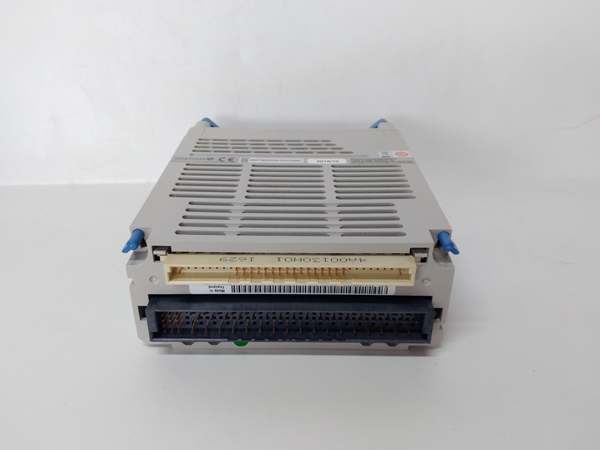
1C31179G01
Part 6: Typical Applications
Power Generation Remote Auxiliary Control: The 1C31179G01 is extensively deployed in coal-fired, gas-fired, and nuclear power plants to extend Ovation I/O to remote auxiliary systems such as cooling water pump houses, coal handling facilities, and water treatment plants. The fiber optic link withstands the high EMI environments of switchyards and motor control centers while providing the distance capability to reach auxiliary buildings hundreds of meters from the main control room.
Turbine Hall Distributed I/O: Within power plant turbine buildings, the module connects remote I/O cabinets mounted near the turbine generator to the central controller, monitoring bearing vibrations, steam temperatures, and lubricating oil systems. The 850 nm configuration typically serves these applications where distances are under 2 km, while the immunity to electrical noise from large rotating machinery ensures reliable data acquisition for turbine protection systems.
Water Treatment Remote Pump Stations: In municipal and industrial water treatment facilities, the MAU enables centralized control of remote well fields, booster stations, and reservoir pumping facilities located miles from the central treatment plant. The 1300 nm long-distance capability supports these geographically dispersed applications, allowing a single Ovation controller to manage the entire water distribution network without requiring multiple control nodes.
Petrochemical Tank Farm Monitoring: Refinery and chemical processing facilities utilize the module to connect I/O cabinets distributed throughout tank farms and loading racks to central control room processors. The fiber optic communication prevents ignition hazards associated with copper wiring in classified hazardous areas, while the extended distance capability accommodates the large physical footprints of tank storage facilities.
Pipeline Compressor Station Control: Natural gas pipeline applications employ the 1C31179G01 to link remote compressor station I/O to central pipeline control centers. The module’s robust construction withstands the vibration and temperature extremes of outdoor compressor shelters, while the fiber link provides secure, interference-free communication across the long distances typical of pipeline infrastructure.