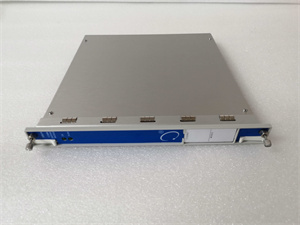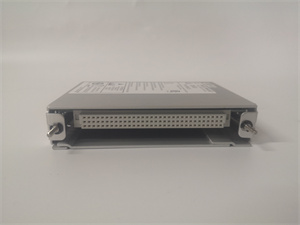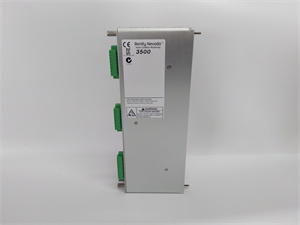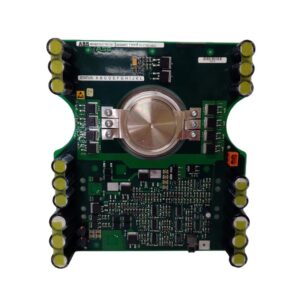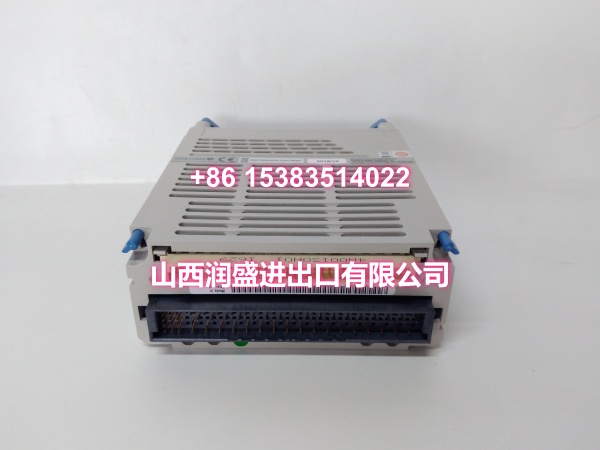
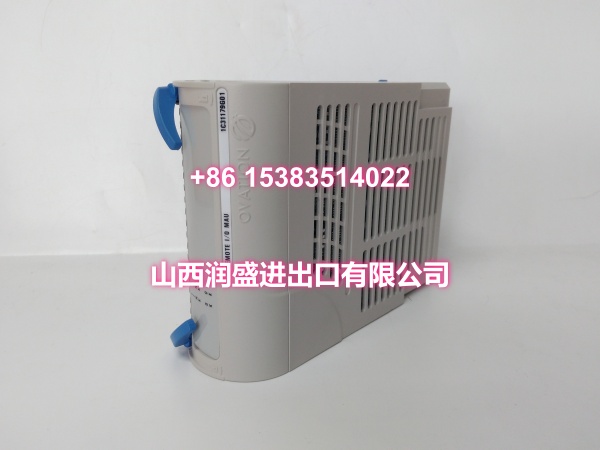
Description
Product Core Brief
- Part: 1C31179G01
- Brand: Westinghouse / Emerson Ovation
- Most consistent identification: Remote I/O electronics module used in the Ovation remote node and extended rack build, mounted in an additional unit base 1C31206G01 together with a matching personality module
- Related hardware: 2 port fiber conversion card 1C31181G01 and 4 port fiber conversion card 1C31181G02, often listed with this part as a MAU remote connection setup
- Core function: Carries I/O communication between the local Ovation rack and remote or extended I/O, rather than conditioning a field signal itself
- Condition: New Surplus / New Old Stock, varies by lot
Big correction before you spend budget. Reseller pages describe this part in at least four conflicting ways. Some call it a general purpose input output module for sensors and actuators, one calls it a DeltaV 8 channel analog input card with 16 bit resolution and 1500Vrms isolation, one dumps a long list of RTD specs with FBM203 ranges and 24VDC redundant supply, and another says it supports 4 to 20mA signals and acts as a remote node on Ethernet. Those are copy paste errors from unrelated products. The Ovation system documentation is the reliable reference, and it places this part in the remote I/O and additional unit base group. Verify against your own Ovation I/O reference manual before ordering.
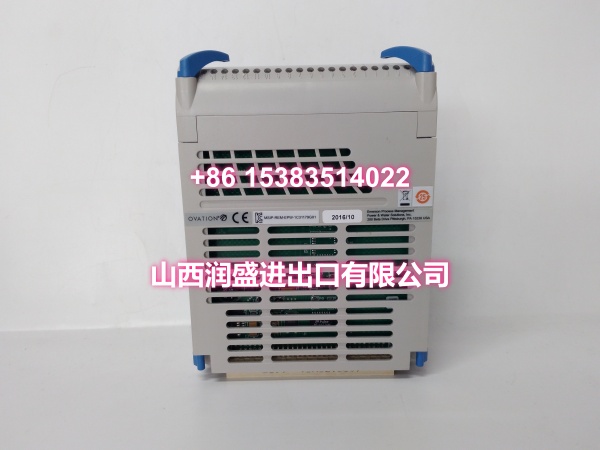
Product Introduction
Westinghouse 1C31179G01 sits in the communication path of an Ovation remote or extended I/O build, not on the field side of a loop. When it fails, the symptom is usually a whole group of points going bad at once instead of one drifting sensor, and operators see a rack full of frozen values while every individual transmitter still tests fine.
For system integrators, this is the part that separates a fast recovery from a long outage. If you only stock EMOD and PMOD pairs for local I/O, a remote node failure leaves the crew chasing dozens of healthy loops. Holding the correct electronics module plus the matching additional unit base, personality module, fiber conversion card, and AUI cable turns that into a planned swap.
Key Technical Specifications
| Parameter | Value |
|---|---|
| Function | Remote I/O or extended rack electronics module |
| Host System | Ovation DCS, power, water, petrochemical applications |
| Base | Additional unit base 1C31206G01 on Ovation remote I/O listings |
| Related Fiber Card | 1C31181G01 two port and 1C31181G02 four port conversion cards |
| Remote Rack Side Hardware | Remote I/O base 1C31205G01, electronics module 1C31203G01, fiber MAU interface 1C31204G01 |
| Communication Path | Controller to remote node through serial or fiber link depending on build |
| Status Indication | Module LEDs plus controller and node communication diagnostics |
| Power Source | Rack auxiliary or backplane supply depending on cabinet design |
| Environment | Conditioned control room cabinet, low dust, non condensing |
| Documentation | Ovation I/O reference manual, remote I/O configuration guide |
| Sourcing Risk | Legacy part, revision and firmware pairing vary widely |
Do not trust copied specs claiming 8 channel RTD input, FBM203 ranges, 16 bit analog input, DeltaV compatibility, or direct 4 to 20mA field wiring for this part. Those come from unrelated listings.
Quality Control Process
Communication modules fail from connectors, fiber, and configuration mismatch, so testing covers the whole link.
- Documentation cross check. We confirm the part against Ovation remote I/O documentation and your rack build before calling it remote I/O hardware.
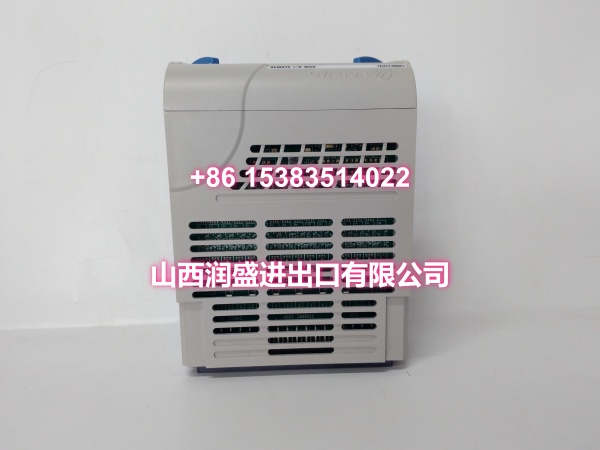
- Label and revision audit. Silk screen, revision, and date code must match, and refurbished stickers get rejected.
- Edge connector and pin inspection. Pushed or corroded pins cause intermittent node loss that looks like a controller problem. Checked under magnification.
- Rail short check. A Fluke multimeter confirms no short across supply paths before power up.
- Mate test with known good base and PMOD. We install in a confirmed 1C31206G01 with the correct personality module and verify the node reports healthy instead of fault.
- Link test with fiber or serial path. We verify the conversion card, MAU interface, and cable actually pass traffic instead of only lighting LEDs.
- Node loss and recovery test. We pull the link to confirm the controller flags the node and recovers cleanly on restore without stuck I/O images.
- ESD and moisture packaging. Anti-static shielding bag, desiccant, humidity indicator, rigid box.
Replacement Pitfall Guide
❗ Assuming it is an analog or RTD card. Buying this to fix one drifting temperature point wastes money, because it does not condition field signals in most Ovation builds.
❗ Buying only the module. Remote I/O relies on a chain of base, personality module, conversion card, cable, and power cabling, and one missing piece keeps the node down.
❗ Confusing local rack with remote rack hardware. Local extended builds and remote node builds use different bases and electronics, including 1C31206G01 on the local side and 1C31205G01 with 1C31203G01 on the remote side.
❗ Ignoring fiber and MAU health. Dirty fiber ends, a failing MAU interface, or a cracked cable cause random node dropouts that look like a bad electronics module. Clean and test the link first.
❗ Skipping node loss behavior review. Confirm what your logic does when a whole node drops, whether values hold, go bad, or drive trips. A frozen I/O image can hide a real process problem.
❗ Forgetting configuration and firmware pairing. Swapping revisions without checking Ovation documentation can leave the node unrecognized or unstable even when the part number matches.
❗ Trusting generic blog descriptions. Pages calling this a DeltaV module, a general sensor interface, or an Ethernet remote node with 4 to 20mA wiring are unreliable and should not drive your purchase.
Compatibility Matrix & Benchmarks
| Original Setup | Replacement Option | Compatibility Level | Migration Notes |
|---|---|---|---|
| 1C31179G01 | Same part, later date code | Direct | Confirm revision, base, and personality module |
| 1C31206G01 additional unit build | 1C31179G01 with matched PMOD | Direct | Verify cable, power cabling, and node configuration |
| Local extended rack | Remote node build with 1C31205G01 and 1C31203G01 | Needs Adaptation | Different architecture, communication and power review |
| Copper link setup | Fiber conversion card 1C31181G01 or G02 | Needs Adaptation | Confirm port count, MAU interface, and fiber routing |
| Aging Ovation remote I/O | Modern Ovation I/O or remote I/O gateway | Needs Adaptation | Database, communication, and node loss handling review |
| Obsolete rack with hard to find spares | Partial I/O migration | Needs Adaptation | Plan phased cutover to protect running loops |
- Real reliability in a remote build depends on fiber cleanliness, MAU health, and configured node loss behavior far more than on the electronics module label.
- If your rack is obsolete and remote I/O spares keep getting harder to find, migrating extended racks to modern remote I/O often costs less than years of surplus hunting plus full rack outages.
Send a photo of the installed label plus the base, personality module, and any fiber conversion card, and I can help confirm whether this is the correct drop-in for your rack or whether a remote I/O migration makes more sense.