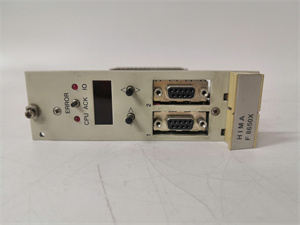
Description
System Role and Integration
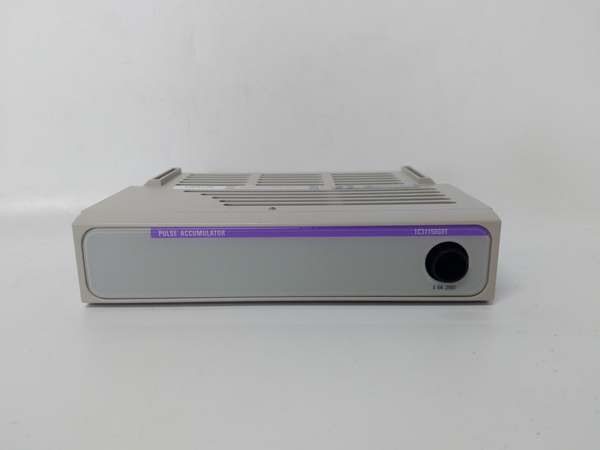
The 1C31150G01 serves as the personality-defining interface for pulse accumulation applications within the Ovation Distributed Control System, functioning as the critical companion to the 1C31147G01 Pulse Accumulator Electronics Module (EMOD). As a Personality Module (PMOD), it mounts directly beneath the EMOD in standard Ovation I/O bases to create a complete two-channel pulse counting solution for flow meters, turbine meters, and rotary encoders.
This module occupies a specific niche in the Ovation I/O architecture by providing the voltage-specific signal conditioning and field termination that the universal EMOD lacks. While the 1C31147G01 contains the 32-bit counters, filtering algorithms, and communication interface, the 1C31150G01 supplies the excitation voltage, current limiting, and surge protection required to interface safely with field pulse sources. This modular separation allows the same electronics platform to serve diverse sensor types through appropriate personality module selection.
Core Functionality and Signal Handling
The G01 variant specifically configures the pulse input channels for local power operation with common-negative return, meaning the module sources excitation voltage to the field pulse device and senses the returning signal referenced to the negative common. This configuration accommodates the majority of industrial turbine flow meters and encoders that provide dry contact or open-collector outputs requiring external excitation.
The module provides terminal block connections for field wiring, including terminals for pulse signal inputs, excitation power distribution, and shield grounding. Internal circuitry includes current-limiting resistors, transient voltage suppression, and noise filtering components that protect the sensitive EMOD electronics from field-side electrical faults and electromagnetic interference. The PMOD also establishes the specific input voltage range—either 5/12VDC or 24/48VDC depending on the specific system configuration and external power supply connections—ensuring compatibility with the output characteristics of the connected pulse source.
Platform Heritage and Operational Benefits
As a component of the Westinghouse Ovation platform now maintained within Emerson’s automation portfolio, the 1C31150G01 reflects the modular design philosophy that reduces spare parts inventory while maximizing application flexibility. Rather than stocking multiple dedicated pulse input cards for different voltage ranges, facilities maintain a inventory of universal 1C31147G01 EMODs and specific personality modules (G01 for common-negative local power, G02 for common-positive, G03 for external power) matched to their installed sensor base.
The G01 configuration specifically addresses applications where the pulse source requires a local excitation supply and returns the signal to a common negative reference—typical of magnetic pickup sensors, turbine flow meters with internal preamps, and mechanical switch contacts. By integrating the field power distribution onto the PMOD, the system eliminates the need for external interposing relays or signal conditioners, reducing installation complexity and potential failure points in critical flow measurement loops.

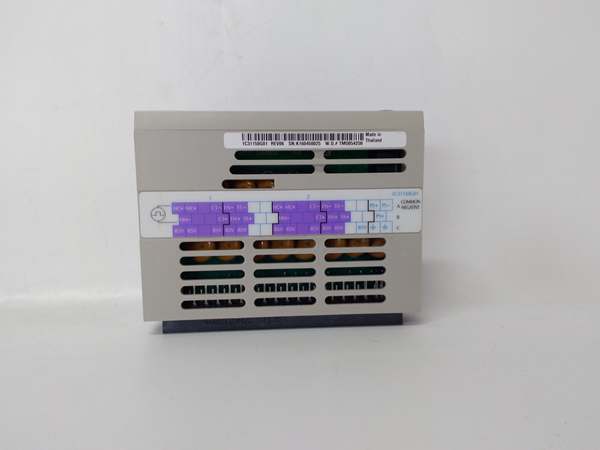
1C31150G01
Part 4: Technical Specifications
-
Model Number: 1C31150G01
-
Manufacturer: Westinghouse Electric Corporation (Emerson Ovation product line)
-
Product Type: Pulse Accumulator Personality Module (PMOD)
-
Compatible Electronics Module: 1C31147G01 (Pulse Accumulator EMOD)
-
Number of Channels: 2 pulse input channels (matches EMOD capacity)
-
Power Configuration: Local field power supply, common negative return
-
Input Voltage Ranges: 5VDC, 12VDC, 24VDC, or 48VDC (configuration and supply dependent)
-
Field Termination: Screw terminal blocks for pulse signals and power distribution
-
Signal Conditioning: Current limiting, transient suppression, noise filtering
-
Input Type: Single-ended pulse inputs (dry contact, open collector, or voltage pulse compatible)
-
Excitation Method: Local power sourcing to field devices
-
Common Configuration: Common negative (signal return to negative rail)
-
Isolation: Channel-to-channel and channel-to-system isolation via EMOD
-
Operating Temperature: -40°C to +70°C (-40°F to +158°F)
-
Storage Temperature: -40°C to +85°C (-40°F to +185°F)
-
Humidity: 0% to 95% RH (non-condensing)
-
Mounting: Standard Ovation I/O base, installs beneath 1C31147G01 EMOD
-
Weight: 0.2 kg to 0.5 kg (0.5 lbs to 1.1 lbs) depending on configuration
-
Alternative Configurations: 1C31150G02 (Local Power, Common Positive), 1C31150G03 (External Field Power)
Part 5: Core Features & Customer Value
Local Power Distribution Architecture: The G01 configuration provides onboard excitation power for field pulse devices, eliminating the need for external 24V or 48V power supplies and distribution wiring to the I/O base. For instrumentation engineers, this integration reduces installation costs by consolidating power sourcing and signal sensing into a single module pair, while ensuring consistent excitation voltage for flow meters and encoders that require specific supply voltages for accurate pulse output.
Common-Negative Signal Referencing: The common-negative configuration accommodates the majority of industrial pulse sources, including magnetic pickup sensors and turbine flow meters with open-collector or dry contact outputs. By establishing a negative common reference point, the module simplifies field wiring—technicians connect the pulse source positive to the input terminal and return the negative to the common bus—reducing wiring errors during commissioning and maintenance.
Surge Protection and Noise Immunity: The PMOD integrates transient voltage suppression and current-limiting networks that protect the expensive 1C31147G01 EMOD from field-side electrical faults. In power plant switchyard environments and petrochemical facilities where lightning strikes and switching transients generate high-voltage spikes on field wiring, this protection ensures that surge events damage the replaceable personality module rather than the counting electronics, reducing repair costs and spare parts inventory requirements.
Modular Replacement Strategy: The separation of the PMOD from the EMOD allows field technicians to replace the personality module independently when field wiring faults damage the input circuitry, without disturbing the EMOD configuration or pulse count data. If a lightning strike destroys the input channel on the PMOD, technicians swap the inexpensive personality module while the EMOD retains the accumulated count values and calibration parameters, minimizing mean time to repair (MTTR) and preventing data loss in custody transfer applications.
Voltage Range Flexibility: Through appropriate wiring and configuration, the G01 supports multiple input voltage ranges (5/12V or 24/48V), allowing the same module part number to serve both low-voltage encoders and high-voltage turbine meters. This flexibility reduces spare parts proliferation—facilities stock the G01 for common-negative applications across their entire pulse input inventory regardless of specific sensor voltage requirements.
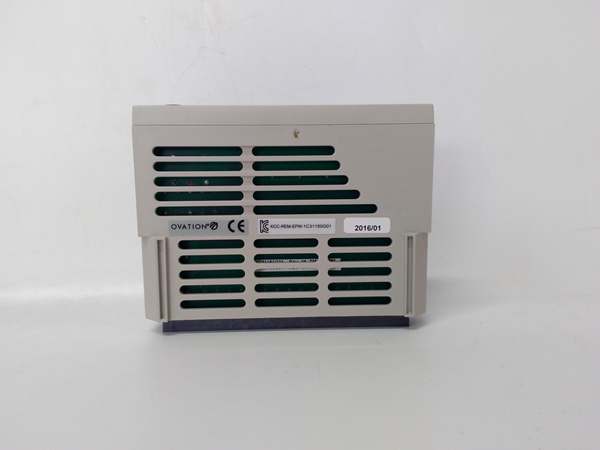
1C31150G01
Part 6: Typical Applications
Custody Transfer Flow Metering: The 1C31150G01 is extensively deployed in oil and gas pipeline applications paired with the 1C31147G01 to interface with turbine flow meters providing pulse outputs proportional to volumetric flow. In these applications, the local power configuration excites the flow meter preamplifier, while the common-negative input accurately detects the pulse train for precise totalization. The surge protection proves critical in above-ground pipeline installations subject to lightning-induced transients.
Turbine Supervisory Speed Sensing: Within power generation turbine control systems, the G01 configuration connects to magnetic pickup sensors monitoring turbine rotor speed. The local power supply excites the magnetic pickup coils, and the common-negative input senses the resulting AC pulse train converted to square wave signals. The module’s noise filtering eliminates electrical interference from generator excitation systems, ensuring accurate speed measurement for overspeed protection and load control.
Water Treatment Flow Monitoring: In municipal water treatment facilities, the module pairs with propeller-type flow meters and magnetic flow meters providing pulse outputs. The local 24V power supply eliminates the need for separate instrument power supplies in remote pump stations, while the common-negative configuration accommodates the three-wire pulse outputs common in water industry flow transmitters.
Positive Displacement Metering: Chemical and petroleum processing facilities utilize the G01 with positive displacement meters for precise batch control and inventory management. The module’s current limiting protects against short circuits in hazardous area cabling, while the local power configuration ensures consistent meter excitation voltage independent of plant power supply fluctuations.
Rotary Encoder Position Feedback: Manufacturing and materials handling systems employ the G01 to interface with rotary encoders monitoring conveyor belt speed and position. The 5/12V configuration (when wired appropriately) accommodates the low-voltage differential or single-ended outputs of precision encoders, while the common-negative referencing simplifies wiring in multi-axis control systems.