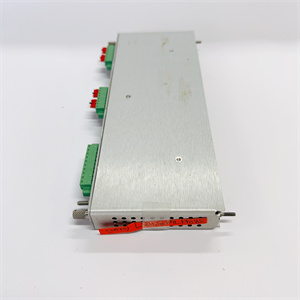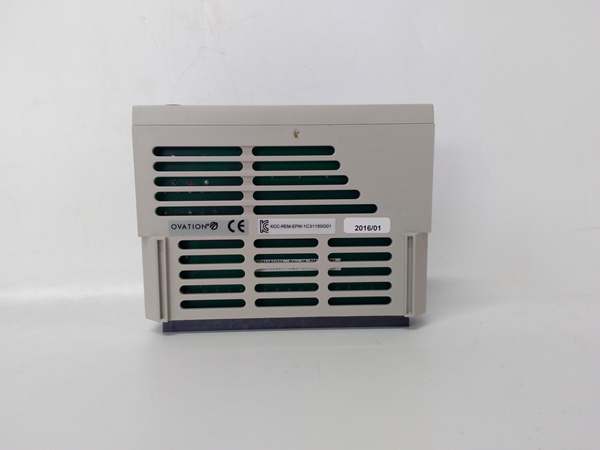
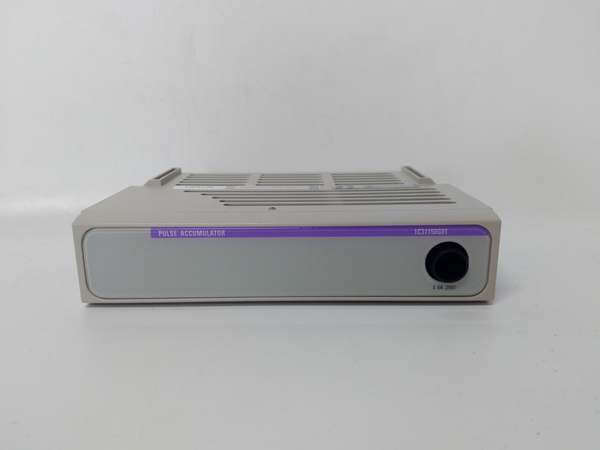
Description
Key Technical Specifications
-
Model Number: 1C31150G01
-
Manufacturer: Emerson (formerly Westinghouse)
-
Function: Pulse accumulator + 12-bit analog I/O personality for Ovation DCS
-
Pulse Inputs: 0-100 kHz, 24 VDC / 220 VAC wetting, transformer-isolated
-
Analog I/O: ±10 V, 12-bit resolution, ±0.1 % accuracy
-
Internal Carrier: 50 kHz ±2 % (back-plane communication)
-
Isolation: 2 kV basic channel-to-bus; transformer-coupled
-
Power Supply: 24 VDC field power or 220 VAC bus power (jumper-selectable)
-
Operating Temperature: –40…+85 °C
-
Protection Degree: IP20 module rating; conformal-coated PCB
-
Dimensions / Weight: 150 × 100 × 50 mm, 0.5 kg typical
-
Certifications: CE, UL 508, IEC 61000-6-2
-
Status: Factory discontinued – new & tested spares available

1C31150G01
Field Application & Problem Solved
In the field the biggest headache is getting both an accurate pulse count from a turbine meter and a rock-steady ±10 V servo command without stuffing two cards in the rack. The 1C31150G01 solves both: it counts 0-100 kHz pulses from encoders or flow meters, transformer-isolates them, and provides ±10 V analog I/O for position or flow loops—all on one 50 kHz carrier. You’ll typically find one per flow loop or servo valve on Frame-7/9 peakers—swap time is under two minutes with the unit on turning gear. Core value: it collapses a pulse accumulator, a 12-bit analog I/O front-end, and a 50 kHz carrier interface into one 0.5 kg plug-in card you can hot-swap without losing counts or position.
In the field the biggest headache is getting both an accurate pulse count from a turbine meter and a rock-steady ±10 V servo command without stuffing two cards in the rack. The 1C31150G01 solves both: it counts 0-100 kHz pulses from encoders or flow meters, transformer-isolates them, and provides ±10 V analog I/O for position or flow loops—all on one 50 kHz carrier. You’ll typically find one per flow loop or servo valve on Frame-7/9 peakers—swap time is under two minutes with the unit on turning gear. Core value: it collapses a pulse accumulator, a 12-bit analog I/O front-end, and a 50 kHz carrier interface into one 0.5 kg plug-in card you can hot-swap without losing counts or position.
Installation & Maintenance Pitfalls (Expert Tips)
Pulse Input Level Must Match Field Signal – Don’t Guess
The board is factory-set for 24 VDC / 220 VAC wetting. If your encoder outputs 5 V TTL you’ll get no counts. Verify the dipswitch or jumper setting against the loop sheet before you insert the card—otherwise you’ll chase “zero flow” that isn’t real.
The board is factory-set for 24 VDC / 220 VAC wetting. If your encoder outputs 5 V TTL you’ll get no counts. Verify the dipswitch or jumper setting against the loop sheet before you insert the card—otherwise you’ll chase “zero flow” that isn’t real.
±10 V Analog Must Be Terminated – Don’t Float It
The analog outputs are high-impedance. If you leave the sense line floating the DAC drifts ±0.5 %. Land the sense terminal or terminate with 10 kΩ to ground or you’ll chase phantom servo offset.
The analog outputs are high-impedance. If you leave the sense line floating the DAC drifts ±0.5 %. Land the sense terminal or terminate with 10 kΩ to ground or you’ll chase phantom servo offset.
50 kHz Carrier Must Be Grounded – Or the Bus Dies
The 50 kHz sine rides on the module transformer. If you forget the PE bond the SNR drops 10 dB and the main rack sees “module not responding.” Torque the PE lug to 1 Nm and megger it after every lightning season.
The 50 kHz sine rides on the module transformer. If you forget the PE bond the SNR drops 10 dB and the main rack sees “module not responding.” Torque the PE lug to 1 Nm and megger it after every lightning season.
Spare Lead-Time Is 6-8 Weeks – Keep One on the Shelf
Factory stock is gone; new & tested spares are available but not overnight. If you crack a layer or burn the transformer you’ll be down until the part arrives—keep one in stores or you’ll discover the weakness during the next grid event.
Factory stock is gone; new & tested spares are available but not overnight. If you crack a layer or burn the transformer you’ll be down until the part arrives—keep one in stores or you’ll discover the weakness during the next grid event.
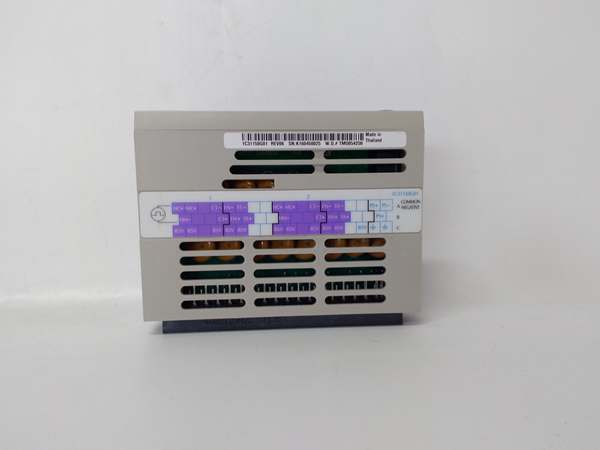
1C31150G01
Technical Deep Dive & Overview
Internally the module is a 12-bit SAR ADC/DAC bolted to a 2 kV isolation barrier. The left half counts pulses via a transformer-coupled comparator; the right half provides ±10 V analog I/O with on-board reference. The 50 kHz oscillator feeds the Ovation back-plane so the module appears as a transparent extension of the rack. Lose the 24 VDC / 220 VAC rail and the module stops counting/converting; lose a single channel and the CPU throws “I/O FLT” for that channel only. No firmware to reload—pure hardware—so you can hot-swap it: pull the old card, land the field leads exactly where they came from, snap the 96-pin connector in, and the DCS sees pulses and analog data again in under ten seconds.
Internally the module is a 12-bit SAR ADC/DAC bolted to a 2 kV isolation barrier. The left half counts pulses via a transformer-coupled comparator; the right half provides ±10 V analog I/O with on-board reference. The 50 kHz oscillator feeds the Ovation back-plane so the module appears as a transparent extension of the rack. Lose the 24 VDC / 220 VAC rail and the module stops counting/converting; lose a single channel and the CPU throws “I/O FLT” for that channel only. No firmware to reload—pure hardware—so you can hot-swap it: pull the old card, land the field leads exactly where they came from, snap the 96-pin connector in, and the DCS sees pulses and analog data again in under ten seconds.