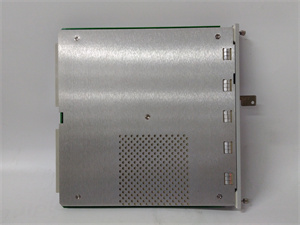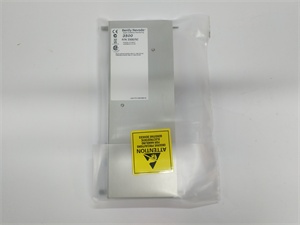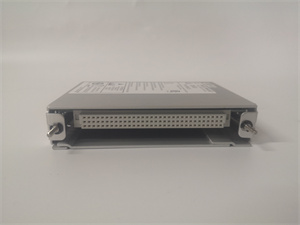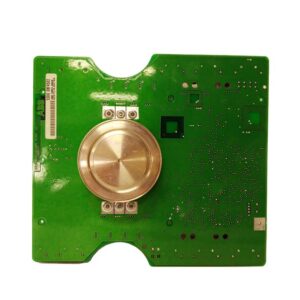
Description
Product Core Brief
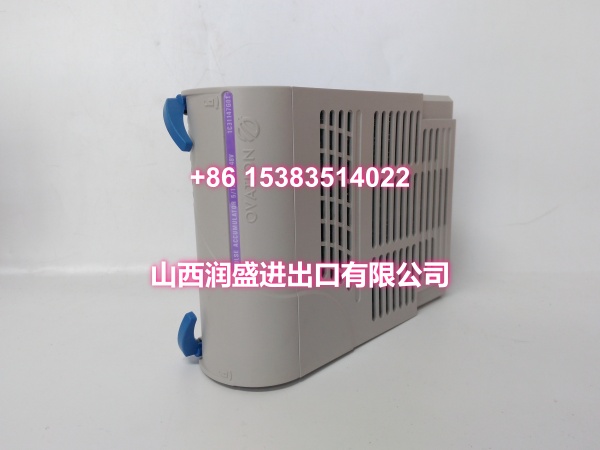
- Model: 1C31147G01
- Brand: Westinghouse / Emerson Ovation lineage
- Correct Class: Electronic module, EMOD, for pulse counting, also called pulse accumulator
- Core Function: Provides pulse counting for one of three possible pulse input levels, 24/48V on CT+ and CT minus inputs referencing a common negative or positive field supply and suitable for CE standard systems, 12V medium speed on MC+ and HM minus inputs not suitable for CE, or 5V medium speed on HC+ and HM minus inputs not suitable for CE
- Sibling EMOD: 1C31147G02 provides 5V high speed pulse counting on HC+ and HM minus and is not suitable for CE standard systems
- Paired PMOD Family: 1C31150 series characteristic modules, not a random personality module
- Not A Controller: Some trading pages list it as an Ovation controller. That is wrong and copied filler
- Condition: New Original / New Surplus / Refurbished, demand nameplate photos
Product Introduction
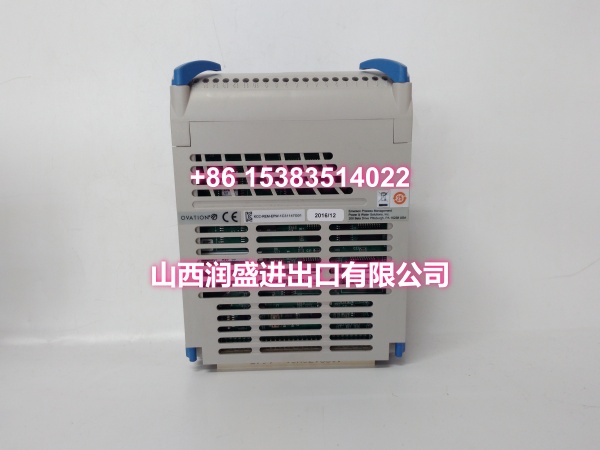
1C31147G01 is the pulse count electronic module in the Ovation family. It counts pulses from flow meters, turbine meters, watt hour meters and other pulse producing devices, and it feeds those counts into the controller for totalizing and rate calculation. It can also keep calculating pulses until the Ovation controller or an external field control input tells it to stop, and it can measure pulse duration
The part that trips people up is the input level. G01 covers 24/48V, 12V medium speed and 5V medium speed depending on which terminals you wire, while G02 covers 5V high speed. If your meter outputs fast high speed pulses, G01 will undercount and your total will slowly drift below reality, which is a nasty fault because nothing alarms.
The second trap is the PMOD. The characteristic modules used with the pulse count module are 1C31150G01 for 24/48V counting and control inputs from dry contacts or open collector drivers, active low, referenced to the internal auxiliary supply common negative, 1C31150G02 for 24/48V dry contact inputs active high referenced to the internal auxiliary positive, and 1C31150G03 which provides a dedicated 24/48V field input supply taken from an external DC source connected to two base terminal block terminals, DSA and DSB.
Key Technical Specifications
| Parameter | Value |
|---|---|
| Part Number | 1C31147G01 |
| Platform | Ovation DCS, Westinghouse and Emerson heritage |
| Module Class | EMOD, pulse count or pulse accumulator electronic module |
| Input Levels | 24/48V CT+ and CT minus, CE suitable, 12V medium speed MC+ and HM minus, 5V medium speed HC+ and HM minus, neither medium speed option CE suitable |
| Sibling EMOD | 1C31147G02, 5V high speed HC+ and HM minus, not CE suitable |
| Paired PMODs | 1C31150G01 dry contact or open collector active low, 1C31150G02 dry contact active high, 1C31150G03 external 24/48V field supply via DSA and DSB |
| Functions | Pulse counting, hold count until controller or external field input stops it, measure pulse duration |
| Typical Failure Mode | Frozen count, undercounting fast pulses, missed counts from contact bounce, dead channel from wrong PMOD, corroded terminal, failed auxiliary supply path |
| Handling | Anti-static bag with desiccant, store flat, keep away from conductive dust |
| Verification Method | Confirm input level and CE requirement against Ovation hardware documentation and cabinet drawing |
No supplier publishes a confirmed factory datasheet for this part, so validate maximum pulse rate, input voltage class and isolation against your Ovation documentation before energizing.
Quality Control Process
Pulse paths need a pulse generator, not a quick power up check.
- Nameplate and suffix match. Confirm G01, not G02. They look similar and cover different pulse speeds.
- PMOD confirmation. Verify which 1C31150 variant is installed and whether it matches dry contact, open collector or external field supply wiring
- CE requirement check. If your system must meet CE, the 12V and 5V medium speed options on G01 are not suitable
- Pulse generator sweep. Feed known pulse counts at low and high rates and compare the accumulated value against the generator.
- Contact bounce observation. Watch for double counting with a bouncing dry contact, which inflates totals silently.
- Terminal and clamp inspection. Look for green corrosion and loose screws on DSA and DSB if using the external field supply PMOD
- Insulation test using a Megger. Confirm no short between input groups and cabinet ground.
- Freeze and resume test. Confirm the count holds and resumes correctly when the controller or external field control input stops and restarts counting
I once saw a plant lose about four percent on fuel totalizing for months. The card was healthy. Someone had installed the active high PMOD on a dry contact circuit wired for active low, so half the pulses never registered.
Replacement Pitfall Guide
Buying G02 thinking it is the same card. G02 is the 5V high speed pulse count EMOD and is not suitable for CE standard systems, so swapping blindly changes both speed behavior and compliance
Believing it is an Ovation controller. Some listings label it as an Ovation controller with one year warranty and two to three day lead time. That is recycled marketing and does not match Ovation module documentation
Trusting 16 channel digital input specs. Pages describe it as a high performance digital input module with 5 to 30VDC input, 16 inputs, sink or source, isolation and LEDs. That is a generic DI description pasted under the wrong number
Expecting ControlNet or EtherNet/IP. Some listings paste whole ControlLogix, NetLinx, EtherNet/IP, ControlNet and DeviceNet descriptions under this part number. Completely different platform
Confusing it with a SCR voltage regulator. A few Chinese listings attach ZK type SCR voltage regulator specs, including 220V AC supply and phase shift triggering, to this number. That is an entirely different product
Ignoring contact bounce and shielding. A long unshielded pulse run next to motor cables creates phantom counts that look like a failing card.
Skipping the I/O Builder step during swap. Put all points on the slot out of service and stop scanning before pulling the card, then restore the original scan status after reinstalling
Installing in the wrong order. Fit the characteristic module into the base first, then slide the electronic module in so it locks the PMOD, then close the blue latch. Reverse the order when removing, and line up the pins carefully, because inserting misaligned can burn the module when powered
Keep these in mind and you’ll cut most rework time.
Compatibility Matrix & Benchmarks
| Original Model | Replacement / Alternative | Compatibility Level | Migration Notes |
|---|---|---|---|
| 1C31147G01 | Refurbished same part | Direct | Run pulse sweep at low and high rates, check terminals and insulation |
| 1C31147G01 | 1C31147G02 | Needs Adaptation | 5V high speed only and not CE suitable, verify pulse source matches |
| 1C31147G01 | 1C31150G01 | Not Compatible | Pulse count PMOD for dry contact or open collector active low, pairs rather than replaces |
| 1C31147G01 | 1C31150G03 | Not Compatible | Provides dedicated external 24/48V field supply via DSA and DSB |
| 1C31147G01 | 1C31194G01 or 1C31197G01 | Not Compatible | Valve position controller pair, different function |
| 1C31147G01 | Third party pulse counter | Needs Adaptation | Loses native Ovation registration and diagnostics, needs interface redesign |
Benchmark references
- Acceptance criterion: accumulated count matches the pulse generator exactly over at least 1000 pulses at your real field rate.
- Drift target: daily totalized value stays within your plant tolerance against a reference meter over a week.
- Freeze target: count holds steady while the stop condition is active and resumes cleanly afterward
Procurement Notes
Pricing on this part is unreliable because listings are often mislabeled. One Xiamen listing showed around 1259 RMB per unit under the Westinghouse name, another showed around 6985 RMB while pasting SCR voltage regulator descriptions, and a third page listed it as an Ovation controller with one year warranty and two to three day lead time. Treat all of these as unverified.
Push for four things before paying: a clear nameplate photo, confirmation from the seller that it is a pulse count EMOD rather than a controller or a generic DI card, the 1C31150 PMOD variant they believe pairs with it, and customs paperwork if it is claimed as imported original stock.
A fast sanity check is the Emerson Ovation Mobile Help app, which lets you scan or look up an Ovation electronic module part number and returns module descriptions, valid module combinations, wiring diagrams, diagnostic LED information and component specifications. If a seller cannot tell you which PMOD and base go with the card, they have probably never installed one.
Want me to build an Ovation pulse counting selection sheet mapping dry contact, open collector and externally powered pulse inputs to the right EMOD, 1C31150 PMOD and base, plus a frozen total troubleshooting checklist, so your team stops swapping cards on a wiring or bounce fault?