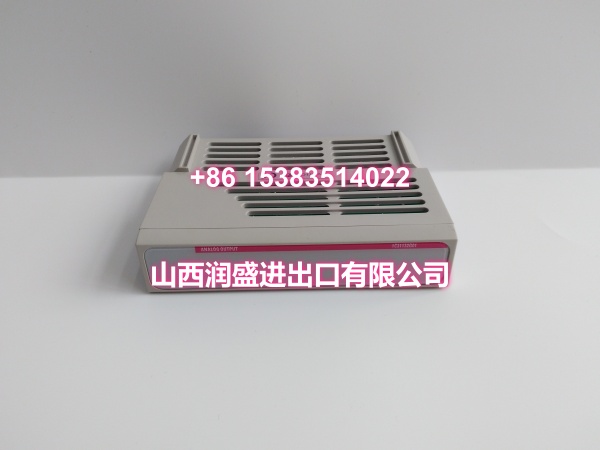

Description
Product Core Brief
- Part: 1C31132G02
- Brand: Westinghouse / Emerson Ovation
- Most likely product type: Analog output personality module, the field interface half of an Ovation analog output assembly
- Closest confirmed sibling: 1C31132G01 is widely listed as the Ovation analog output personality module paired with the 1C31129G03 0 to 20mA analog output electronic module
- Common assembly: AO EMOD plus AO PMOD plus correct I/O base plus cavity insert
- Condition: New Surplus / New Old Stock, varies by lot
Straight caution. I could not find an authoritative Emerson or Westinghouse document that pins 1C31132G02 to one confirmed spec sheet. Most listings only cover the G01 version, and some reseller pages describe the analog output family as a 220VAC power supply with 24VDC 2.8A output, which is clearly wrong for an AO personality module. Treat G02 as a revision or variant in the same analog output PMOD family until you verify the silk screen and your Ovation I/O reference manual.
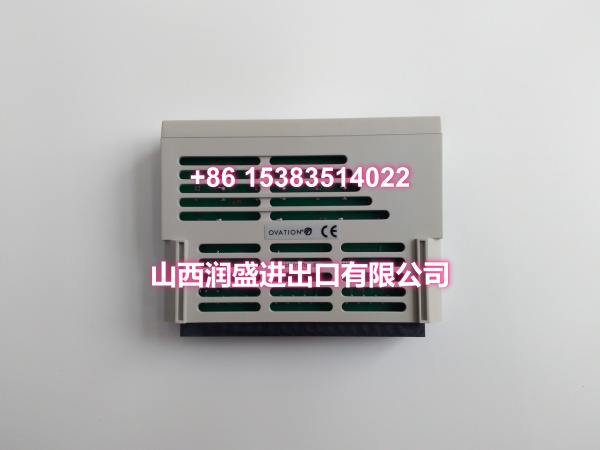
Product Introduction
Westinghouse 1C31132G02 sits on the field side of an Ovation analog output subsystem. The electronic module converts controller commands into a current signal, and the personality module carries that signal out to the terminals, adds surge and wiring interface hardware, and defines how the loop actually connects to a positioner, actuator, or downstream analog input.
For integrators, this is the part people forget to stock. A healthy EMOD with a cracked PMOD, corroded terminal, or wrong base still gives you a frozen valve and an operator stuck in manual. Holding the correct PMOD alongside the EMOD turns a long loop trace into a quick swap during an outage window.
Key Technical Specifications
| Parameter | Value |
|---|---|
| Function | Analog output personality module, field interface for AO EMOD |
| Host System | Ovation DCS, power, steel, water applications |
| Paired EMOD | 1C31129G03 0 to 20mA analog output electronic module with diagnostics on common listings |
| Point Count | 4 points per module on typical Ovation analog output listings |
| Signal Class | 0 to 20mA analog output on the paired EMOD family |
| Mounting | Ovation I/O base with correct cavity insert and terminal block |
| Status Indication | Comes from EMOD LEDs and controller diagnostics, not the PMOD alone |
| Power Source | System powered or field powered depending on loop design |
| Environment | Conditioned control room cabinet, low dust, non condensing |
| Documentation | Ovation I/O reference manual and module combination lists |
| Sourcing Risk | Legacy part, revision differences between G01 and G02 must be verified |
Do not trust copied specs claiming 85 to 264VAC input, 24VDC 2.8A output, or 50kHz output frequency for this part. Those numbers describe a power supply, not an analog output personality module.
Quality Control Process
PMODs fail from terminals, corrosion, and bad mating, so testing covers the whole stack.
- Documentation cross check. We confirm whether G02 is a valid revision of the G01 analog output PMOD against Ovation I/O documentation before calling it a drop-in.
- Label and revision audit. Silk screen, revision, and date code must match, and refurbished stickers get rejected.
- Terminal and screw inspection. Loose, corroded, or stripped terminals cause intermittent output that looks like a failing positioner.
- PCB and component review. We look for bulged capacitors, cracked solder joints, burn marks, and flux residue from prior repairs.
- Assembly mate test. We install with a confirmed 1C31129G03 and the correct base and cavity insert, then verify the stack reports healthy instead of fault.
- Loop current sweep. We command 0, 25, 50, 75, and 100 percent and measure with a process calibrator to confirm linearity and no stuck channel.
- Open loop check. We break the loop to confirm the EMOD actually reports an open output fault instead of staying silent.
- ESD and moisture packaging. Anti-static shielding bag, desiccant, humidity indicator, rigid box.
Replacement Pitfall Guide
❗ Assuming G02 drops in for G01. Revision differences can change wiring, surge components, or base fit. Confirm against the Ovation I/O reference manual before install.
❗ Buying only the PMOD. A missing or wrong EMOD gives you dead outputs no matter how good the personality module is. Buy the assembly, not one board.
❗ Skipping the cavity insert. Ovation analog output builds often use a cavity insert with the EMOD and PMOD, and a missing insert causes poor backplane contact and random faults.
❗ Confusing AO with relay output builds. Relay output setups such as 1C31219G01 with 1C31222G01 or 1C31223G01 use form C or form X contacts and follow completely different wiring rules. They are not interchangeable with an analog output PMOD.
❗ Ignoring loop power source. System powered and field powered analog loops wire differently, and the wrong arrangement gives flat reads or no output at all.
❗ Skipping fail position review. Confirm what the controller does on link loss, whether output holds last value, drops to zero, or drives a configured fail position. That matters more than the board label on trip related loops.
❗ Forgetting shield grounding. Analog shields are normally grounded on the DCS side and left floating in the field unless the design says otherwise, and wrong shielding creates drift that looks like sensor or positioner failure.
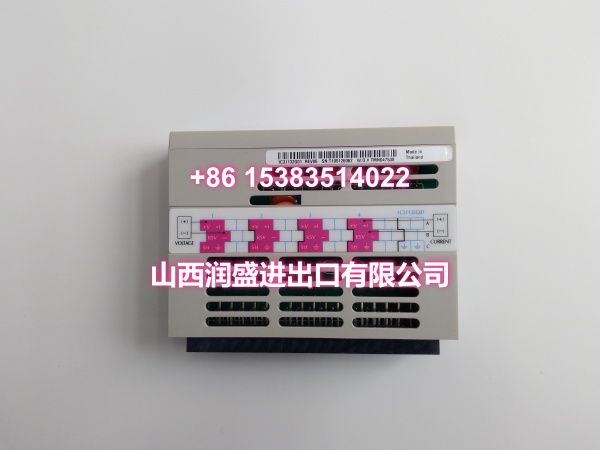
Compatibility Matrix & Benchmarks
| Original Setup | Replacement Option | Compatibility Level | Migration Notes |
|---|---|---|---|
| 1C31132G02 | Same part, later date code | Direct | Confirm revision, base, and cavity insert |
| 1C31132G01 | 1C31132G02 | Needs Verification | Revision differences must be confirmed in Ovation documentation |
| 1C31129G03 with 1C31132G01 | 1C31129G03 with 1C31132G02 | Needs Verification | Verify terminal layout and surge components match your loop |
| AO EMOD and PMOD set | Modern Ovation AO I/O | Needs Adaptation | Database, scaling, grounding, and fail position review |
| Legacy AO build | Remote I/O with HART | Needs Adaptation | Communication, power source, and diagnostics review |
| Aging Ovation rack | Partial I/O migration | Needs Adaptation | Plan phased cutover to protect running control loops |
- Real loop reliability depends on terminals, loop power, shielding, and configured fail behavior far more than on the PMOD part number.
- If your rack is obsolete and AO spares keep getting harder to find, migrating critical control loops to modern I/O with HART diagnostics often costs less than years of surplus hunting plus unplanned manual operation.
Send a photo of the installed board label plus the EMOD, base, and cavity insert, and I can help confirm whether G02 is a true drop-in for your G01 setup or whether a targeted AO migration makes more sense.