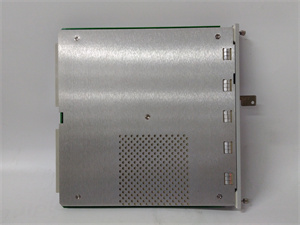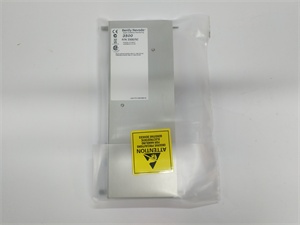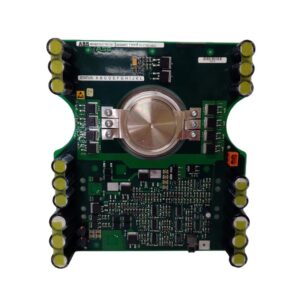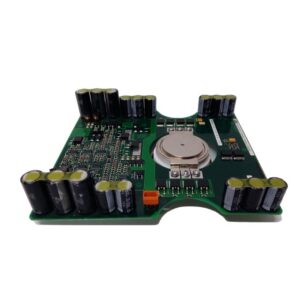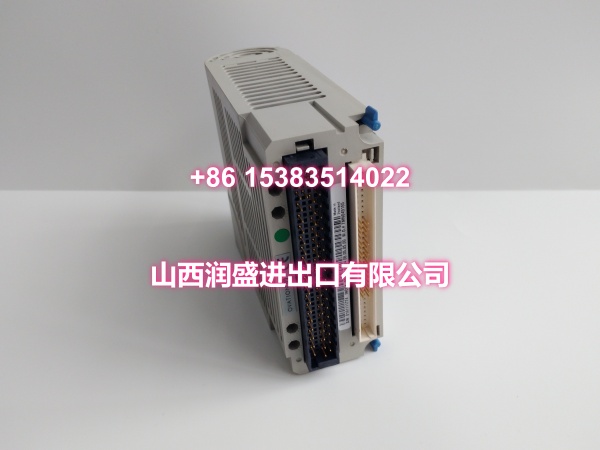
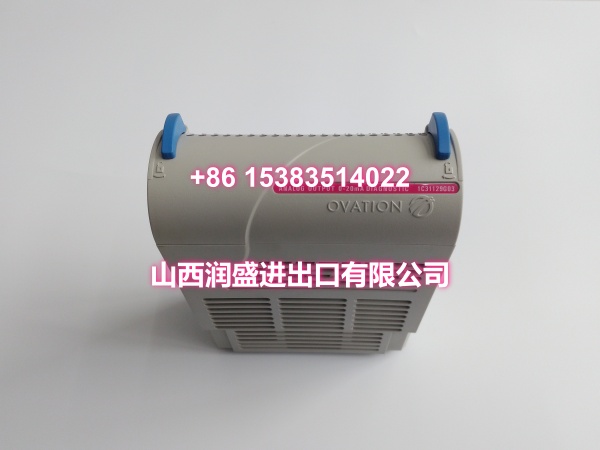
Description
Product Core Brief
- Part: 1C31129G03
- Brand: Westinghouse / Emerson Ovation
- Product Type: Analog output electronic module, commonly listed as a 0 to 20mA AO EMOD with diagnostics
- Common Pairing: 1C31132G01 analog output personality module
- Core Function: Converts controller commands into a current output that drives final control elements such as control valve positioners and actuators
- Typical Build: 4 points per module on many Ovation analog output listings
- Condition: New Surplus / New Old Stock, varies by lot
Important correction. Some reseller pages call this a controller or processor module, and another lists it as a relay output module with I/A Series backplane bus, IP20 rating, and 6.8kg weight. Those descriptions are wrong and copied from unrelated products. The consistent identification across Ovation spare references is an analog output electronic module with diagnostics, paired with an analog output personality module.
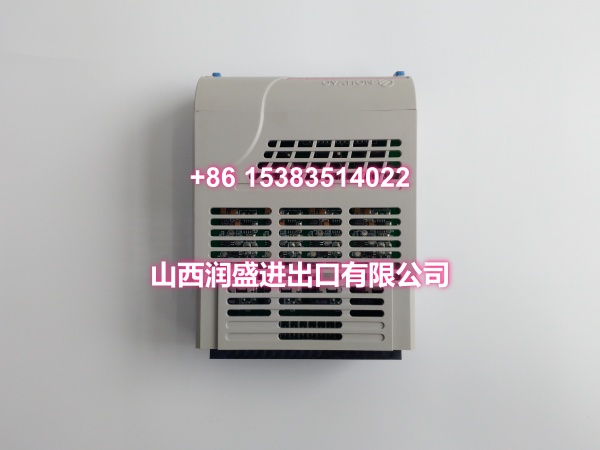
Product Introduction
Westinghouse 1C31129G03 is the electronic half of an Ovation analog output subsystem. It takes controller output commands and drives a current signal into the field, which usually means feeding a valve positioner, actuator, or analog input on another system.
For system integrators, the value is protecting closed loop stability. A failed AO module can freeze a control valve, drive a loop to one rail, or force operators into manual for the rest of a shift while everyone chases what looks like a bad positioner. Holding the correct EMOD plus the matching personality module and base turns that into a short swap instead of a forced outage.
Key Technical Specifications
| Parameter | Value |
|---|---|
| Function | Analog output electronic module with diagnostics |
| Host System | Ovation DCS, power, steel, water applications |
| Signal Type | 0 to 20mA class analog output on most listings |
| Channel Count | 4 points per module on common Ovation AO listings |
| Personality Module | 1C31132G01 analog output personality module |
| Typical Load | Control valve positioners, actuators, analog interfaces |
| Status Indication | Module LEDs plus controller diagnostics where configured |
| Mounting | Ovation I/O base with matched personality module and terminal block |
| Environment | Conditioned control room cabinet, low dust, non condensing |
| Documentation | Ovation I/O reference manual and module combination lists |
| Sourcing Risk | Legacy part, date code and revision vary widely |
Do not trust random spec tables claiming 16 bit resolution, 0.1% accuracy, I/A Series backplane, or IP20 enclosure for this part. Those numbers come from copied listings and do not match Ovation AO hardware documentation.
Quality Control Process
AO cards get blamed for positioner and wiring faults, so we verify the whole chain.
- Documentation cross check. We confirm the EMOD to PMOD pairing against Ovation I/O documentation instead of trusting a reseller list.
- Label and revision audit. Silk screen, revision, and date code must match, and refurbished stickers get rejected.
- Edge connector and pin inspection. Pushed or corroded pins cause intermittent output drops that look like controller faults. Checked under magnification.
- Rail short check. A Fluke multimeter confirms no short across backplane supply paths before power up.
- Mate test with known good PMOD. We install with a confirmed 1C31132G01 and correct base, then verify the stack reports healthy instead of fault.
- Loop current measurement. We command 0, 25, 50, 75, and 100 percent and measure with a process calibrator to confirm linearity and no stuck output.
- Open loop and diagnostic check. We break the loop to confirm the module actually reports an open output fault rather than staying silent.
- ESD and moisture packaging. Anti-static shielding bag, desiccant, humidity indicator, rigid box.
Replacement Pitfall Guide
❗ Buying only the EMOD. Ovation splits function between the electronic module and the personality module, and a missing or wrong PMOD gives dead or floating outputs.
❗ Confusing AO with relay output. Relay output builds such as 1C31219G01 with 1C31222G01 use form C or form X contacts and follow completely different wiring rules. They are not interchangeable with an AO EMOD.
❗ Ignoring loop power source. Some analog loops are system powered and some are field powered, and wiring the wrong arrangement gives flat reads or no output at all.
❗ Skipping fail safe behavior review. Confirm what the controller does on link loss, whether output holds last value, goes to zero, or goes to a configured fail position. That decision matters more than the card label on trip related loops.
❗ Forgetting shield and grounding practice. Analog shields are normally grounded on the DCS side and left floating in the field unless the design says otherwise, and wrong shielding creates drift that looks like a failing positioner.
❗ Skipping the I/O database check. Swapping hardware without confirming range, scaling, and output limits leaves the loop acting wrong even when the card is healthy.
❗ Trusting copied listing specs. Claims about CPU functions, redundant processor failover, Modbus TCP, stainless housings, or tower crane monitoring come from unrelated products and
do not apply here.
Compatibility Matrix & Benchmarks
| Original Setup | Replacement Option | Compatibility Level | Migration Notes |
|---|---|---|---|
| 1C31129G03 | Same part, later date code | Direct | Confirm revision, base, and paired PMOD |
| 1C31129G03 with 1C31132G01 | Same pair | Direct | Verify terminal wiring and loop power source |
| 1C31129G03 | 1C31129G01 or 1C31129G02 analog output variants | Needs Verification | Revision and diagnostic behavior differ, check documentation |
| 1C31129G03 | 1C31129G04 analog output without diagnostics | Needs Adaptation | Loss of open loop and output fault detection, review alarm strategy |
| 1C31129G03 | 1C31219G01 with 1C31222G01 relay output build | Not Recommended | Different signal type and load handling, redesign required |
| Legacy Ovation AO | Modern Ovation I/O or remote IAO with HART | Needs Adaptation | Database, grounding, fail position, and HART diagnostics review |
- Real loop reliability depends on loop power, shielding, and configured fail behavior far more than on the EMOD label.
- If your rack is obsolete and AO spares keep getting harder to find, migrating critical control loops to modern I/O with HART diagnostics often costs less than years of surplus hunting plus unplanned manual operation.
Send a photo of the installed EMOD label plus the personality module and base, and I can confirm whether this is the correct drop-in or whether you should look at a targeted AO migration instead.