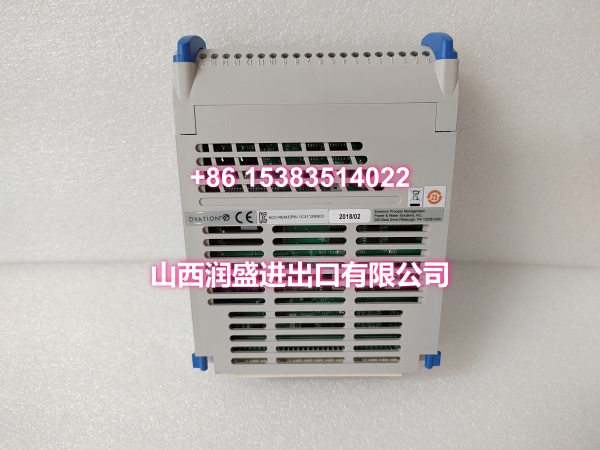
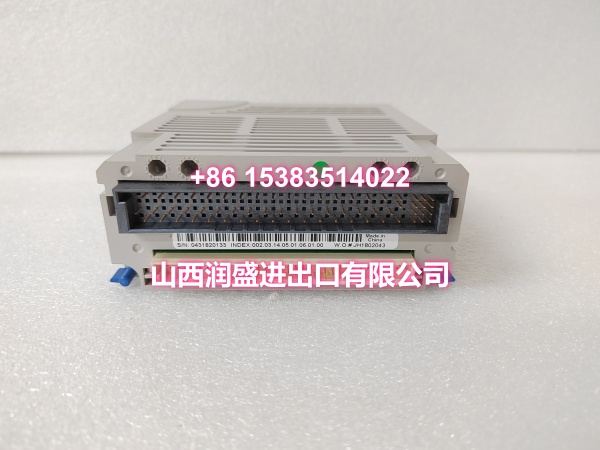
Description
Product Core Brief
- Model: 1C31129G03
- Brand: Westinghouse
- Series: Ovation DCS Analog Output family
- Core Function: Converts controller digital values into a 0-20mA analog output signal for valves, actuators, and drives.
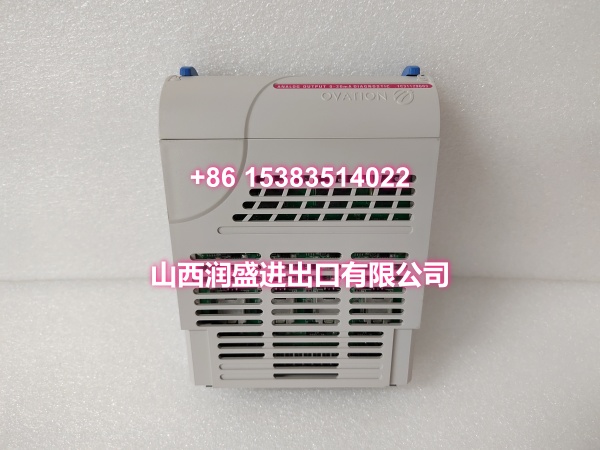
- Product Type: Analog Output Electronic Module (AO EMOD) with diagnostics
- Key Specs: 0-20mA output | Diagnostic capability | Pairs with 1C31132G01 AO personality module
- Condition: New Surplus / New Old Stock, varies by lot
Quick correction on a common mistake. Some listings call this a relay output module. It is not. It is an analog output electronic module with diagnostics.
Product Introduction
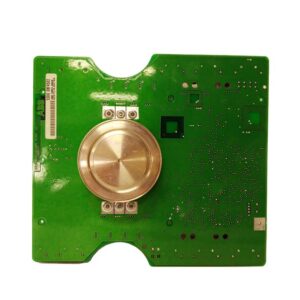
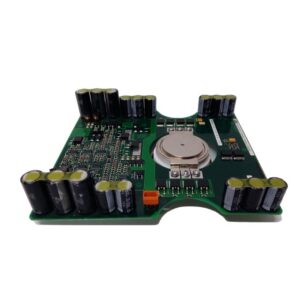
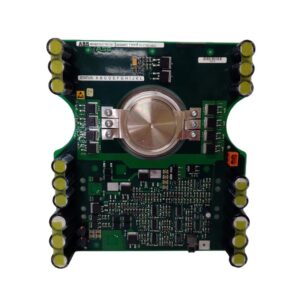
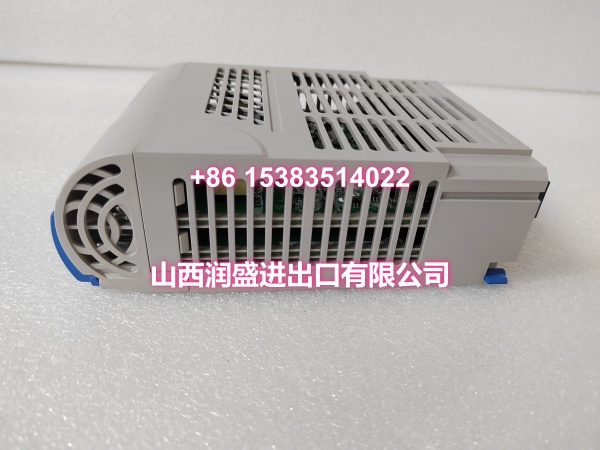
Westinghouse 1C31129G03 is an Ovation analog output electronic module that drives 0-20mA signals to field devices. It sits on the I/O base with a matching personality module and receives values from the controller through the I/O bus.
Its value is fast recovery during an outage. AO failures usually stop a control loop dead, so correct shelf stock beats a two week sourcing scramble. Diagnostic reporting also helps separate a bad card from a broken field loop.
Key Technical Specifications
| Parameter | Value |
|---|---|
| Function | Analog output electronic module |
| Host System | Ovation DCS |
| Signal Range | 0-20mA output |
| Diagnostics | Included on this revision |
| Paired Personality Module | 1C31132G01 analog output PMOD |
| Typical Channels | 4 points per module in standard Ovation AO builds |
| Mounting | I/O base, control room cabinet installation |
| Status Indication | Module LEDs plus controller diagnostics |
| Fuse Protection | User replaceable fuses on some assemblies |
| Environment | Conditioned control room, low dust and vibration |
| Related Revisions | 1C31129G01 0-5VDC, 1C31129G02 0-10VDC, 1C31129G04 0-20mA without diagnostics |
Quality Control Process
AO cards fail in predictable ways, so we test for those first.
- Label and revision audit. The silk screen must read G03, not G04. Diagnostics are the whole reason people buy this revision.
- Visual board inspection. We look for bulged capacitors, cracked solder on the terminal side, and corrosion on the edge connector.
- Short and rail check. A Fluke multimeter confirms no short across the supply rails before power is applied.
- Loop current bench test. We mate the card with a known good 1C31132G01, drive 4mA, 12mA, and 20mA, then read the loop with a calibrated clamp meter or Fluke process calibrator.
- Ripple and stability check. An oscilloscope confirms the output holds steady instead of drifting or oscillating under load.
- Fault injection. We open the loop to confirm the diagnostic actually reports, since silent AO failure is dangerous in a closed control loop.
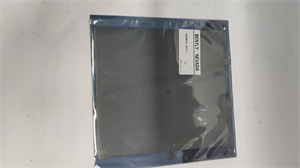
- ESD packaging. Units ship in anti-static shielding bags with desiccant and a humidity indicator.
Replacement Pitfall Guide
❗ Swapping in the wrong revision. 1C31129G04 has no diagnostics, so a replacement there hides faults instead of reporting them. Check the suffix carefully.
❗ Forgetting the personality module. The EMOD and PMOD work as a set. A damaged 1C31132G01 can make a healthy card look dead.
❗ Ignoring loop load and supply limits. Every device in the current loop adds resistance. Too much burden and the output saturates below 20mA, which reads like a bad card.
❗ Ground loops between cabinets. Analog loops shared across cabinets with separate grounds create drift and noise. Bond at one point only.
❗ Skipping the configuration check. If the I/O database still points at the old slot or range, the new card will drive nothing. Verify tags and scaling after any swap.
❗ Trusting vague seller descriptions. Some listings describe this as a relay output module with IP20 ratings and backplane bus specs copied from another product line. Cross check against the Ovation I/O manual.
Keep these in mind and you’ll cut 90% of rework time.
Compatibility Matrix & Benchmarks
| Original Model | Replacement / Successor Model | Compatibility Level | Migration Notes |
|---|---|---|---|
| 1C31129G03 | Same part, later date code | Direct | Confirm diagnostics still report after install |
| 1C31129G03 | 1C31129G04 | Needs Adaptation | Loses diagnostics, review fault handling logic |
| 1C31129G03 | 1C31129G01 or G02 | Needs Adaptation | Voltage output instead of current, field loop must change |
| 1C31132G01 | Equivalent AO PMOD | Needs Adaptation | Verify terminal layout and signal conditioning |
| Legacy Ovation AO | Modern Ovation or third party AO gateway | Needs Adaptation | Requires database, wiring, and grounding review |
- Typical Ovation AO builds provide around 4 current output points per module.
- Output accuracy and resolution depend on the card revision, loop burden, and calibration state, not on the controller alone.
Send a photo of your installed card label plus the base and personality module numbers, and I can confirm whether this is the correct drop-in for your rack.