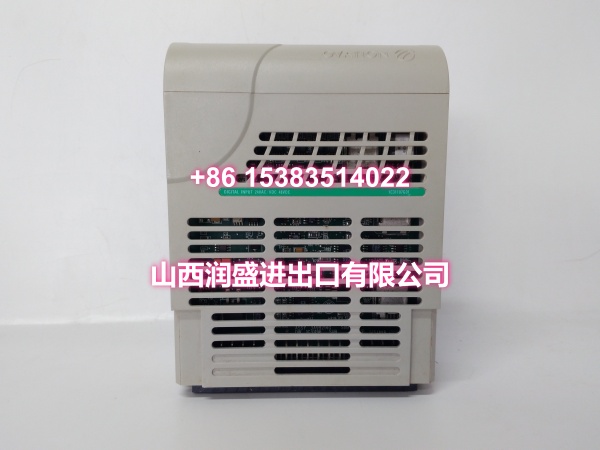
Description
Product Core Brief
- Part: 1C31107G01
- Brand: Westinghouse / Emerson Ovation
- Common listing: Digital input module for 24VDC, 48VDC, and in some listings 24VAC contact or active signals
- Core Function: Reads field contact and switch states such as pump status, valve limits, and relay contacts, then passes them to the controller
- Product Type: Ovation digital input electronic module, requires matching base and terminal wiring
- Condition: New Surplus / New Old Stock, varies by lot
Straight warning. Most pages for this part are reseller listings, not Emerson documentation, and some blogs even guess it belongs to DeltaV or describe stainless 316 wetted housings and rubber seals copied from a transmitter. Those specs are wrong. Confirm against your Ovation I/O reference manual and the silk screen before buying.
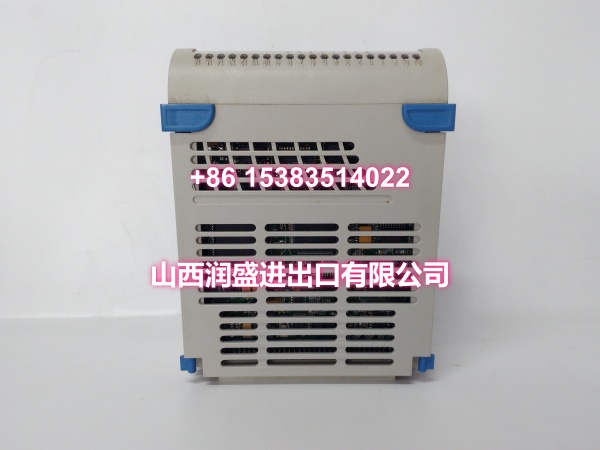
Product Introduction
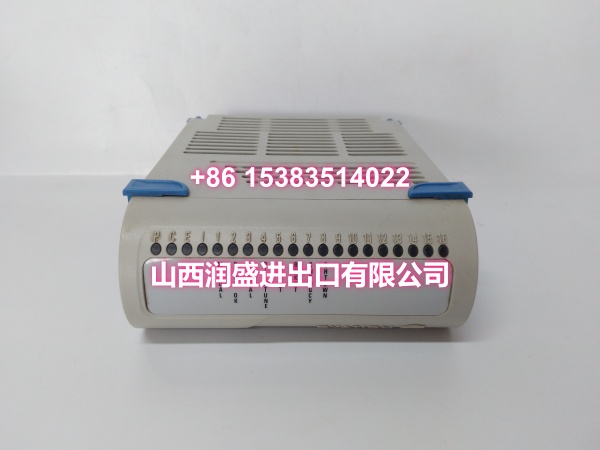
Westinghouse 1C31107G01 is generally treated as an Ovation digital input card used to collect switch and contact states in power, water, and process plants. It sits on an I/O base in a control room cabinet and feeds open or closed states into the controller for interlocks, alarms, and sequence logic.
For integrators, the value is short outage recovery. A dead DI card can freeze an interlock, hide a failed valve limit, or make an operator think a pump is running when it is not. Holding the correct spare turns a full shift of loop tracing into a quick swap, as long as the base and wiring match.
Key Technical Specifications
| Parameter | Value |
|---|---|
| Function | Digital input, listed as DI for contact and active DC signals |
| Host System | Ovation DCS |
| Input Voltage Class | 24VDC or 48VDC common, some listings include 24VAC |
| Channel Count | Varies by build, confirm on label and base, do not assume 32 |
| Isolation | Channel group isolation on many Ovation DI designs |
| Status Indication | Module LEDs plus controller diagnostics |
| Mounting | Ovation I/O base with matched terminal block |
| Hot Swap | Only where rack and procedure allow, verify first |
| Environment | Conditioned control room cabinet, low dust, non condensing |
| Documentation | Ovation I/O reference manual and module combination lists |
| Sourcing Risk | Legacy part, date code and revision vary widely |
A faster way to confirm. Emerson offers Ovation documentation and module lookup tools that return valid module combinations and wiring, which beats trusting a spare list that groups unrelated parts together.
Quality Control Process
DI cards get blamed for wiring and grounding faults, so we verify before shipping.
- Documentation cross check. We compare the label against Ovation I/O documentation to confirm voltage class and base pairing instead of trusting a reseller description.
- Label and revision audit. Silk screen, revision, and date code must match, and refurbished stickers get rejected.
- Edge connector and pin inspection. Pushed or corroded pins cause intermittent states that look like field noise. Checked under magnification.
- Rail short check. A Fluke multimeter confirms no short across backplane supply paths before power up.
- Channel pulse test. We drive each channel open and closed and confirm the state reaches the controller without sticking or doubling.
- Ground fault check. We create a deliberate ground path to confirm the assembly reports a fault instead of reading stuck inputs.
- ESD and moisture packaging. Anti-static shielding bag, desiccant, humidity indicator, rigid box.
Replacement Pitfall Guide
❗ Assuming any DI card drops in. Voltage class matters. A 24V card in a 48V loop reads stuck, and a 48V card in a 24V loop may never pick up.
❗ Confusing DI with SOE. If you need trip reconstruction, a standard DI card will not give you reliable event sequencing. Check time tagging and controller clock sync, and look at dedicated SOE hardware instead.
❗ Splitting shared commons across modules. Signals sharing a common must stay on the same assembly, otherwise channels float and trigger randomly.
❗ Ignoring the base and personality pairing. Ovation often splits function between an electronic module and a personality module, and a missing piece makes healthy hardware read garbage.
❗ Skipping the I/O database check. Swapping hardware without confirming point configuration and inversion settings leaves logic acting opposite to field reality.
❗ Trusting copied listing specs. Stainless housings, Modbus TCP, DeltaV family claims, and transmitter style seals have nothing to do with an Ovation DI card. Cross check before paying.
Compatibility Matrix & Benchmarks
| Original Setup | Replacement Option | Compatibility Level | Migration Notes |
|---|---|---|---|
| 1C31107G01 | Same part, later date code | Needs Verification | Confirm label, voltage class, revision, and base |
| 1C31107G01 | 1C31234G01 with matching P MOD | Needs Adaptation | On board 48VDC supply and wiring differ, review loop |
| 1C31107G01 | 1C31232G03 differential DI 120VAC/DC | Needs Adaptation | Different voltage class and field wiring |
| 1C31107G01 | Dedicated SOE hardware | Needs Adaptation | Verify time tagging, clock sync, and event database |
| Legacy Ovation DI | Modern Ovation I/O or remote I/O | Needs Adaptation | Database, grounding, power, and failure behavior review |
- Practical DI reliability depends on common wiring, shielding, and supply class far more than on the card label.
- If your rack is obsolete and spares keep getting harder to find, a targeted I/O migration often costs less than years of surplus hunting.
Send a photo of the installed label plus the base and terminal block, and I can confirm whether this is the correct drop-in or whether a different Ovation DI assembly fits your loop.