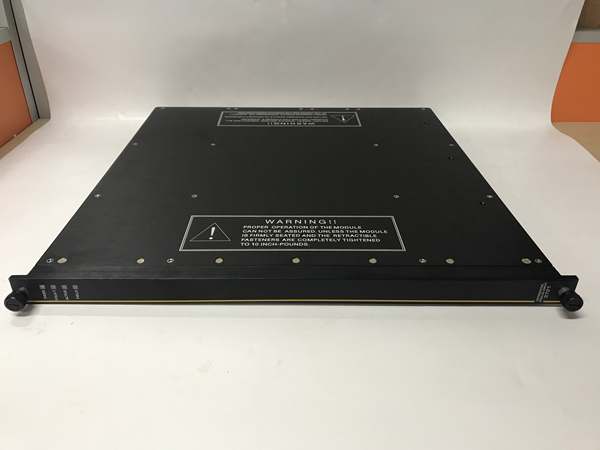
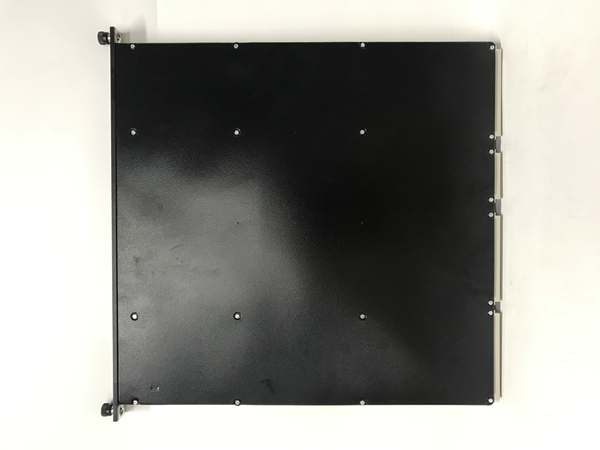
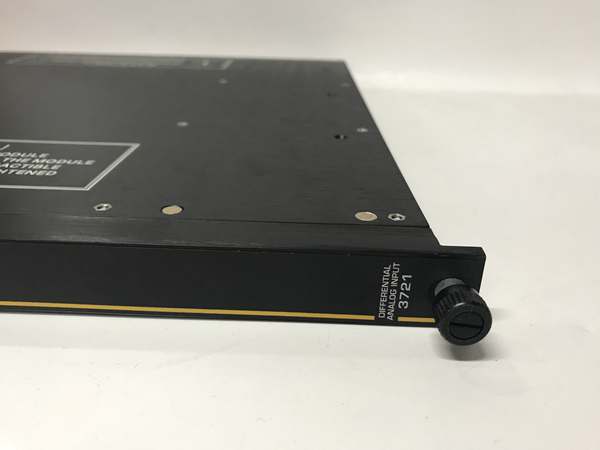
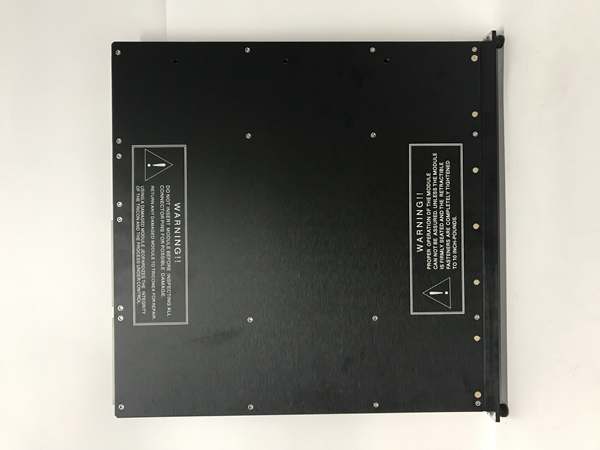
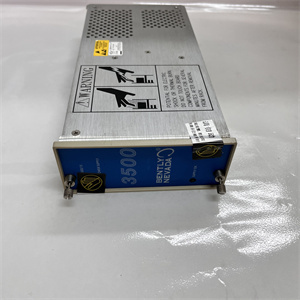
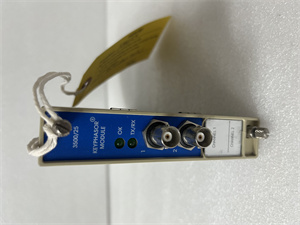
TRICONEX 3721 | 32-Ch TMR Analog Input In Stock

  • Model: 3721
  • Brand: TRICONEX (Schneider Electric)
  • Series: Tricon TMR (Triple Modular Redundancy)
  • Core Function: Acquires high-accuracy differential analog signals for SIS/ESD and process control.
  • Product Type: Analog Input Module (SIL3, TMR)
  • Key Specs: 32 differential ch | 0–5VDC/±5VDC | 10ms update | <0.15% FSR accuracy
In Stock
Manufacturer:

Our extensive catalogue, including , is available now for dispatch to the worldwide. Brand:
The listed price is not final; the actual selling price is negotiable based on current market conditions.

Description

Product Core Brief

  • Model: 3721
  • Brand: TRICONEX (Schneider Electric)
  • Series: Tricon TMR (Triple Modular Redundancy)
  • Core Function: Acquires high-accuracy differential analog signals for SIS/ESD and process control.
  • Product Type: Analog Input Module (SIL3, TMR)
  • Key Specs: 32 differential ch | 0–5VDC/±5VDC | 10ms update | <0.15% FSR accuracyTriconex 3721

    Triconex 3721

Key Technical Specifications

  • Architecture: Triple Modular Redundancy (TMR), 2oo3 voting
  • Channel Count: 32 differential, DC-coupled inputs
  • Input Ranges: 0–5VDC or –5 to +5VDC (field-configurable)
  • Resolution: 12-bit or 14-bit, programmable
  • Update Rate: 10ms per channel
  • Accuracy: <0.15% of FSR (0°C to 60°C)
  • Common Mode Rejection: –85dB (DC–100Hz)
  • Overrange Protection: 150VDC / 115VAC continuous
  • Safety Rating: IEC 61508 SIL3, TUV AK6 certified
  • Operating Temp: –40°C to +70°C
  • Power Draw: 5W typical
  • Hot-Swap: Supported (Tricon v9–v10 chassis)
  • Dimensions: 19” rack-mount, 1 slot; weight ~1.36kg


Product Introduction

TRICONEX 3721 is a 32-channel TMR analog input module for Tricon v9–v10 SIS and process control systems. It captures precision voltage signals from pressure, temperature, and flow sensors.

Its 2oo3 TMR design eliminates single points of failure. The module’s 10ms update rate and 14-bit resolution deliver stable, accurate data for safety-critical loops.


QA & Testing SOP (Transparency Building)

  1. Incoming Inspection: Verify OEM part number, serial number, hologram; check PCB for damage and connector wear.
  2. Live Testing: Seat in Tricon chassis; apply 24VDC; confirm PASS LED; 24-hour signal simulation on all 32 channels.
  3. Electrical Testing: Calibrate 0–5VDC/±5VDC ranges; verify –85dB CMR and 150VDC overrange protection.
  4. Firmware/Config Backup: Record firmware rev (e.g., v4.2.1); save channel config and calibration data.
  5. Final QC & Packaging: Anti-static bag; QC tag; shock case with calibration report.


Installation Pitfalls & Guide (Engineer to Engineer)

  • ❗ Backplane Compatibility: 3721 works only in Tricon v9–v10 chassis. It will not fit Trident or older Tricon racks.
  • ❗ Input Range Mismatch: Configuring for 0–5VDC while wiring ±5VDC causes full-scale errors. Match settings to sensor output.
  • ❗ Ground Loop Noise: Ungrounded field sensors create common-mode noise. Use isolated transmitters and single-point grounding.
  • ❗ Firmware Rev Conflict: Mismatched firmware causes voting errors. Align module rev with the host TriStation version.
  • ❗ ESD Vulnerability: Static discharge damages analog front ends. Use ESD strap and mat; $6k+ modules at risk.

Replacement Guide:

  1. Pre-install: Safe system state; back up config; power down; ESD protection.
  2. Removal: Extract module; label field wiring; note DIP switch positions.
  3. Install: Seat firmly; set switches; reconnect sensors; verify range settings.
  4. Power-on Test: Confirm PASS LED; calibrate channels; validate TMR voting health.
Triconex 3721

Triconex 3721

FAQ (Frequently Asked Questions)

Q: Is 3721 hot-swappable?A: Yes, in Tricon v9–v10 chassis. TMR voting prevents data loss; confirm system firmware supports hot-swap.

Q: What’s the warranty?A: New original: 12-month OEM warranty. Refurbished: 6-month functional warranty; excludes calibration drift.

Q: Can it handle 4–20mA inputs directly?A: No. It is voltage-only. Use external I/V converters for 4–20mA sensors.

Q: What’s the difference between 3721 and 3720?A: 3721 = 32-ch differential, 10ms update. 3720 = 16-ch single-ended, 20ms update; different pinout.

Q: What causes the FAULT LED to blink?A: Channel overrange, calibration drift, voting mismatch, or firmware error. Use TriStation diagnostics to isolate.

Q: Is 3721 obsolete?A: Not yet. Supported in current Tricon v9–v10 systems. Check Schneider Electric for EOL dates.

Q: How often should calibration be verified?A: Every 12 months per SIL3 requirements; or after sensor replacement or extreme temperature exposure.

Please note: The listed price is for reference only and is not binding. Final pricing and terms are subject to negotiation based on current market conditions and availability.