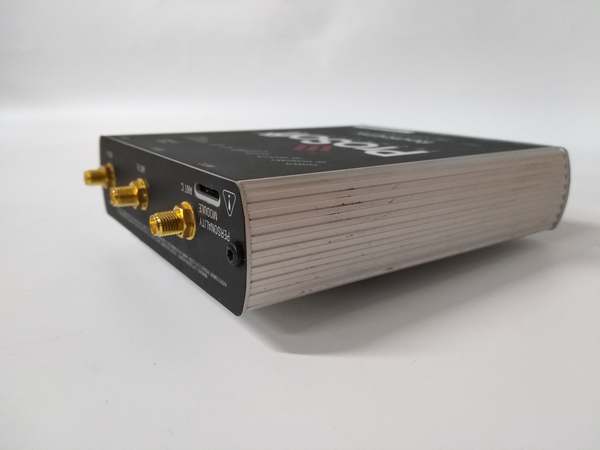
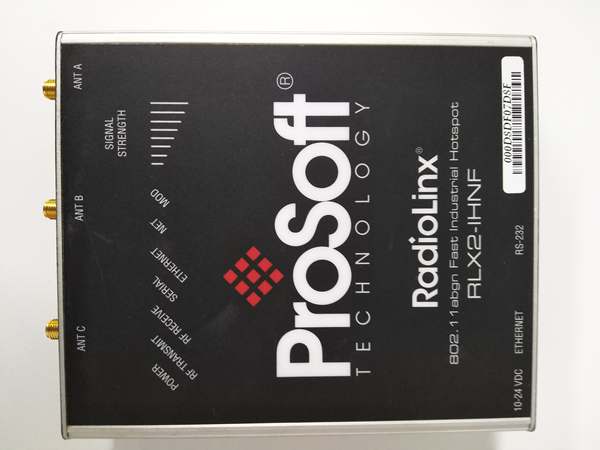
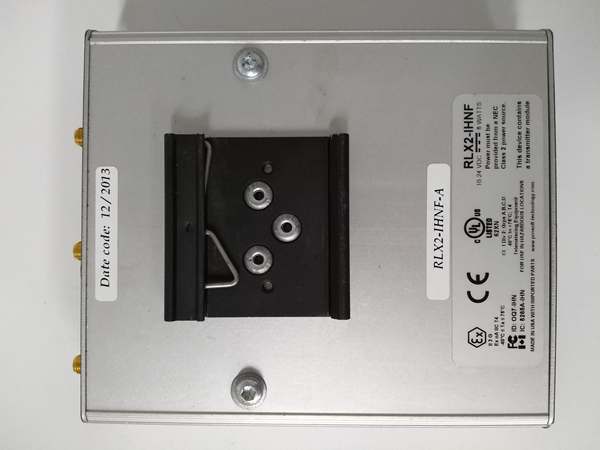
Description
Hard-Numbers: Technical Specifications
- Wireless Standards: 802.11a/b/g/n (MIMO with channel bonding), 2.4 GHz and 5 GHz bands including DFS channels
- Data Rate: Up to 300 Mbps (2-stream 802.11n), down to 6.5 Mbps (1-stream)
- Transmit Power: 22 dBm at MCS0/MCS8, 17 dBm at MCS7/MCS15 (programmable per regional limits)
- Receiver Sensitivity: -92 dBm at MCS0/MCS8, -74 dBm at 54 Mbps
- Operating Temperature: -40°C to +75°C (-40°F to +167°F) for most versions; -40°C to +70°C for Series B/C/D
- Power Input: 10-24 VDC or 802.3af PoE (15.4W max from injector)
- Power Consumption: <9W (Series B), <10W (Series C), <6W (Series D)
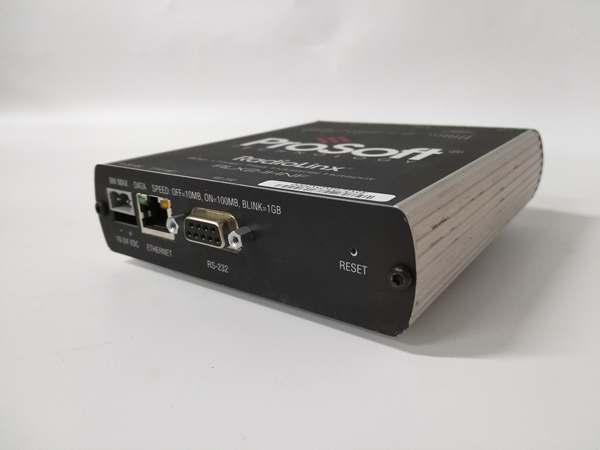
- Physical: Extruded aluminum DIN-rail mount enclosure, 5.82″ × 4.64″ × 1.48″ (14.8 × 11.8 × 3.8 cm), 1.1 lb (499 g)
- Shock/Vibration: 20g 3-axis (IEC 60068-2-27); 5g 10-150 Hz (IEC 60068-2-6)
- Interfaces: 1 × 10/100/1000 Base-T RJ45, 1 × RS232 DB9 female, 3 × RP-SMA antenna ports
- Security: WPA2-Personal/Enterprise (128-bit AES), RADIUS, MAC filtering, 802.11i, WEP legacy support
- Distance (Line-of-Sight): Up to 2 miles (3.2 km) with proper antennas

PROSOFT RLX2-IHNF-A
The Real-World Problem It Solves
This radio eliminates the need to trench conduit or run armored Ethernet cable across hazardous areas, saving days of installation time in Class I Div 2 zones. It provides a self-healing wireless backhaul for remote PLC/SCADA nodes and keeps Ethernet I/O alive on cranes, AGVs, and monorails as they roam between access points.
Where you’ll typically find it:
- Oil and gas upstream sites connecting remote wellhead RTUs to central control rooms across hazardous locations
- Automotive assembly lines and bottling plants where automated guided vehicles (AGVs) roam between access zones
- Water/wastewater treatment plants linking distributed PLC racks across campus without underground conduit
The bottom line: One radio replaces miles of conduit with a self-healing wireless path that survives vibration, temperature swings, and Class I Div 2 environments.
Hardware Architecture & Under-the-Hood Logic
The RLX2-IHNF-A operates as an intelligent wireless Ethernet bridge with its own processor and memory, transparently forwarding Layer 2 traffic between wired and wireless interfaces. It supports multiple operating modes (Access Point, Client, Repeater) and maintains network topology through Spanning Tree Protocol to prevent loops.
- Ethernet traffic enters the radio via 10/100/1000 Base-T RJ45 port, passing through internal switch logic
- Processor determines forwarding path based on configured mode (AP/Client/Repeater) and MAC address table
- Wireless interface encodes/decodes frames using 802.11n MIMO with channel bonding for 300 Mbps throughput
- Serial port (RS232) encapsulates Modbus RTU/DNP3 traffic into TCP/IP packets for wireless transmission
- QoS engine prioritizes I/O control traffic over general data using 802.1p tagging
- Spanning Tree Protocol detects and disables redundant paths to prevent broadcast storms
- IGMP snooping filters unnecessary UDP multicast traffic, reducing airtime utilization for EtherNet/IP
- Embedded EtherNet/IP object allows PLCs to read radio diagnostics via CIP messaging
- Fast roaming logic maintains sub-10ms switchover between access points using pre-authentication
- Optional microSD card stores configuration for disaster recovery during field replacement
PROSOFT RLX2-IHNF-A
Field Service Pitfalls: What Rookies Get Wrong
DFS Channel Selection Without Radar Site Survey
Deploying 5 GHz DFS channels without first confirming radar activity in the area causes intermittent link drops as the radio vacates channels when it detects radar signals.
- Field Rule: Run a site survey with spectrum analyzer or IH Browser’s built-in spectrum tool before going live. Avoid DFS channels (52-64, 100-140) in airports, coastal radar zones, or military installations unless absolutely necessary for bandwidth.
Antenna Gain Mismatch on MIMO Installations
Mixing antennas with different gain ratings (e.g., 2 dBi omni + 10 dBi Yagi) on the three RP-SMA ports breaks MIMO spatial diversity, reducing throughput and causing asymmetric link quality.
- Quick Fix: Use identical antenna models on all three ports for true MIMO operation. If using high-gain directional antennas, ensure they’re all the same model and gain rating. Document antenna positions (left/center/right) during install for consistent replacement.
PoE Budget Miscalculation on Long Cable Runs
Assuming standard PoE injectors work reliably on 300-foot cable runs causes brownouts, especially in cold ambient temperatures that increase cable resistance and voltage drop.
- Field Rule: Calculate voltage drop for your cable length and gauge. For runs over 100 meters, use 14 AWG cable or move the PoE injector closer to the radio. Verify voltage at the radio’s power input terminals under load—it should stay within 10-24 VDC range.
Ultra-Fast Roaming Misconfiguration on Moving Equipment
Leaving roaming settings at default values causes AGVs and cranes to drop connections when switching between access points, triggering I/O faults and e-stops.
- Quick Fix: Enable “Fast Roaming” in IH Browser and reduce the roaming threshold to -70 dBm or higher. Test by walking a client between access points while pinging—roaming should complete within 10 ms without packet loss. Adjust roaming aggressiveness based on physical speed of moving equipment.
Ignoring IGMP Snooping on EtherNet/IP Networks
Leaving IGMP snooping disabled floods the wireless link with unwanted multicast traffic, saturating airtime and causing I/O timeouts on critical control traffic.
- Field Rule: Always enable IGMP Snooping in the radio configuration for EtherNet/IP networks. Verify packet-per-second (PPS) rates during commissioning—unicast control traffic should dominate, not broadcast/multicast overhead.
MicroSD Card Backup Neglect During Replacement
Swapping a failed radio without first saving its configuration to the microSD card forces you to rebuild the entire network from scratch, extending downtime.
- Field Rule: Before removing any radio for replacement, use IH Browser to “Save Configuration to MicroSD Card.” When installing the replacement, ensure the microSD is transferred from the old unit. The radio boots up with the saved config, cutting recovery time from hours to minutes.