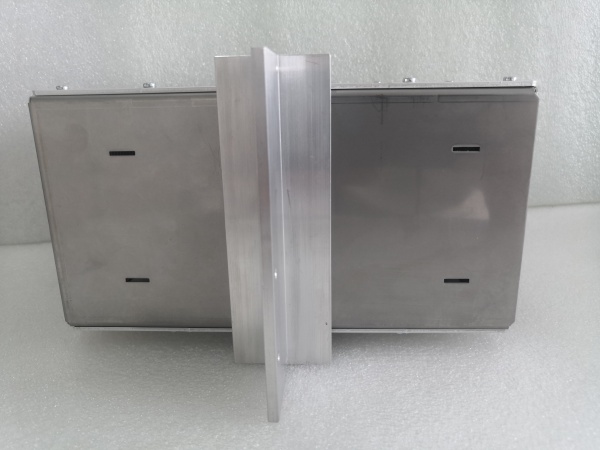
Description
Hard-Numbers: Technical Specifications
As Power Supply Unit (Primary Interpretation)
-
Power Specifications:
- Rated Output Power: 70 W
- Input Voltage Range: 100-240 VAC ±10% (Universal)
- Input Frequency: 50/60 Hz
- Output Voltage: 12 VDC
- Output Current: 5.83 A (calculated at 70W/12V)
- Efficiency: 90%
- Power Factor: 0.9 (typical at 230VAC full load)
-
Physical Characteristics:
- Dimensions: 3.2 x 1.8 x 1.2 inches (81.3 x 45.7 x 30.5 mm)
- Form Factor: Compact enclosure
- Mounting: Panel-mount or DIN rail compatible (verify manufacturer specifications)
- Weight: Not specified (estimated <500g based on dimensions)
-
Environmental Ratings:
- Operating Temperature: 0-50°C (typical for industrial power supplies, verify datasheet)
- Storage Temperature: -20-70°C (typical range)
- Humidity: 20-90% RH non-condensing
- Vibration Resistance: 0.5G (typical for compact power supplies)
- Protection Class: IP20 or IP30 (verify specific model rating)
-
Safety & Compliance:
- Safety Certifications: UL, CE, TUV (verify specific markings on unit)
- EMC Compliance: EN55032 Class B, EN61000-3-2, EN61000-3-3 (typical for universal input supplies)
- Isolation Resistance: 100 MΩ minimum (typical)
- Dielectric Strength: 3000 VAC input-output (typical)
As Mini Controller (Alternative Interpretation)
-
Controller Specifications:
- Type: Mini Programmable Logic Controller (PLC) or Automation Controller
- Control Functions: Logic control, sequence control, timing control
- Programming Interface: User-friendly programming environment with graphical interface
- I/O Support: Multiple input/output interfaces (specific count depends on model variant)
- Scalability: Supports expansion modules for additional I/O points
-
Communication & Programming:
- Communication Ports: RS-232C, USB, or Ethernet (verify specific model)
- Programming Languages: Ladder logic, function blocks, structured text (manufacturer-specific)
- Programming Tool: PC-based configuration software
- Program Storage: EEPROM or flash memory (typical for mini controllers)
-
Environmental Specifications:
- Operating Temperature: 0-50°C (industrial standard)
- Storage Temperature: -20-70°C
- Humidity: 20-90% RH non-condensing
- Vibration Resistance: 0.5G (JIS-C0911 compliant)
- Noise Immunity: 1,500 V, 1 µs (noise simulator)

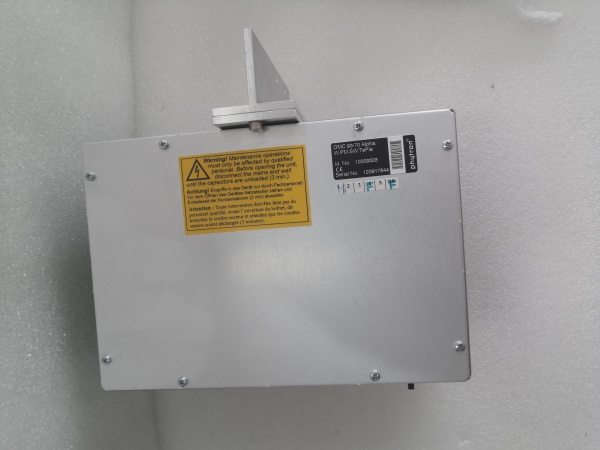
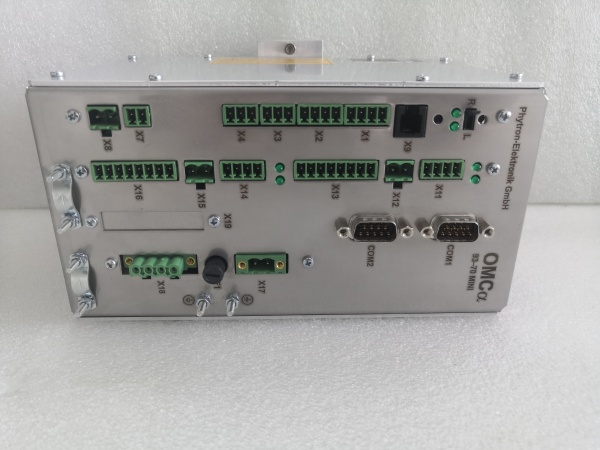
OMC OMC93-70 MINI
The Real-World Problem It Solves
As Power Supply:
The OMC93-70 MINI power supply addresses the need for compact, universal-input DC power in space-constrained applications. Its 100-240VAC universal input eliminates the need for voltage selection or region-specific models, simplifying inventory and deployment. The 90% efficiency reduces heat generation and energy costs, while the 12VDC 70W output provides sufficient power for LED lighting arrays, audio amplifiers, communication equipment, and other low-voltage DC loads.
Where you’ll typically find it:
- LED lighting systems (strips, modules, architectural lighting)
- Audio equipment (amplifiers, mixers, signal processors)
- Communication devices (routers, modems, network equipment)
- Industrial control cabinets providing 12VDC power to sensors and controllers
- Automotive test equipment and diagnostic tools
- Educational and hobbyist electronics projects
Bottom line: It delivers reliable, efficient, and compact DC power with universal input compatibility, reducing the need for multiple power supply models and simplifying global deployment.
As Mini Controller:
The OMC93-70 MINI controller provides compact, multi-functional control for industrial automation applications where space is limited but functionality requirements are moderate. Its programming environment supports multiple control paradigms (logic, sequence, timing), and the ability to expand I/O via expansion modules allows for system growth without complete controller replacement.
Where you’ll typically find it:
- Small-scale automated machinery and equipment
- Conveyor systems and material handling
- Packaging machinery and labeling equipment
- Pump and valve control systems
- Assembly lines with moderate I/O requirements
- Educational and training systems for PLC programming
Bottom line: It offers a balance of compactness, functionality, and expandability for applications that don’t require full-sized PLC systems but need more than simple relay logic.
System Architecture & Operational Logic
Power Supply Architecture:
The OMC93-70 MINI power supply implements a switching power supply topology with power factor correction (PFC) to achieve high efficiency and universal input compatibility. The input stage filters EMI and rectifies AC to DC, followed by a PFC stage that shapes input current to be sinusoidal. The DC-DC conversion stage uses high-frequency switching to generate regulated 12VDC output with feedback control for voltage stability.
Signal flow and processing logic:
-
Input Stage:
- EMI filter reduces conducted and radiated interference
- Bridge rectifier converts AC input to DC
- PFC circuit improves power factor and reduces harmonic distortion
- Bulk capacitor stores energy and smooths rectified DC
-
Switching Stage:
- High-frequency MOSFET or IGBT switches modulate power
- Transformer provides isolation and voltage transformation
- Switching frequency typically 50-100 kHz (verify datasheet)
-
Output Stage:
- Secondary rectifier converts transformer output to DC
- LC filter smooths output voltage and reduces ripple
- Feedback network monitors output voltage
- Control IC adjusts duty cycle to maintain regulation
-
Protection Circuits:
- Overcurrent protection (OCP) limits output current
- Overvoltage protection (OVP) prevents excessive output voltage
- Short-circuit protection (SCP) prevents damage from output shorts
- Thermal protection (OTP) shuts down unit if overheating occurs
-
Control Logic:
- PWM controller adjusts switching duty cycle
- Voltage feedback loop maintains output regulation
- Current limiting reduces output current during overload conditions
- Soft-start circuit limits inrush current at power-up
Mini Controller Architecture:
The OMC93-70 MINI controller implements a scan-cycle architecture typical of PLCs and programmable automation controllers. The processor reads input states, executes user programs in a deterministic scan, updates outputs, and handles communication with external devices and programming software.
Control flow and processing logic:
-
Input Scan:
- Read physical input states from I/O modules
- Sample analog inputs and perform A/D conversion
- Store input values in input image table
-
Program Execution:
- Execute user program sequentially (ladder logic, function blocks, structured text)
- Process logic operations, timers, counters, and mathematical functions
- Update intermediate results and temporary storage
-
Output Scan:
- Write output states from output image table to physical outputs
- Update analog outputs via D/A conversion
- Indicate program status via LEDs or display
-
Communication Handling:
- Process communication requests from programming software
- Handle data exchange with other controllers or HMIs
- Update status and diagnostic information
-
Watchdog and Safety:
- Monitor program execution time
- Detect and handle communication errors
- Execute safety functions and emergency stop logic
OMC OMC93-70 MINI
Field Service Pitfalls: Critical Technical Considerations
Dual Product Interpretation Confusion
The model number OMC93-70 MINI appears in literature both as a 70W power supply and as a mini controller, leading to potential specification mismatches during procurement.
- Field Rule: Always verify the physical device markings, manufacturer datasheet, and application requirements before installation. Cross-reference part numbers with supplier documentation to ensure correct product type.
Input Voltage Overlook
Despite universal input rating (100-240VAC), some applications may require specific voltage considerations (e.g., 110V vs 220V circuits, phase requirements, grounding configurations).
- Quick Fix: Verify the actual line voltage at installation site matches device ratings. For high-power applications, ensure circuit capacity and protection devices are appropriately rated. Use a multimeter to confirm line voltage before connecting the device.
Output Current Limitations
Calculating load requirements incorrectly can lead to overloading the 70W capacity (approximately 5.83A at 12VDC), causing shutdowns or reduced lifespan.
- Field Rule: Calculate total load current including peak and startup currents. Derate capacity by 20% for reliability (target ~4.7A continuous). Monitor operating temperature during initial commissioning.
Thermal Management in Confined Spaces
Compact dimensions (3.2 x 1.8 x 1.2 inches) mean the unit generates heat density that must be dissipated effectively, especially at full load.
- Field Rule: Maintain adequate ventilation around the unit (minimum 25mm clearance on all sides). Avoid enclosing in sealed compartments without forced air cooling. Monitor ambient temperature and ensure it stays within specified range.
Programming Software Compatibility (Controller Interpretation)
As a mini controller, the device requires specific programming software and communication cables that may not be readily available or compatible with all PC systems.
- Quick Fix: Obtain the correct programming software version and communication cables from the manufacturer. Verify PC compatibility (OS version, USB/serial ports) before programming. Always backup original programs before modification.
I/O Wiring and Grounding Issues (Controller Interpretation)
Incorrect I/O wiring, ground loops, or lack of proper shielding can cause erratic operation, false signals, or equipment damage.
- Field Rule: Use shielded cables for analog and long-distance digital I/O. Maintain single-point grounding. Verify input voltage levels match device requirements (24VDC vs 5VDC vs relay outputs). Test I/O functionality with simple programs before full deployment.
Expansion Module Compatibility (Controller Interpretation)
Adding expansion modules without verifying compatibility may cause communication failures or system instability.
- Field Rule: Consult manufacturer compatibility charts before adding expansion modules. Verify power supply capacity can support additional I/O loads. Update controller firmware to support new modules if required.
Inrush Current Management (Power Supply)
Multiple power supplies on the same circuit may have cumulative inrush currents that trip breakers or cause voltage sags during power-up.
- Field Rule: Use delay-type breakers or stagger power-on sequences for multiple units. Consider NTC thermistors or soft-start circuits if required by application. Monitor voltage during initial power-up sequence.
EMI and Noise Sensitivity
Switching power supplies can generate electrical noise that affects sensitive equipment nearby. Conversely, the unit may be sensitive to external EMI.
- Field Rule: Use ferrite cores on input and output cables. Avoid running power cables parallel to signal cables. Provide adequate distance between the power supply and sensitive analog or communication equipment. Verify proper grounding per manufacturer specifications.