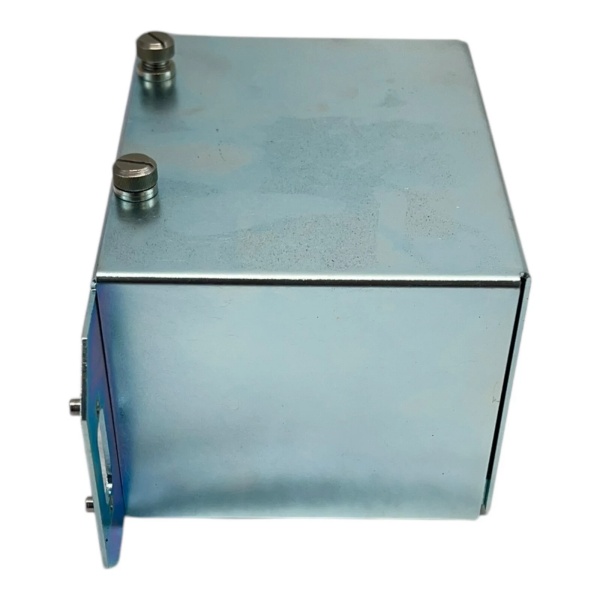
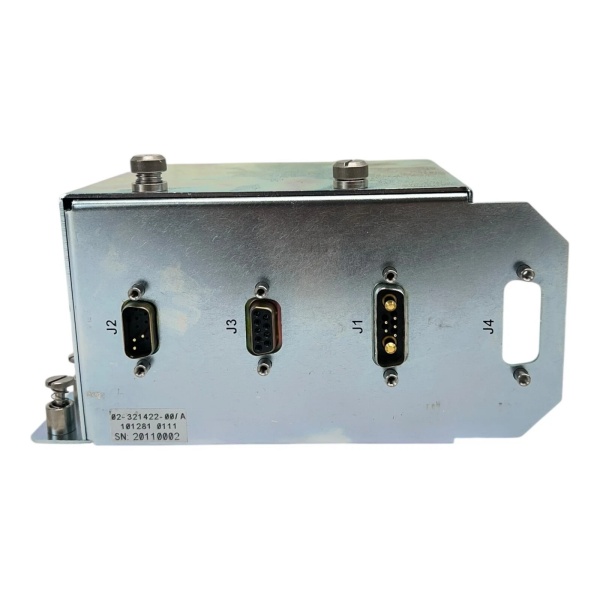
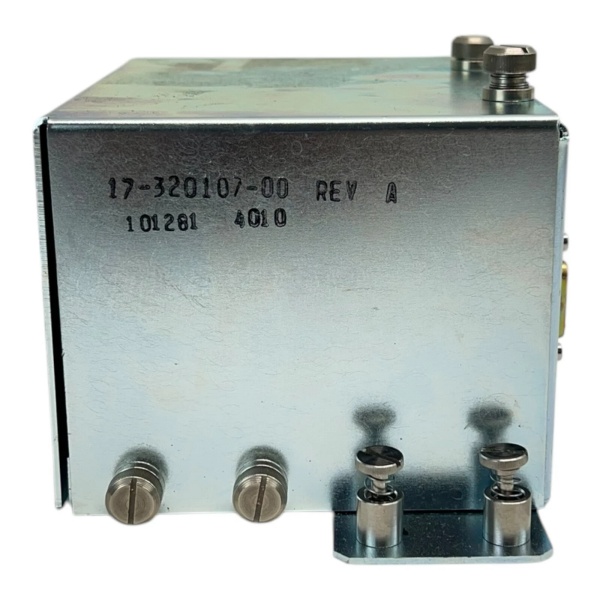
Description
Hard-Numbers: Technical Specifications
-
Function: Field terminal panel / I/O distribution board
-
System Compatibility: Novellus C1 CVD (150mm and 200mm wafer sizes)
-
I/O Capacity: 20+ field cable connections (discrete I/O, analog, serial, power)
-
Signal Types:
-
Discrete inputs/outputs (24V DC, NPN/PNP)
-
Analog I/O (4-20mA, 0-10V)
-
RS-232/RS-485 serial communications
-
Thermocouple inputs (Type K, Type J)
-
AC power distribution (120/240V heater circuits)
-
-
Connection Method: Screw terminals, IDC headers, D-sub connectors (field-dependent)
-
Isolation: Optical isolation on discrete I/O (1500V DC)
-
Operating Temperature: 0°C to +50°C (ambient, chassis-mounted)
-
Power: +24V DC (system power), +5V DC (logic power) from C1 controller
-
Mounting: Chassis-mounted in C1 system enclosure
-
Dimensions: Standard C1 panel mount (exact dimensions per C1 system configuration)
-
Weight: Approximately 2-3 kg (depending on configuration)

Novellus 02-00374-00
The Real-World Problem It Solves
The Novellus C1 CVD system has dozens of field devices—gas panel valves, pressure controllers, heater zones, robot arms, vacuum pumps—that all need to talk to the central controller. Running individual cables back to the controller creates a rat’s nest that’s impossible to troubleshoot and a nightmare to modify. The 02-00374-00 terminal panel consolidates all these field connections into one organized interface, with clear labeling and separation of power/signal classes. When the original 02-00072-00 panels started failing due to corrosion and obsolete connectors, the NG (New Generation) version brought modern termination and better isolation.
Where you’ll typically find it:
-
Legacy C1 CVD systems: Replacing obsolete 02-00072-00 terminal panels in 150mm and 200mm oxide/nitride deposition systems.
-
Retrofit projects: C1 NG upgrades where the terminal panel is swapped to accommodate new PLC-based control systems (Omron, etc.) while keeping existing field wiring.
-
Refurbished equipment: Third-party remanufactured C1 systems where the terminal panel is rebuilt with new connectors and isolation components.
Bottom line: It’s the organized handshake between your field devices and the C1 controller—without it, you’re tracing wires through a haystack at 2 AM when the reactor faults out.
Hardware Architecture & Under-the-Hood Logic
This isn’t just a passive terminal block. The 02-00374-00 is an active PCA with conditioning circuitry, isolation, and protection for each I/O channel. Field cables terminate on the front or top edge; the back side connects to the C1 controller (or modern PLC replacement) via ribbon cables or discrete wiring harnesses. The board separates high-voltage heater circuits from low-level sensor signals to prevent noise coupling.
-
Field termination: Screw terminals, spring-clamp terminals, or D-sub connectors accept field cables from gas panels, pumps, and sensors. Each channel is labeled for function (e.g., “LL Pressure,” “Throttle Valve,” “Heater Zone 1”).
-
Signal conditioning: Discrete inputs pass through optocouplers for isolation; analog signals see RC filtering and surge protection; thermocouple inputs have cold-junction compensation.
-
Power distribution: Fused +24V DC rails feed field devices; AC heater circuits pass through solid-state relays or contactor drivers on the panel.
-
Controller interface: Conditioned signals route to the C1 controller (or replacement PLC) via backplane connectors or cable harnesses. The NG version uses standard D-sub or terminal blocks compatible with modern PLCs.
-
Status indication: LEDs on the panel show power status, communication activity, and fault states for critical channels.
Novellus 02-00374-00
Field Service Pitfalls: What Rookies Get Wrong
Confusing 02-00072-00 with 02-00374-00
The older “Classic” C1 systems used the 02-00072-00 terminal panel. The NG (New Generation) 02-00374-00 has different pinouts, connector types, and isolation schemes. Swapping one for the other without checking compatibility fries I/O channels or leaves devices unpowered.
-
Field Rule: Verify the part number on the existing panel before ordering. Look for “NG” or “New Generation” markings. If you’re retrofitting a Classic C1 to NG, you’ll need the full upgrade kit (terminal panel + PLC + harnesses), not just the panel. Check that your gas panel, heater control, and robot interfaces match the NG pinout—some 150mm systems had unique configurations.
Ignoring Corrosion on Field Terminals
CVD systems run corrosive gases (SiH4, NH3, WF6) that seep into the enclosure. Terminal screws corrode, resistance rises, and you get intermittent faults that look like software problems. I’ve seen heater zones fault out because a terminal screw had 10 ohms of corrosion resistance.
-
Quick Fix: During PMs, torque all terminal screws to spec (usually 5-7 in-lb for Phoenix Contact-type terminals). Look for green or white corrosion on screw heads—replace the terminal block if you see it. Apply NO-OX-ID or similar antioxidant compound to clean terminals, not dielectric grease (which traps moisture). Check the enclosure positive pressure—if the purge air fails, corrosive gases infiltrate the electronics bay.
Mixing Signal Classes on the Same Terminal Strip
Rookies run 120V heater wiring next to 4-20mA pressure sensor signals on adjacent terminals. The magnetic field from the heater current induces noise in the analog loop—your pressure reading drifts 0.5 PSI every time the heater cycles.
-
Field Rule: Maintain separation: high voltage ( heaters, pumps) on one end of the panel, low-level signals (pressure, TCs) on the other. Use shielded cable for analog signals and ground the shield at the panel end only. If you must cross high-voltage and low-signal wiring, do it at 90 degrees, not parallel. The 02-00374-00 has designated zones for power vs. signal—respect the silkscreen labels or pay the price in ghost faults.