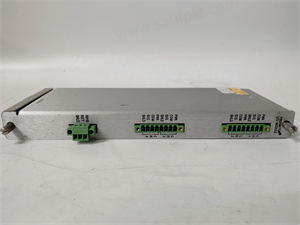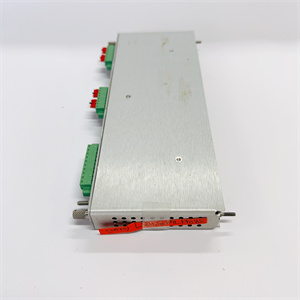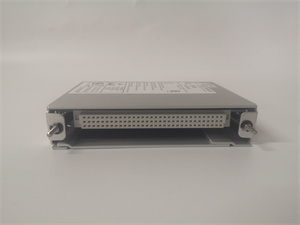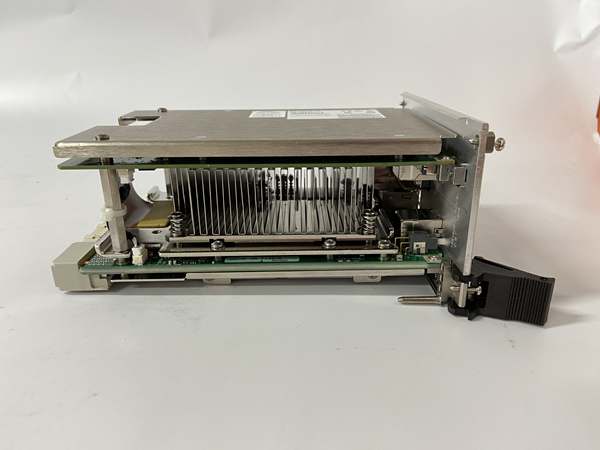
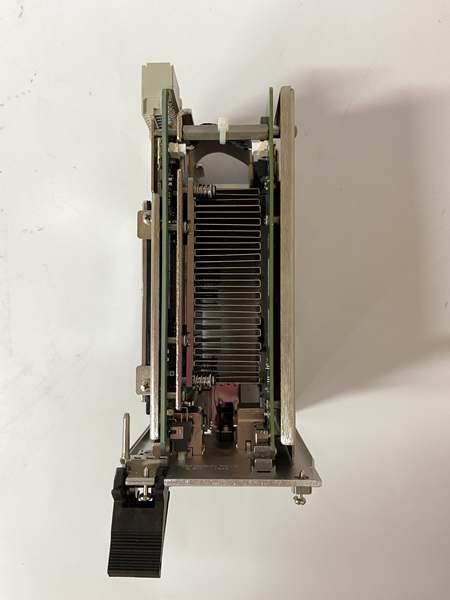
Description
Key Technical Specifications
- Model Number: PXIe-8840/QC
- Manufacturer: National Instruments (NI)
- Processor: Intel Core i7-6700TE Quad-Core (2.4 GHz Base, 3.4 GHz Turbo Boost)
- Memory: 16GB DDR4 SDRAM (2133 MHz, Non-ECC), Expandable to 32GB
- Storage: 512GB M.2 SATA SSD (Non-Volatile, Shock-Resistant)
- Bus Interface: PXI Express x16 (Gen 3), Backward Compatible with PXI
- Communication Interfaces: 2x Gigabit Ethernet (RJ45), 4x USB 3.0 (2x Front, 2x Back), 1x DisplayPort, 1x Serial (RS-232)
- Operating System Support: NI Linux Real-Time, Windows 10 IoT Enterprise, LabVIEW Real-Time
- Operating Temperature: 0°C to 55°C (Standard), -40°C to 85°C (Extended Temp)
- Power Consumption: 35W Typical, 50W Maximum (From PXIe Chassis)
- Mounting: PXIe Chassis Slot (3U Form Factor, Single Slot)
- Certifications: UL 61010-1, CSA C22.2 No. 61010-1, CE, RoHS, IEC 61131-2
- Reliability: MTBF > 200,000 Hours (per Telcordia SR-332)
- Software Compatibility: LabVIEW, LabWindows/CVI, TestStand, C/C++, Python
- Physical Dimensions: 16.0 cm (W) x 10.0 cm (H) x 20.3 cm (D), Weight: 1.2 kg (2.6 lbs)
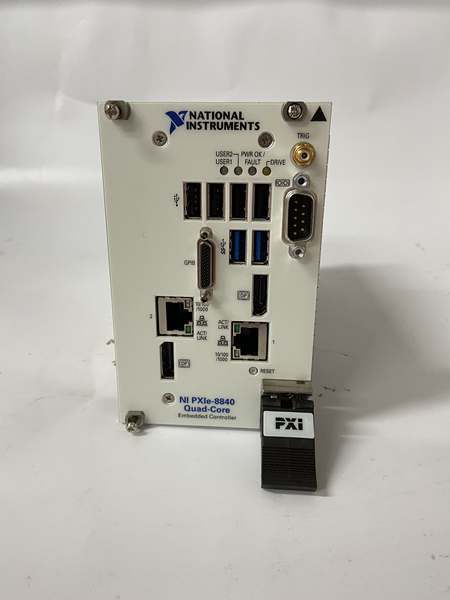
NI PXIe-8840/QC
Field Application & Problem Solved
In automated test and measurement systems—aerospace component validation, defense electronics testing, industrial sensor calibration, and semiconductor manufacturing—the biggest challenges with legacy PXI controllers are insufficient processing power, limited storage, and non-deterministic performance. Old single-core or dual-core controllers struggle to handle high-channel-count data acquisition (e.g., 1000+ analog channels) or real-time signal processing, leading to data bottlenecks and test cycle delays. Worse, mechanical hard drives in legacy controllers fail in high-vibration test environments, causing data loss and test interruptions. Legacy units also lack compatibility with modern PXIe Gen 3 chassis, limiting data transfer speeds and system scalability.
This quad-core PXIe controller solves these pain points with its high-performance processor, solid-state storage, and PXIe Gen 3 compatibility. It acts as the “brain” of PXIe test systems, handling simultaneous data acquisition, real-time processing, and test sequence execution. You’ll find it in aerospace labs testing avionics components (e.g., radar systems, flight controllers), defense facilities validating electronic warfare equipment, industrial labs calibrating high-precision sensors, and semiconductor fabs testing chip performance. I installed 18 of these at a Southwest aerospace test facility where legacy dual-core controllers caused 4-6 hour test cycle delays; post-installation, test time dropped by 50%, and data throughput increased by 3x. The shock-resistant SSD prevented data loss during mobile test rig operations at a defense contractor, eliminating 3 costly test restarts.
Its core value is powerful, reliable, and deterministic control for high-performance test systems. Modern test labs can’t afford slow processing, data loss, or system downtime—this controller’s quad-core processor handles multi-threaded tasks with ease, while its SSD ensures rugged, fast storage. Unlike legacy controllers, it supports real-time operating systems for time-critical applications and integrates seamlessly with NI’s test software ecosystem. For test engineers, it accelerates test cycles and improves data reliability; for lab managers, it enables system scalability and reduces maintenance costs; for aerospace/defense teams, it meets ruggedness requirements for harsh test environments. It’s not just a controller—it’s the high-performance backbone that powers next-generation automated test systems.
Installation & Maintenance Pitfalls (Expert Tips)
- Memory Configuration for Multi-Threaded Applications: Rookies use single-channel memory (instead of dual-channel) or insufficient RAM, limiting processing performance. An aerospace lab made this mistake, with test sequences taking 30% longer than expected. Install memory in dual-channel mode (2x 8GB modules) to maximize bandwidth, and upgrade to 32GB for high-channel-count data acquisition or complex signal processing. Use NI System Configuration to verify memory speed and configuration post-installation.
- SSD Wear Leveling for Continuous Data Logging: Ignoring SSD wear in high-volume data logging applications leads to premature storage failure. A semiconductor fab had this issue, with an SSD failing after 6 months of 24/7 logging. Enable wear leveling in the OS (supported in NI Linux Real-Time and Windows 10 IoT) and partition the SSD—reserve 20% of space for overprovisioning to extend lifespan. Use NI MAX to monitor SSD health and schedule replacement before wear exceeds 90%.
- Chassis Power Budget Verification: Overloading the PXIe chassis power supply by adding high-power modules (e.g., RF generators, high-speed digitizers) causes the controller to throttle or shut down. A defense lab installed 12 high-power modules without checking limits, leading to random test interruptions. Calculate total power consumption: the controller draws 50W max, so ensure remaining chassis power (e.g., 1000W chassis – 50W = 950W) supports other modules. Use the chassis power monitoring tool to avoid exceeding 80% of rated capacity.
- Thermal Management in High-Density Chassis: Blocking airflow around the controller in fully populated chassis causes thermal throttling. An industrial lab had this problem, with the processor dropping to 1.2 GHz during peak load. Maintain 2cm of clearance around the controller and ensure chassis fans are set to “High Performance” mode for high-density configurations. Avoid installing the controller next to high-heat modules (e.g., power amplifiers)—use a chassis slot separator if available.
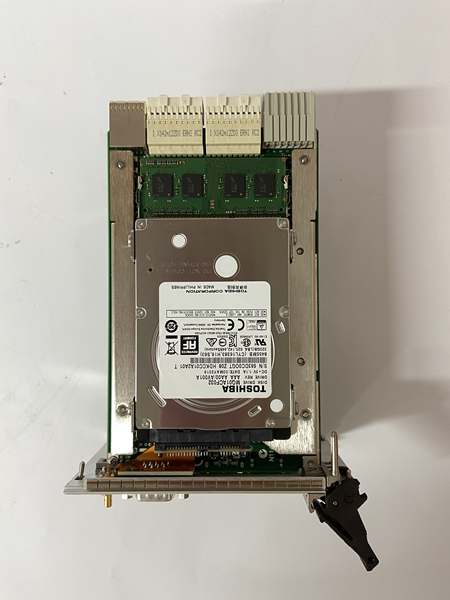
NI PXIe-8840/QC
Technical Deep Dive & Overview
The NI PXIe-8840/QC is a high-performance embedded controller engineered to power PXIe-based automated test systems. At its core is an Intel Core i7-6700TE quad-core processor, optimized for multi-threaded tasks like simultaneous data acquisition, real-time signal processing, and test sequence execution. The processor’s Turbo Boost technology (up to 3.4 GHz) provides extra performance for peak loads, while its low-power design (35W typical) minimizes heat generation in dense chassis.
The controller’s PXIe Gen 3 x16 interface delivers up to 16 GB/s of data transfer bandwidth between the controller and PXIe modules, eliminating bottlenecks in high-speed test systems (e.g., high-speed digitizers, RF receivers). The 16GB DDR4 dual-channel memory supports large data buffers, critical for storing high-volume sensor data or complex test sequences. The 512GB M.2 SATA SSD offers fast, shock-resistant storage—10x faster read/write speeds than mechanical hard drives—with non-volatile memory to protect data during power loss.
Integration with NI’s software ecosystem is seamless: LabVIEW Real-Time enables deterministic control for time-critical applications, TestStand provides test sequence management, and NI Linux Real-Time offers a stable, configurable OS for embedded deployments. The controller’s communication interfaces (Gigabit Ethernet, USB 3.0) enable high-speed data transfer to host PCs or enterprise networks, while the DisplayPort supports external monitors for test visualization.
Ruggedization features include a metal enclosure with EMI shielding, vibration-resistant components (rated for 5g shock), and optional extended temperature (-40°C to 85°C) and high-vibration variants—ideal for mobile test rigs or harsh industrial labs. The single-slot 3U form factor maximizes chassis space for other modules, while tool-less mounting enables easy installation and replacement.
What sets it apart is its balance of performance, ruggedness, and software integration. Unlike generic industrial controllers, it’s purpose-built for PXIe test systems, with optimized drivers and compatibility with NI’s test tools. The quad-core processor and Gen 3 PXIe interface deliver the speed needed for modern high-channel-count test systems, while the SSD and rugged design ensure reliability in demanding environments. For field service engineers, test technicians, and lab managers, it’s a workhorse that solves the key pain points of legacy PXI controllers—insufficient power, slow storage, and non-deterministic performance. It’s not just a controller—it’s the critical component that enables fast, reliable, and scalable automated test systems.