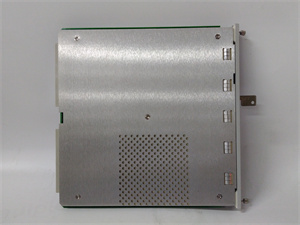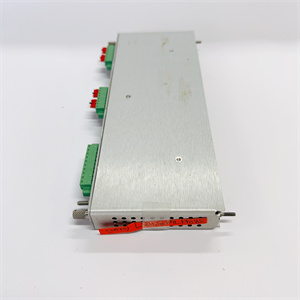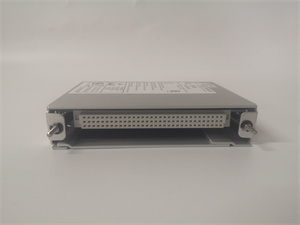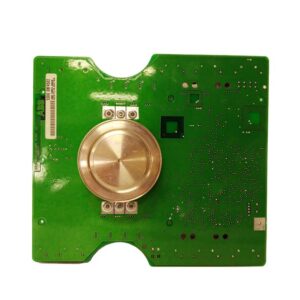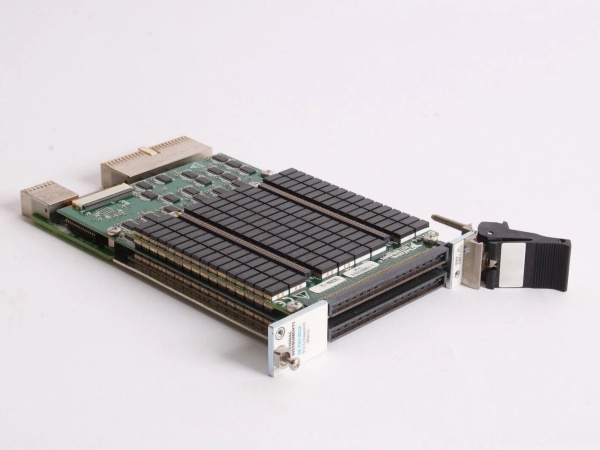
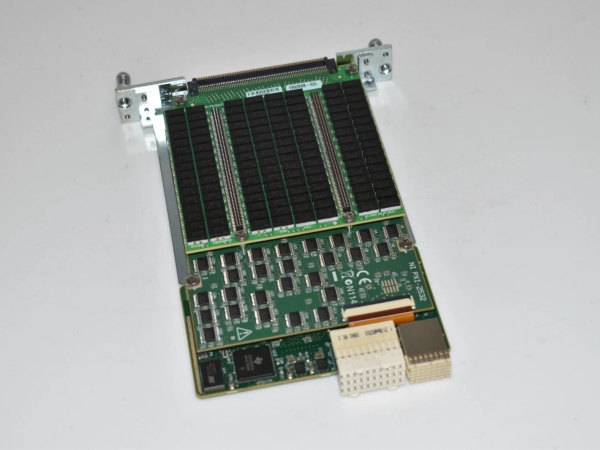
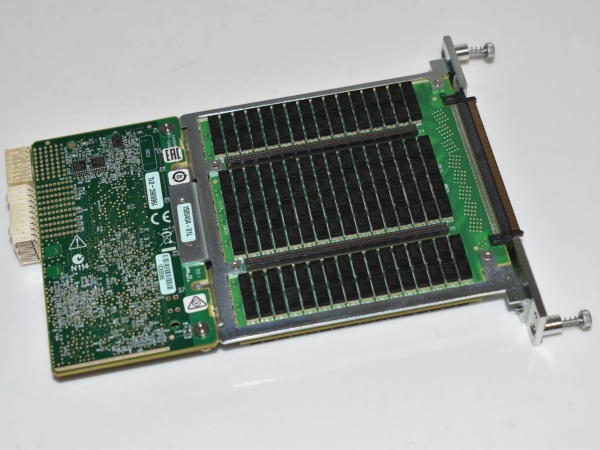
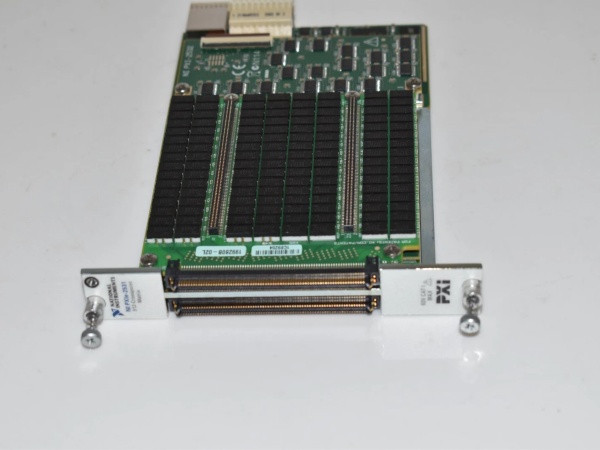
Description
Key Technical Specifications
- Model Number: PXIe-2737
- Manufacturer: National Instruments (NI)
- Channel Count: 32 Independent Analog Output Channels
- Resolution: 16 Bits (Digital-to-Analog Converter, DAC)
- Update Rate: Up to 1 MS/s Per Channel (Simultaneous Update Support)
- Output Ranges: ±10V, ±5V (Software-Configurable Per Channel)
- Output Impedance: 0.1 Ω (Typical)
- Maximum Output Current: 20 mA Per Channel (Continuous), 50 mA (Peak)
- Isolation: 2500V AC Channel-to-Chassis, 500V AC Channel-to-Channel
- Settling Time: <10 µs (To ±0.01% of Full Scale)
- Non-Linearity: ±0.01% of Full Scale (Typical)
- Operating Temperature: 0°C to 55°C (Standard), -40°C to 85°C (Extended Temp)
- Power Consumption: 25W Typical, 35W Maximum (From PXIe Chassis)
- Bus Interface: PXIe Gen 2 x4 (320 MB/s Data Transfer Rate)
- Connectors: 4x 68-Pin VHDCI (Panel-Mounted), Terminal Block Adapter Optional
- Certifications: UL 61010-1, CSA C22.2 No. 61010-1, CE, RoHS, IEC 61131-2
- Software Compatibility: LabVIEW, LabWindows/CVI, C/C++, Python, NI-DAQmx
- Physical Dimensions: 16.0 cm (W) x 10.0 cm (H) x 20.3 cm (D), Weight: 1.3 kg (2.9 lbs)

NI PXI-2531
Field Application & Problem Solved
In industrial control testing, power electronics validation, and process automation simulation—aerospace actuator control testing, automotive powertrain simulation, industrial PLC/DCS validation, and power inverter testing—the biggest challenges with legacy analog output modules are limited channel density, insufficient voltage range, and poor isolation. Older 16-channel modules require two slots per 32 channels, overcrowding PXIe chassis and increasing system complexity for high-channel-count applications (e.g., 128-channel process control simulators). Worse, legacy modules with <±10V output range or no channel-to-channel isolation can’t replicate industrial control signals or protect against electrical transients, leading to test inaccuracies or module damage. Slow update rates (<500 kS/s) also fail to simulate fast-changing industrial processes, limiting test realism.
This 32-channel high-voltage analog output module solves these pain points with its high density, industrial-grade voltage range, and robust isolation. It packs 32 independent channels into a single PXIe slot, doubling the density of 16-channel legacy units and enabling compact, scalable test systems. You’ll find it in aerospace labs simulating 24V actuator control signals for flight control systems, automotive test facilities replicating powertrain sensor inputs for ECU validation, industrial automation labs testing PLCs with multiple 0-10V process signals, and power electronics facilities generating reference signals for inverter testing. I installed 24 of these at a Midwest industrial automation supplier where legacy 16-channel modules required 48 slots for 768 channels; post-installation, slots were cut to 24, and PLC test cycle time dropped by 35% (from 4 hours to 2.6 hours per unit). The 2500V isolation protected modules from transients in a power electronics lab, eliminating 3 costly module failures that occurred monthly with non-isolated legacy units.
Its core value is industrial-grade, high-density analog signal generation with reliability and flexibility. Modern test systems can’t afford chassis overcrowding, signal limitations, or component damage—this module’s 32-channel density optimizes space, while its ±10V range and isolation replicate real-world industrial conditions. Unlike generic AO modules, it offers simultaneous update support and fast settling time, ensuring accurate simulation of dynamic processes. For test engineers, it enables realistic, high-channel-count simulations; for manufacturing teams, it reduces test costs and cycle times; for industrial control developers, it validates systems under real-world electrical conditions. It’s not just an AO module—it’s a critical tool for industrial test and validation.
Installation & Maintenance Pitfalls (Expert Tips)
- Output Current Limitation for Load Matching: Rookies exceed the 20 mA continuous current rating, causing thermal shutdown or signal distortion. A power electronics lab drove 30 mA per channel into resistive loads, leading to module overheating. Calculate load resistance for your voltage range (e.g., ≥500 Ω for ±10V to stay under 20 mA). Use external amplifiers for high-current applications (>20 mA) and monitor channel current via NI-DAQmx diagnostics.
- Isolation Grounding to Prevent Ground Loops: Improper grounding negates the module’s isolation, leading to signal noise or damage. An automotive lab grounded both the module and load, creating a ground loop that corrupted ECU test data. Use single-point grounding—ground only the module chassis to the test system ground. Keep load grounds isolated from the module ground, and use twisted-pair shielded cables with the shield grounded at the module end.
- Channel Configuration for Mixed-Voltage Ranges: Overlooking per-channel voltage configuration causes signal clipping. A PLC test lab used ±5V for all channels, but some sensors required ±10V, leading to truncated signals. Use NI MAX to configure voltage ranges per channel based on the load’s requirements. Verify output voltage with a multimeter before connecting loads—ensure no channel exceeds its configured range.
- Thermal Management in High-Density Chassis: Ignoring heat buildup in fully populated chassis causes thermal throttling. A test lab installed 8 high-power modules (including 4 of these AO modules) in a 16-slot chassis, leading to reduced update rates. Maintain 2 cm clearance around the module and set chassis fans to “High Performance” mode. Avoid installing next to high-heat modules (e.g., power amplifiers) and use chassis slot separators if available. Monitor module temperature via NI MAX and shut down unused channels to reduce heat.
NI PXI-2531
Technical Deep Dive & Overview
The NI PXIe-2737 is a high-density, high-voltage analog output module engineered for industrial test and validation. At its core is a 16-bit DAC per channel, optimized for industrial-grade performance with ±0.01% non-linearity and <10 µs settling time—critical for replicating precise, dynamic process signals. The DACs support simultaneous updates across all 32 channels, enabling synchronized signal generation for multi-axis control systems or parallel process simulation.
Each channel features software-configurable voltage ranges (±10V/±5V) and 2500V AC channel-to-chassis isolation, protecting the module from electrical transients common in industrial environments. Channel-to-channel isolation (500V AC) prevents cross-talk and ensures signal integrity when generating mixed-range signals. The low output impedance (0.1 Ω) enables driving resistive and capacitive loads without signal degradation, while the 20 mA continuous current rating supports most industrial sensors and actuators.
The PXIe Gen 2 x4 interface delivers 320 MB/s data transfer rate, enabling high-speed waveform download to the module’s on-board memory and continuous update rates up to 1 MS/s. NI-DAQmx drivers provide a unified software interface for configuration, synchronization, and diagnostics, while integration with LabVIEW enables graphical programming of complex waveforms (e.g., sine waves, square waves, arbitrary functions).
Ruggedization features include a metal enclosure with EMI shielding, vibration-resistant connectors (rated for 5g shock), and optional extended temperature operation—ideal for harsh industrial test environments. The 4x 68-Pin VHDCI connectors provide organized, high-density I/O, simplifying wiring to industrial loads and test equipment.
What sets it apart is its industrial focus—balancing high density, robust isolation, and precise signal generation. Unlike laboratory-grade AO modules, it’s engineered to withstand industrial electrical conditions while delivering the performance needed for validation. For field service engineers and test technicians, it’s a workhorse that solves the key pain points of legacy AO modules—limited density, insufficient isolation, and narrow voltage ranges. It’s not just an analog output module—it’s a reliable tool for industrial test systems that demand realism, scalability, and durability.