Description
Key Technical Specifications
| Technical Item | Details |
|---|---|
| Manufacturer | National Instruments (NI) |
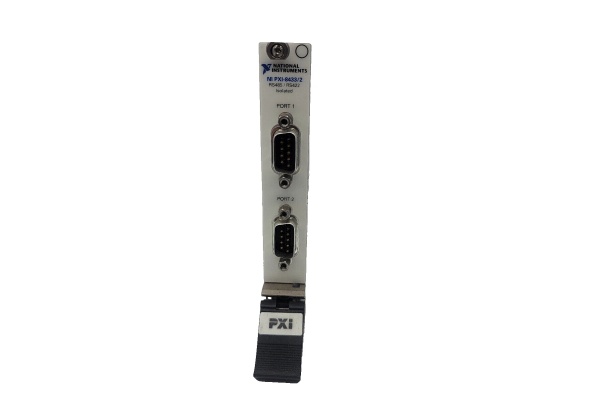
| Port Count | 2 independent configurable RS – 485/RS – 422 ports |
| Protocol Support | RS – 485, RS – 422, and compatible with standard serial communication protocols such as ASCII and Binary |
| Data Rate | Up to 3 Mbps; supports custom baud rates from 2 bps to 3 Mbps with baud rate accuracy within 1.3% |
| Communication Mode | Software – selectable 2 – wire (half – duplex) and 4 – wire (full – duplex) transceiver modes |
| Buffer Size | 128 bytes transmit/receive FIFO per port |
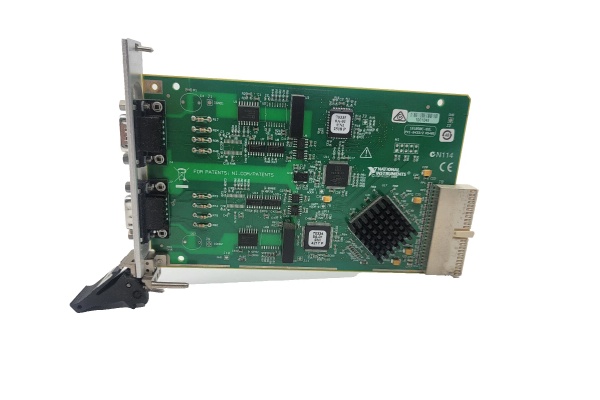
| Bus Interface | PXI hybrid, single – slot 3U form factor |
| Isolation Performance | Provides port – to – PC and port – to – port isolation, up to 2000V optical isolation |
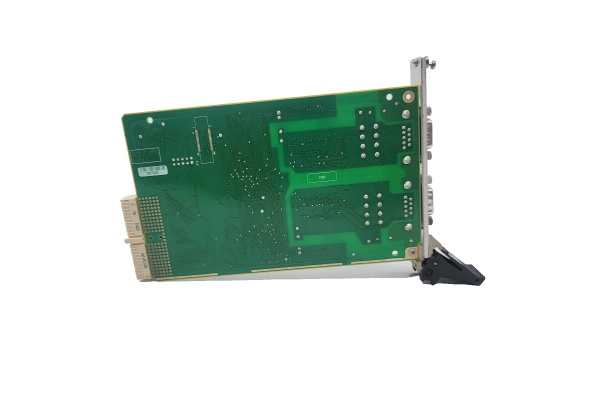
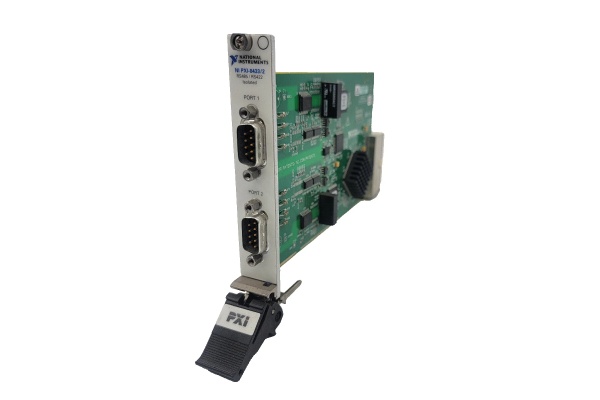
| Connectors | 2 DB – 9 male connectors |
| Operating Temperature | 0°C – 55°C (optimal performance range) |
| Storage Temperature | – 20°C – 70°C |
| Power Consumption | Typical 725 mA, maximum 1 A at +5 VDC |
| Physical Dimensions | 6.37 x 3.94 inches, weight 125 g |
| Software Compatibility | NI – Serial driver, compatible with LabVIEW, LabWindows/CVI, and supports Windows and real – time operating systems |
NI PXI-8433/2
Field Application & Problem Solved
In scenarios like lithium – ion battery test benches, small – scale industrial instrument networks, and high – interference factory instrument control, legacy serial modules often face problems such as data corruption due to ground loops, insufficient isolation leading to device damage, and high CPU overhead during high – speed communication. For example, in lithium – ion battery test systems, multiple charge – discharge modules and temperature sensors need stable serial communication, but ordinary serial modules are susceptible to electromagnetic interference from test equipment, resulting in inaccurate test data. Besides, traditional serial communication relies on CPU polling for data transmission, which occupies a lot of CPU resources and affects the synchronization of the entire test system.
The NI PXI – 8433/2 solves these pain points effectively. Its multi – level isolation design eliminates ground loop interference, ensuring reliable data transmission in harsh industrial environments. The high – performance DMA transfer function reduces CPU overhead significantly, guaranteeing the smooth operation of the entire system. It is widely used in lithium – ion battery test systems to connect charge – discharge modules and temperature sensors. It is also applied in small – scale manufacturing workshops for communication between PLCs and on – site instruments, and in electronic test labs for data interaction between multiple test devices. A case in point is that a battery test facility previously had a 20% data error rate when using non – isolated serial modules; after replacing with the PXI – 8433/2, the data error rate dropped to less than 1%, and the CPU occupancy rate of the test system decreased by 30%.
Installation & Maintenance Pitfalls (Expert Tips)
- Connector Matching Check: The module uses DB – 9 male connectors. Novices may mistakenly use mismatched cables (such as DB – 9 female – to – female) which leads to poor contact. It is necessary to confirm that the connecting cable is a DB – 9 female – to – male type that matches the module, and use a multimeter to test the continuity of the cable before installation to avoid communication failures caused by broken wires.
- Isolation Protection Avoidance: Do not bypass the module’s isolation circuit in pursuit of convenient wiring. In high – voltage industrial environments, this behavior will not only cause data transmission errors but also may damage the module and connected instruments due to voltage surges. For equipment with special voltage requirements, external surge protectors can be added to further enhance protection.
- Baud Rate and Communication Mode Matching: Inconsistent baud rate settings between the module and the connected device is a common problem. When configuring the 2 – wire/4 – wire mode, ensure it matches the connected instrument. For example, if the sensor uses RS – 485 2 – wire half – duplex mode, do not configure the module to 4 – wire full – duplex mode, otherwise, no data can be received normally.
- Operating Temperature Control: Do not use the module beyond the 0°C – 55°C operating temperature range. In high – temperature factory workshops, avoid installing the module near heat sources such as motors and heating equipment. Excessive temperature will reduce the isolation performance of the module and shorten its service life.

NI PXI-8433/2
Technical Deep Dive & Overview
The NI PXI – 8433/2 stands out in industrial serial communication due to its excellent isolation design and efficient data transmission mechanism. Its core advantage lies in the dual isolation design, which can completely eliminate ground loop interference common in industrial sites. This interference is usually caused by voltage differences between different device grounds and often leads to distorted serial communication data. The 2000V optical isolation can also protect the host computer and the module itself from damage caused by sudden voltage spikes in the industrial field.
In terms of data transmission efficiency, the module supports high – performance DMA transfers. Unlike traditional CPU – dominated data transmission, DMA can directly transmit data between the module and the system memory, which greatly reduces CPU overhead and ensures the stability of the entire PXI system when multiple modules work simultaneously. The 128 – byte FIFO buffer per port can prevent data loss during high – speed communication, which is very important for scenarios that require real – time data collection such as battery testing.
In terms of compatibility, the module is displayed as a standard COM port in the system, which can be directly used by various serial communication software without custom driver development. The 2 DB – 9 male connectors are common in serial communication, making it easy to connect with most industrial instruments and sensors. At the same time, the support for multithreading and multiprocessor systems enables the module to adapt to complex industrial control systems and meet the communication needs of multiple devices at the same time. It is a cost – effective and reliable choice for small – to – medium – scale isolated serial communication scenarios.