Description
Key Technical Specifications
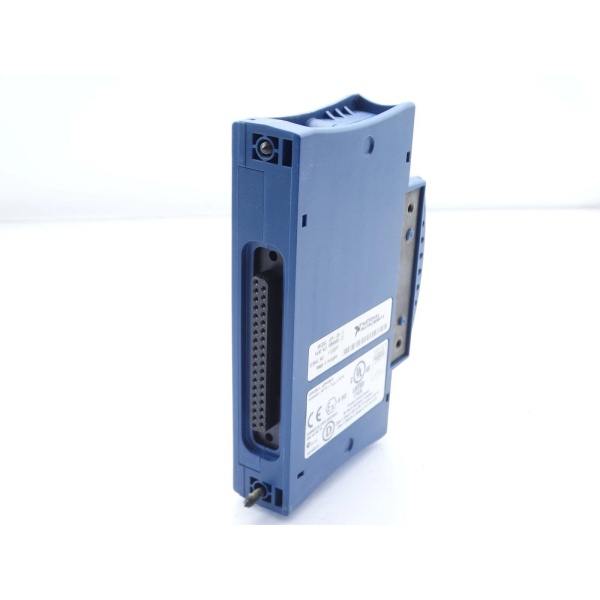
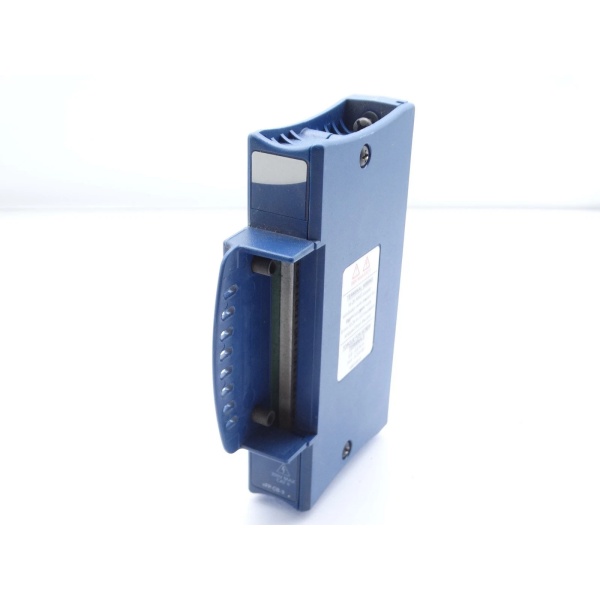
- Model Number: cFP-CB-3
- Manufacturer: National Instruments (NI)
- Slot Count: 3 Independent Slots for FieldPoint I/O Modules (Analog/Digital/Counter/Thermocouple)
- Mounting: DIN-Rail (EN 50022-35) or Panel-Mount Compatible
- Backplane Type: Passive (No On-Board Processing), FieldPoint Bus Interface
- Compatibility: Works with All FieldPoint Controllers (cFP-2100/2200 Series) & I/O Modules
- Operating Temperature: 0°C to 55°C (Standard), -40°C to 70°C (Extended Temp)
- Humidity Tolerance: 10% to 90% RH (Non-Condensing)
- Physical Dimensions: 14.6 cm (L) × 10.2 cm (W) × 7.6 cm (H), Weight: 0.3 kg (0.7 lbs)
- Ruggedness: IP30 Rated Enclosure, Shock Resistant (30g Peak), Vibration Resistant (3g RMS)
- Connection: Locking Module Connectors (Anti-Vibration Design)
- Power Distribution: Passes Power from Controller to I/O Modules (10-30 VDC)
- Certifications: UL 61010-1, CSA C22.2 No. 61010-1, CE, RoHS, FCC Part 15 Class A

NI CFP-CB-3
Field Application & Problem Solved
In distributed industrial control—refineries, water treatment plants, and factory floors—scattered sensors and actuators require a modular, rugged chassis to house I/O modules close to the field. Legacy centralized systems force long wiring runs, leading to signal noise, higher installation costs, and increased vulnerability to lightning or voltage surges. Maintenance teams also struggle with downtime when replacing failed modules, as traditional chassis require powering down the entire system.
This 3-slot FieldPoint backplane solves those pain points by providing a compact, hot-swappable chassis for distributed I/O. You’ll find it in refineries mounting thermocouple modules near distillation columns, water treatment plants housing level sensor I/O close to tanks, and automotive factories integrating digital I/O modules for robot cell control. It’s a critical component in legacy FieldPoint systems, acting as the backbone for I/O expansion while maintaining compatibility with existing controllers and modules.
Its core value is modularity and ruggedness for field deployment. The 3-slot design balances compact size (fits in tight control cabinets) with sufficient expansion for most distributed applications. Hot-swappable modules mean maintenance teams can replace failed I/O modules without powering down the controller or stopping production—critical for 24/7 operations. For field engineers, this translates to reduced downtime, lower wiring costs, and simplified system scaling as process needs change.
Installation & Maintenance Pitfalls (Expert Tips)
- Module Insertion/Removal Force: Rookies often jam modules into slots or yank them out, bending connector pins. Use the module’s locking lever to seat/unseat modules—apply even pressure until the lever clicks. A refinery technician damaged two analog input modules by forcing insertion, costing $800 in replacements and 4 hours of downtime.
- DIN-Rail Mounting Torque: Over-tightening DIN-rail clips (exceeding 4 N·m) cracks the chassis housing, compromising structural integrity. Use a torque screwdriver to fasten clips to 2-3 N·m—this ensures a secure mount without damaging the plastic enclosure. I’ve seen loose mounts cause vibration-induced connection issues in factory settings, and over-tightening lead to water ingress in outdoor cabinets.
- Power Polarity When Daisy-Chaining: When connecting multiple cFP-CB-3 chassis to a single controller, reverse polarity in the power daisy chain fries both the backplane and connected modules. Always verify power polarity (positive to +, negative to -) before connecting. A water treatment plant’s daisy-chain error damaged three chassis and six I/O modules—costing $2,000 and 12 hours of system downtime.
- Ignoring Slot Compatibility for High-Power Modules: High-current digital output modules (e.g., cFP-DO-400) draw more power—installing two or three in a single chassis without checking the controller’s power budget causes voltage drops. The cFP-2110 controller supplies 5W max—calculate module power draw (e.g., 1.5W per high-power module) and limit to two per chassis. An automotive factory experienced intermittent module failures until they spread high-power modules across two chassis.
NI CFP-CB-3
Technical Deep Dive & Overview
The cFP-CB-3 is a passive backplane designed for the harsh realities of industrial field deployment. Its core function is to provide a mechanical and electrical interface between FieldPoint controllers and I/O modules—no on-board processing, just reliable signal and power distribution. The passive design reduces failure points (no active components to burn out) and ensures compatibility with all FieldPoint controller generations, a key advantage for legacy system maintenance.
The backplane’s locking module connectors are a critical ruggedization feature. Unlike standard connectors, they use a lever-locking mechanism that withstands vibration (3g RMS) common in factory floors or refinery equipment. This prevents accidental module disconnection during equipment operation, a leading cause of unplanned downtime in distributed systems.
Hot-swappability is enabled by the FieldPoint bus design, which isolates modules during insertion/removal. The backplane routes power and signals through separate contacts, ensuring no short circuits or signal glitches when swapping modules. This is a game-changer for maintenance teams, who can replace faulty modules without disrupting the entire control loop—critical for safety-critical applications like pressure monitoring or emergency shutdown systems.
DIN-rail mounting (EN 50022-35) ensures compatibility with standard industrial cabinets, while the IP30 rating protects against dust and debris. The compact size (14.6cm × 10.2cm × 7.6cm) makes it ideal for tight spaces, such as wall-mounted cabinets near field sensors.
While it lacks active features like built-in diagnostics or power monitoring, the cFP-CB-3’s simplicity is its strength. It’s a reliable, low-maintenance chassis that does one job—connecting controllers to I/O modules—without unnecessary complexity. For field engineers maintaining legacy FieldPoint systems or deploying distributed I/O, it’s an indispensable component that stands up to harsh conditions, reduces downtime, and simplifies system expansion. Its longevity in industrial settings is a testament to its rugged design and compatibility, making it a trusted workhorse for distributed control.