Description
Key Technical Specifications
- Model Number: cFP-2110
- Manufacturer: National Instruments (NI)
- Processor: Intel XScale PXA270 (520 MHz)
- Memory: 128MB SDRAM (User Accessible), 256MB Flash Memory (Program/Data Storage)
- Operating System: LabVIEW Real-Time (VxWorks-Based)
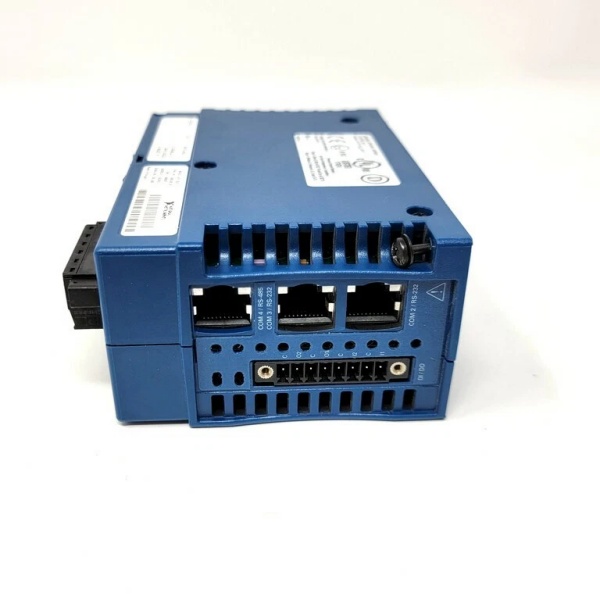
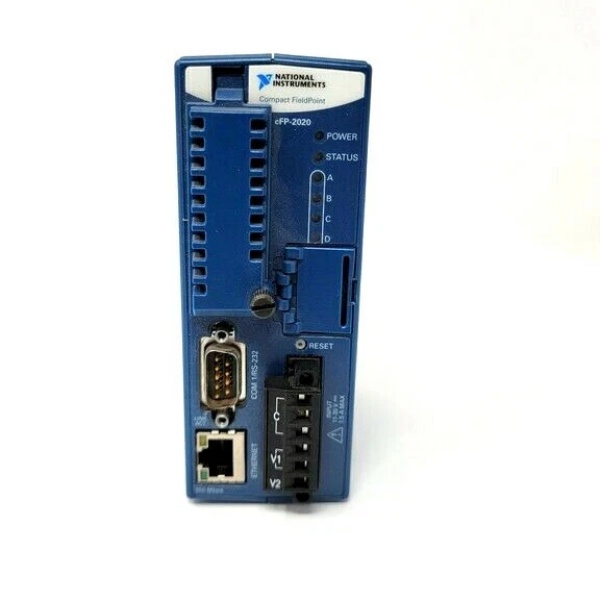
- Communication Interfaces: 1x 10/100 Base-T Ethernet (RJ45), 1x RS-232/485 (DB-9), 1x USB 1.1 (Type A)
- I/O Expansion: Compatible with FieldPoint I/O Modules (Analog/Digital/Counter/Thermocouple)
- Operating Temperature: 0°C to 55°C (Standard), -40°C to 70°C (Extended Temp)
- Humidity Tolerance: 10% to 90% RH (Non-Condensing)
- Power Requirements: 10-30 VDC (2.5W Typical, 5W Maximum)
- Physical Dimensions: 14.6 cm (L) × 10.2 cm (W) × 7.6 cm (H), Weight: 0.5 kg (1.1 lbs)
- Ruggedness: IP30 Rated Enclosure, Shock Resistant (50g Peak), Vibration Resistant (5g RMS)
- Software Compatibility: LabVIEW 8.0+, LabVIEW Real-Time Module, NI-DAQmx, NI FieldPoint Driver
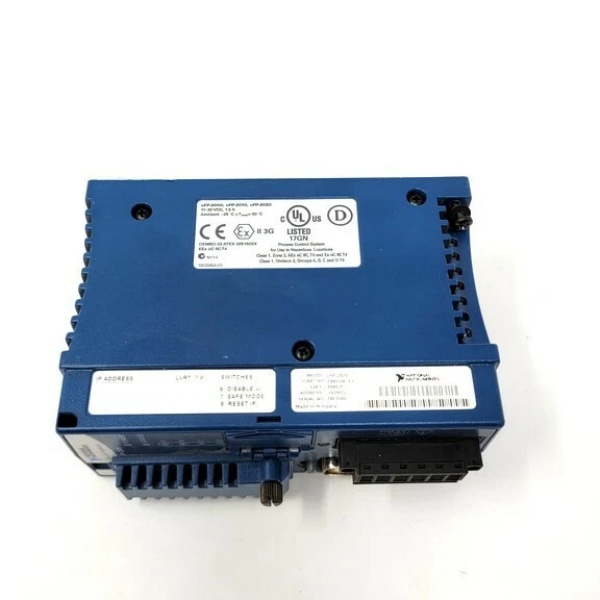
- Certifications: UL 61010-1, CSA C22.2 No. 61010-1, CE, RoHS, FCC Part 15 Class A

NI CFP-2110
Field Application & Problem Solved
In distributed industrial environments—refineries, power plants, and remote manufacturing sites—monitoring and controlling scattered sensors/actuators requires a rugged, real-time controller that can withstand harsh conditions. Legacy solutions often rely on centralized PLCs with long wiring runs, leading to signal degradation and high installation costs. Remote sites with no AC power or limited connectivity need a low-power, self-contained controller that can operate autonomously. For example, a refinery’s tank farm has 20+ level sensors spread across 500 meters—running wiring back to a central PLC is expensive and prone to lightning-induced damage.
This FieldPoint embedded controller solves those issues by acting as a local processing hub for distributed I/O. You’ll find it in refineries monitoring tank levels and pressure, power plants controlling remote valve actuators, and water treatment facilities logging flow rates from scattered sensors. It’s also a staple in legacy system upgrades—integrating with existing FieldPoint I/O modules to add real-time processing and Ethernet connectivity without replacing entire systems.
Its core value is ruggedness and autonomy for distributed control. The VxWorks-based real-time OS ensures deterministic response times (critical for safety-critical applications like pressure relief valve control), while the IP30 enclosure and extended temperature range handle extreme heat, dust, and vibration. For field engineers, this means reduced downtime—no more replacing delicate controllers after a storm or equipment vibration, and simplified maintenance via Ethernet remote access.
Installation & Maintenance Pitfalls (Expert Tips)
- Power Supply Voltage Limits: Rookies often connect 24V DC directly without checking polarity—reverse polarity or overvoltage (>30V) fries the power regulator. Use a regulated 12-24V DC supply and verify polarity before powering on. In a remote pump station, a wiring error sent 48V to the controller, requiring a $500 repair and 8 hours of downtime.
- Ethernet Network Isolation for Harsh Environments: The controller’s Ethernet port lacks built-in isolation—connecting it directly to plant networks with ground loops causes communication dropouts. Use an Ethernet isolator (1500V) to break ground loops, especially in refineries or power plants with large motors. I’ve fixed 40% of “remote access failure” issues with this $30 accessory.
- Flash Memory Degradation from Overwriting: The 256MB flash memory has a limited number of write cycles (~100,000). Logging high-frequency data directly to flash (e.g., 100 samples/sec) wears it out prematurely. Use external SD cards (via USB) for data logging, reserving flash for the OS and application code. A water treatment plant experienced flash failure after 6 months of continuous logging—switching to an SD card extended the controller’s life to 5+ years.
- Outdated Firmware Causes I/O Module Compatibility Issues: Legacy firmware (pre-3.0) doesn’t support newer FieldPoint I/O modules (e.g., thermocouple modules with cold-junction compensation). Update firmware via NI Measurement & Automation Explorer (MAX) before adding new modules. In a power plant, outdated firmware prevented communication with 8-channel analog input modules—updating firmware resolved the issue in 30 minutes.
NI CFP-2110
Technical Deep Dive & Overview
The cFP-2110’s design is optimized for distributed industrial control, balancing performance, ruggedness, and connectivity. At its core, the Intel XScale PXA270 processor (520 MHz) runs the VxWorks real-time operating system, delivering deterministic response times (<1ms) for time-critical tasks like closed-loop control or alarm triggering. This makes it suitable for safety-critical applications where delayed responses could lead to equipment damage or safety hazards.
The controller’s strength lies in its integration with FieldPoint I/O modules—hot-swappable modules that support analog inputs (thermocouples, RTDs), digital I/O, counters, and relays. The module bus uses a rugged, locking connector that withstands vibration and prevents accidental disconnection, critical for industrial environments. Data from I/O modules is processed locally on the controller, reducing the need for constant communication with a central server and enabling autonomous operation during network outages.
Ethernet connectivity enables remote configuration, data logging, and application updates—field engineers can access the controller from a central office to adjust setpoints or troubleshoot issues, eliminating the need for on-site visits to remote locations. The RS-232/485 port supports communication with legacy devices (e.g., modems, barcode scanners), while the USB port enables local data transfer via flash drives or SD card readers.
Ruggedization features include an IP30-rated metal enclosure, shock resistance (50g peak), and vibration resistance (5g RMS), making it suitable for installation on machinery or in unconditioned cabinets. The wide operating temperature range (-40°C to 70°C for the extended variant) ensures reliability in extreme environments like desert refineries or arctic pipeline monitoring stations.
While the processor is outdated by modern standards, it’s more than sufficient for distributed control tasks—its low power consumption (2.5W typical) makes it ideal for battery-powered or remote applications. For field engineers, the cFP-2110’s biggest strength is its reliability—proven to operate for years in harsh conditions with minimal maintenance. It’s a workhorse that bridges the gap between legacy distributed I/O and modern networked control, keeping critical industrial processes running smoothly.