Description
Hard-Numbers: Technical Specifications
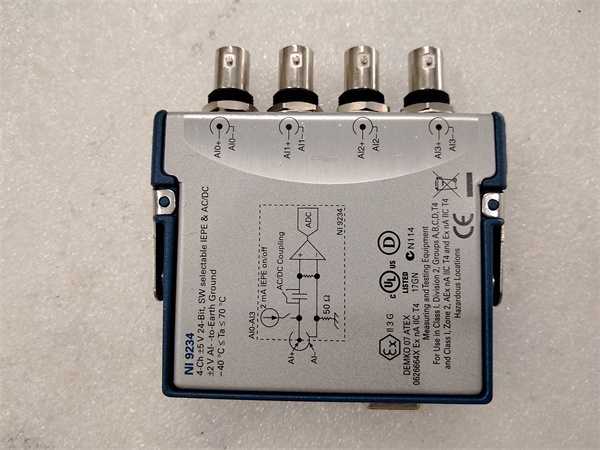
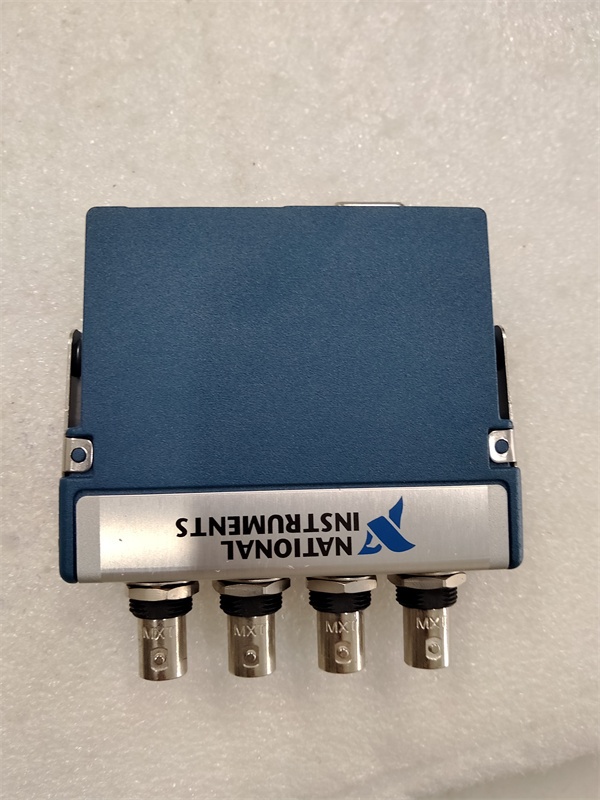
- Analog Input Channels: 4 differential channels
- ADC Resolution: 24-bit sigma-delta
- Maximum Sample Rate: 51.2 kS/s per channel (synchronous)
- Input Range: ±5 V (software selectable)
- IEPE Excitation: 4 mA constant current, 24 V compliance
- Frequency Response: DC to 25 kHz (±0.5 dB)
- Anti-Aliasing Filter: 5th-order Butterworth, programmable cutoff
- Isolation: 250 V RMS channel-to-earth ground
- Operating Temperature: -40 to 70 °C (-40 to 158 °F)
- Power Draw: 3.3 V at 450 mA (typical)
- Connector: 10-32V screw terminal
- Input Impedance: >100 kΩ differential

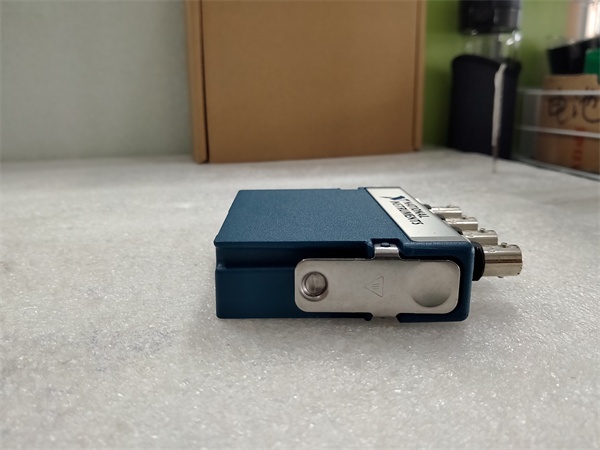
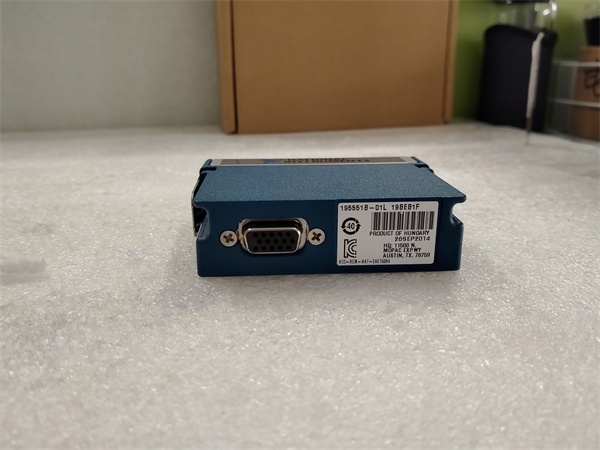
NI 9234
The Real-World Problem It Solves
When you need high-fidelity vibration or acoustic data from IEPE sensors, the NI-9234 delivers clean signals without the noise that plagues lower-resolution DAQ cards. The built-in excitation and anti-aliasing filters mean you don’t need external signal conditioning in most applications.
Where you’ll typically find it:
- Predictive maintenance programs measuring bearing vibration on motors, pumps, and gearboxes
- NVH (Noise, Vibration, Harshness) testing in automotive R&D labs
- Structural health monitoring on bridges, buildings, or heavy machinery
Bottom line: It’s a purpose-built IEPE interface that provides lab-grade measurement quality in harsh industrial environments.
Hardware Architecture & Under-the-Hood Logic
The NI-9234 uses a sigma-delta ADC architecture with dedicated anti-aliasing filtering on each channel. IEPE excitation is current-limited and protected against short circuits, making it safe for field wiring mistakes.
Signal flow and processing logic:
- IEPE Excitation: 4 mA constant current source powers the accelerometer or microphone.
- AC Coupling: Input signal passes through a high-pass filter (DC blocking) per channel.
- Anti-Aliasing Filter: 5th-order Butterworth low-pass filter removes frequencies above Nyquist.
- Sigma-Delta ADC: 24-bit converter digitizes the filtered signal at up to 51.2 kS/s.
- FPGA Processing: On-board FPGA handles data buffering, oversampling decimation, and streaming to the CompactRIO backplane.
- Backplane Interface: Digitized data transfers via the C-Series backplane to the real-time controller or host.

NI 9234
Field Service Pitfalls: What Rookies Get Wrong
Mixing Grounded and Floating IEPE Sensors
Connecting grounded sensors (case grounded to earth) to the NI-9234 without considering ground references creates ground loops that inject 50/60 Hz hum into your data.
- Field Rule: Check your sensor datasheet—if it’s grounded, use isolated mounting or verify your system ground reference matches. If you see 50/60 Hz noise in your FFT, check your ground paths first.
Wrong Sample Rate Settings
Setting the sample rate too low for your vibration frequency range causes aliasing, and you’ll see frequencies in your data that don’t physically exist. New engineers often blame the sensor or the module.
- Quick Fix: Always sample at least 10× your highest frequency of interest. For machinery vibration (typically 10 kHz max), use 25.6 kS/s or 51.2 kS/s to capture harmonics.
Forgetting to Disable Unused Channels
Leaving all four channels active even when you’re only using one wastes bandwidth and can cause timing issues in some CompactRIO configurations.
- Field Rule: In your LabVIEW or VeriStand project, explicitly disable channels you’re not using. This reduces processing load and prevents phantom data issues during high-speed acquisition.