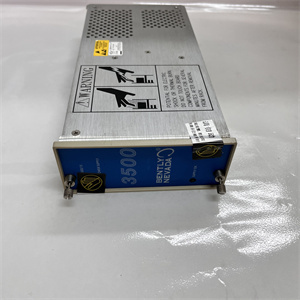
Description
Hard-Numbers: Technical Specifications
-
Processor: PowerPC 7457, 1 GHz (1 MB L2 cache, 256 KB L3 cache, low-power 1.3V core)
-
Memory: 512 MB DDR SDRAM (ECC, soldered down—no DIMM slots)
-
VME Interface: VME64x (ANSI/VITA 1.1-1997), D64 block transfer, 80 MB/s sustained
-
Ethernet Ports: 2x 10/100/1000BASE-T (RJ-45, Intel 82546GB, transformer-coupled)
-
Serial Ports: 2x RS-232 (front panel, 16550-compatible)
-
USB Ports: 2x USB 2.0 (Type A, front panel, 500mA max per port)
-
PMC Slots: 2x PMC/XMC sites (64-bit/66 MHz PCI-X, conduction-cooled retainers)
-
Operating Temperature: -40°C to +71°C (full operation), -55°C storage
-
Isolation Rating: 1500V DC port-to-port (Ethernet), 500V (serial)
-
Power Draw: 22W typical, 32W max (optimized for thermal efficiency)
-
Vibration/Shock: 20G random vibration, 50G shock (MIL-STD-810F)
-
Flash Storage: 1 GB soldered CompactFlash (industrial SLC, bootable)
-
Dimensions: 6U x 160mm (VME standard, P1/P2/P0 connectors, 0.8″ card extractor)
The Real-World Problem It Solves
Standard commercial SBCs die in tracked vehicles when dust clogs fans, or on ships when salt spray corrodes heat sinks. The MVME55006E-0161R sheds heat through the card edge and faceplate directly into the chassis—no moving parts, no air filters, no maintenance. It’s for systems that deploy to places where FedEx doesn’t deliver and “downtime” means mission failure or personnel risk.
Where you’ll typically find it:
-
Armored vehicle fire control: Gun turret computers in Abrams or Bradley variants; survives 140°F ambient in desert compartments.
-
Naval combat systems: Aegis radar signal processors below decks; conduction-cooling handles 100% humidity and bilge splash.
-
Forward air defense: Patriot missile battery command posts; EMC-hardened for EMP survivability, no fans to draw in chemical/biological contaminants.
Bottom line: It’s compute that doesn’t flinch when the environment tries to kill it.

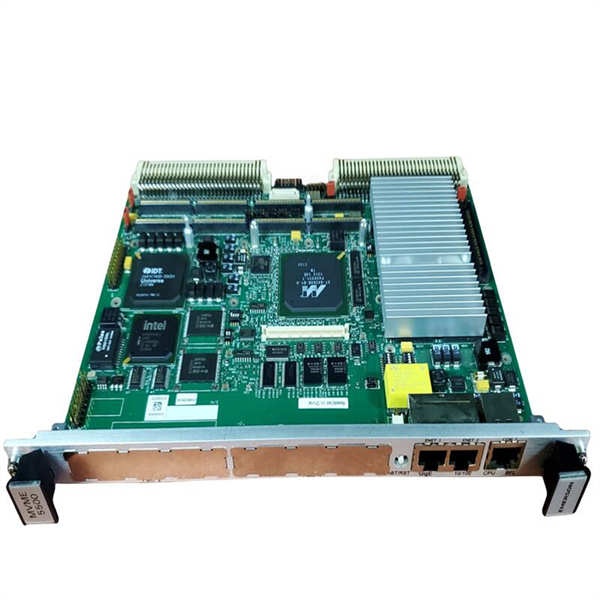
Motorola MVME55006E-0161R
Hardware Architecture & Under-the-Hood Logic
This is the same Tundra Tsi148 VME bridge and PowerPC 7457 core as the commercial MVME5500, but everything is soldered, potted, or thermally bonded. The DDR memory is BGA-soldered to the board—no sockets, no DIMM retention worries. Heat flows from the 7457 die through thermal pads to a full-card aluminum heat spreader, then to the faceplate and wedge locks.
-
Power-on sequence: VME rails stabilize → Tsi148 VME bridge releases CPU hold → 7457 fetches boot vector from soldered CompactFlash controller → Runs POST from 1MB boot flash.
-
Thermal management: Heat spreads laterally across the board’s internal copper planes; wedge locks at top/bottom force thermal contact with chassis card guides. Faceplate adds radiative surface area.
-
Memory architecture: Soldered DDR runs at 133 MHz, ECC scrubbing handled by 7457 memory controller; no DIMM SPD to corrupt or loosen.
-
VME mastering: Tsi148 handles all VME protocol—D64 transfers use onboard FIFOs to decouple 7457 from slow VME slaves. VME IRQ1-7 map to OpenPIC with programmable priority.
-
PMC/XMC integration: PMC slots share the 66 MHz PCI-X bus; conduction-cooled retainers clamp mezzanine thermal pads to the main board heat spreader. XMC modules with serial FPDP or fiber are common fits.
Field Service Pitfalls: What Rookies Get Wrong
Ignoring Wedge Lock Torque Specs
Those top and bottom card retainers aren’t just for vibration—they’re the thermal path. Too loose = hot spots under the 7457, random thermal shutdowns. Too tight = stripped threads or cracked card extractor ears.
-
Field Rule: Use 8-10 in-lb on the wedge locks (Torque screwdriver, not “good and tight”). Verify uniform gap between board edge and chassis rail. If the board ran hot before removal, inspect the thermal pads for tearing or oil seepage—replace with fresh 0.010″ indium foil or approved thermal gap filler.
Treating Soldered Flash as “Permanent”
The CompactFlash is soldered, not socketed. When it wears out after 10+ years of write cycles, you can’t just pop in a new card. Recovery requires JTAG programming or booting from USB to reflash.
-
Quick Fix: Minimize writes in your application—mount /tmp and logs to RAMdisk. If the CF fails, the front-panel USB 2.0 port accepts standard flash drives for emergency boot; jumper J9 selects USB boot priority. Keep a gold-image USB stick in the spares kit, not just CF images.
Assuming Standard PMC Cards Fit
Conduction-cooled PMCs have thicker thermal bars and different retainers. A standard commercial PMC won’t seat properly, won’t conduct heat, and will overheat in minutes.
-
Field Rule: Verify the mezzanine has “CC” or “Rugged” in the part number (e.g., GE Fanuc ACC-188CC). Check that the thermal interface material (TIM) on the PMC thermal bar mates flush with the MVME55006E’s heat spreader. No TIM = air gap = 40°C temperature rise under load. Torque PMC retainers to 4-6 in-lb.