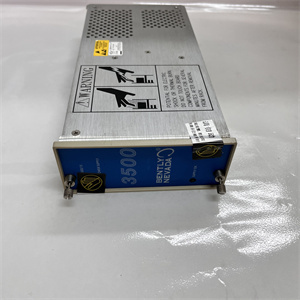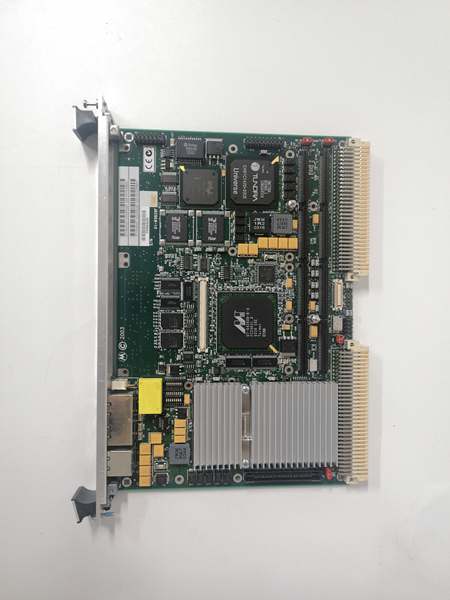
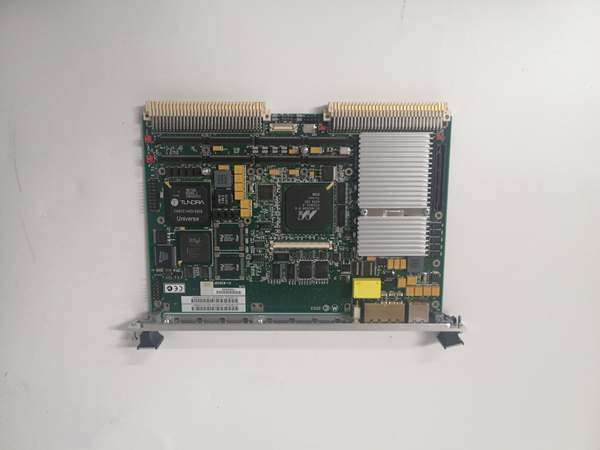
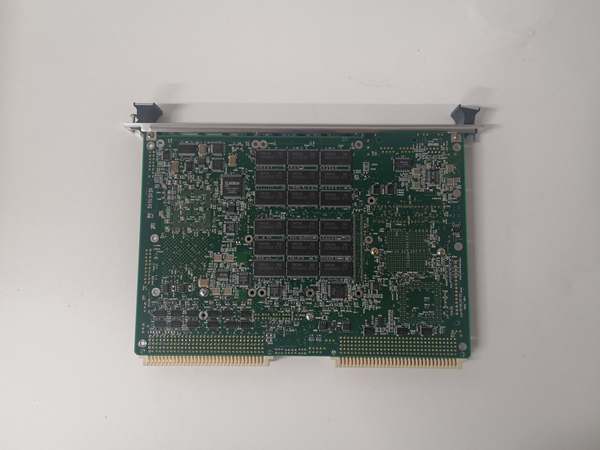
Description
Hard-Numbers: Technical Specifications
-
Processor: PowerPC 7457, 1 GHz (1 MB L2 cache, 256 KB L3 cache)
-
Memory: Up to 1 GB DDR SDRAM (ECC, soldered)
-
VME Interface: VME64x (ANSI/VITA 1.1-1997), D64 transfer mode
-
Ethernet Ports: 2x 10/100/1000BASE-T (RJ-45, Intel 82546GB controller)
-
Serial Ports: 2x RS-232 (DB-9, front panel)
-
USB Ports: 2x USB 2.0 (Type A, front panel)
-
Operating Temperature: 0°C to +55°C (standard), -40°C to +71°C (conduction-cooled variants)
-
Isolation Rating: 1500V DC isolation on Ethernet (transformer-coupled)
-
Power Draw: 25W typical, 35W max (5V/±12V VME rails)
-
Flash Storage: 128 MB to 1 GB CompactFlash (bootable)
-
PMC Slots: 2x PMC/XMC sites (64-bit/66 MHz PCI)
-
Dimensions: 6U x 160mm (VME standard)
The Real-World Problem It Solves
Legacy VME systems don’t die—they get orphaned. When your 1990s-era DCS processor starts throwing parity errors or can’t handle modern Ethernet traffic, you face a rip-and-replace nightmare that kills production for weeks. The MVME5500 slides into existing VME chassis, talks to old I/O cards, and gives you modern networking without rewiring the cabinet.
Where you’ll typically find it:
-
Fossil fuel power plants: Replacing MVME2300/2400 boards in turbine control systems (GE Mark VI, Westinghouse WDPF).
-
Offshore platforms: Upgraded drilling control systems where salt air kills lesser hardware—conduction-cooled variants only.
-
Pulp & paper mills: DCS retrofits in digester and boiler control; survives high vibration and temperature swings.
Bottom line: It buys you another 10-15 years on proven VME I/O while adding Gigabit speed and USB accessibility for modern diagnostics.

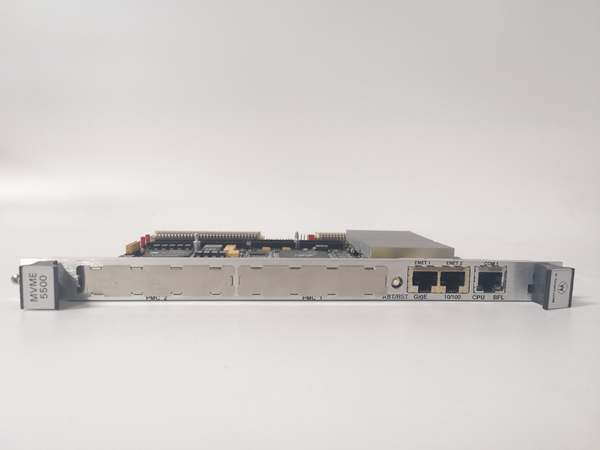
Motorola MVME5500
Hardware Architecture & Under-the-Hood Logic
This board is a self-contained computer, not a dumb I/O slave. It boots its own OS (VxWorks, Linux, or proprietary RTOS) and arbitrates data between the VME backplane and external networks. The PowerPC 7457 runs the show with dedicated memory controllers—no shared bus contention with VME traffic.
-
Power-on sequence: VME +5V and ±12V rails stabilize → PowerPC 7457 executes boot ROM from soldered flash → Initializes DDR memory controller and runs POST.
-
VME arbitration: Tundra Universe II (or Tempe) VME bridge chip handles D64 block transfers between local memory and VME backplane; operates independently of CPU.
-
Network offload: Intel Gigabit MACs manage TCP/IP checksums and segmentation in hardware—CPU sees clean data, not interrupt storms.
-
PMC expansion: PCI-X bus segments feed two PMC slots at 66 MHz; XMC modules add serial FPDP or fiber if fitted.
-
Watchdog logic: Internal WDT resets the board if code hangs; jumper-selectable for automatic reboot or fault flag to VME SYSFAIL line.
Motorola MVME5500
Field Service Pitfalls: What Rookies Get Wrong
Forgetting the Jumper Map
New engineers assume it’s plug-and-play like a PC. It’s not. The MVME5500 has 30+ configuration jumpers for VME requester levels, interrupt priorities, and boot source selection. Wrong jumper = board won’t initialize or conflicts with existing VME masters.
-
Field Rule: Photograph the old board’s jumper positions before swap. Cross-reference with the customer’s VME chassis documentation—never assume factory defaults match the legacy configuration.
Neglecting CompactFlash Wear
These boards often boot from industrial CF cards that have been spinning for a decade. Flash memory wears out. Sudden “no boot” faults are usually dead CF sectors, not board failure.
-
Quick Fix: Keep a gold-image CF card cloned and ready. Boot from USB if the CF socket is suspect—front-panel USB works for emergency recovery.
Improper VME Backplane Termination
The MVME5500 drives VME64x lines hard. If your chassis has old passive termination or missing terminators at slot 21, you’ll see intermittent bus errors under heavy DMA load.
-
Field Rule: Verify active termination (VITA 1.1 compliant) on both ends of the backplane. Check for bent pins in P1/P2 connectors—this board’s 5-row headers are fragile during extraction.