Description
Key Technical Specifications
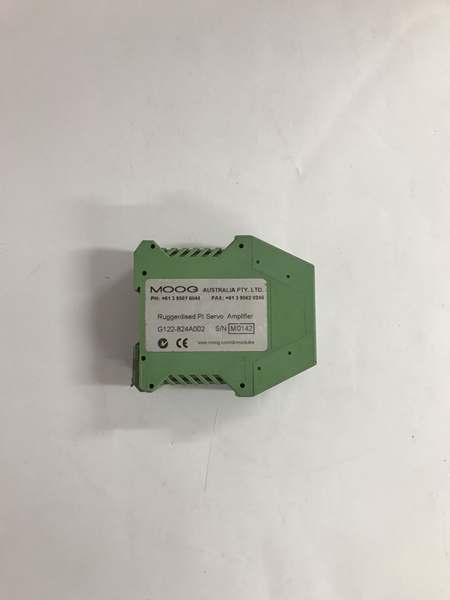
- Model Number: G122-824A002 (G122-824-002)
- Manufacturer: Moog Inc. (Industrial Group)
- Device Type: Proportional-Integral (P-I) servoamplifier for electro-hydraulic control systems
- Control Modes: Switch-selectable P (Proportional), I (Integral), or P+I (Proportional-Integral) control
- Input Signals:
- Input 1: ±10V DC (switch-selectable lag filter)
- Input 2: 4-20mA DC (added in -002 version as upgrade from -001)
- Three single-ended inputs total, one differential input
- Output: Servo valve drive current (0-800mA max, adjustable via internal switches)
- Supply Voltage: 24VDC ±10% (21.6-26.4VDC); 2.5A max current draw
- Mounting Type: DIN rail (EN 50022 standard) – compact housing (17.5mm width)
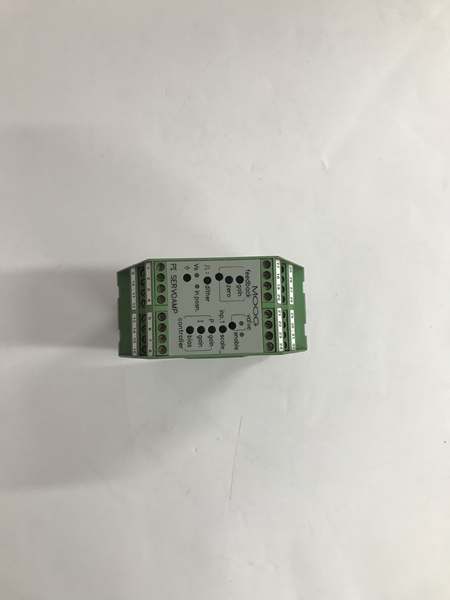
- Key Features: Front panel output step push button (for loop optimization), LED status indicators, test points for troubleshooting, internal DIP switches for configuration
- Operating Temperature: -20°C to +60°C (-4°F to +140°F)
- Storage Temperature: -40°C to +85°C (-40°F to +185°F)
- Certifications: CE, UL 508, RoHS compliant
- Compatibility: Moog servo valves (7600, 7700, 7900 series), hydraulic actuators, PLC/DCS systems (Siemens, Allen-Bradley, ABB), position transducers (LVDT/RVDT)
- Dimensions: 17.5mm (width) × 100mm (height) × 120mm (depth)
- Weight: 0.3kg (0.66lbs)

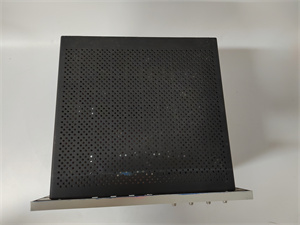
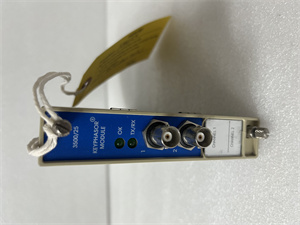
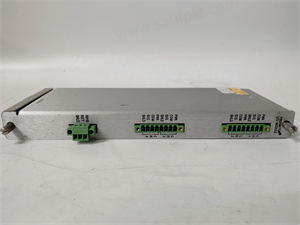
Moog G122-824A002
Field Application & Problem Solved
In industrial electro-hydraulic systems—turbine governor control, steam valve positioning, steel mill roll gap adjustment, refinery process valve actuation—the biggest control challenge is achieving precise, stable closed-loop control while integrating with standard DCS/PLC systems. Generic amplifiers fail here in three critical ways: they lack P+I control flexibility (causing steady-state errors), can’t accept both 4-20mA and ±10V inputs (requiring costly signal converters), or have poor noise immunity (causing valve hunting in high-EMI industrial environments). A Midwest power plant experienced 12 unplanned outages/year due to generic amplifiers with only proportional control, leading to turbine speed fluctuations. A Texas refinery spent $45k annually on signal converters to interface generic amplifiers with their DCS 4-20mA outputs.
This servoamplifier solves these issues as a flexible, DCS-native solution for electro-hydraulic control. You’ll find it in: steam/gas turbine speed governors, hydraulic actuator position control loops, rolling mill thickness control systems, and any application where precise closed-loop control of Moog servo valves is required. It’s the standard upgrade for legacy systems using -001 versions, as it adds 4-20mA input capability and improved thermal performance.
Its core value is control flexibility + DCS integration + industrial ruggedness. Unlike generics, it offers switch-selectable P/I/P+I control (eliminating steady-state errors with integral action), accepts both 4-20mA and ±10V inputs directly (no converters needed), and features robust EMI filtering for industrial environments. For a Pennsylvania steel mill, this amplifier reduced roll gap variation by 40%, improving product quality and reducing scrap rates by 15%—avoiding $220k in annual losses.
Installation & Maintenance Pitfalls (Expert Tips)
- EMI/RFI Protection Is Critical: Rookies mount the amplifier near VFDs or AC servo drives, causing signal noise and valve hunting. A Louisiana refinery’s process valve control system oscillated until we relocated the amplifier 30cm away from a 20kW VFD and added shielded twisted-pair cables (grounded at both ends). Always maintain minimum 20cm separation from high-EMI devices.
- Input Signal Matching: Using 4-20mA on Input 1 (instead of Input 2) causes calibration errors. The -002 version specifically added 4-20mA capability to Input 2—verify input selection via internal DIP switches. A Michigan power plant’s turbine governor drifted until we reconfigured Input 2 for 4-20mA DCS signal.
- DIN Rail Mounting Torque: Over-tightening the DIN rail clip bends the housing, blocking cooling vents. Use the recommended 0.5Nm (4.4 in-lbs) torque—an Ohio paper mill’s amplifier overheated after 3 months due to bent housing restricting airflow.
- Loop Tuning with Step Button: Skip using the front-panel output step button during commissioning, and you’ll spend hours manually tuning. The step button injects a known output signal to the servo valve, allowing quick adjustment of P/I gains. A Texas chemical plant reduced loop tuning time from 8 hours to 45 minutes by using this feature.
- Integral Time Constant Setting: Set the integral time constant too short (≤1s) and the system will oscillate; too long (>10s) and it won’t correct steady-state errors. Use the internal potentiometer to adjust between 0.1-10s—start with 2s for most hydraulic systems. A Wisconsin food processing plant’s filling machine had position errors until we optimized the integral time constant to 3s.
Moog G122-824A002
Technical Deep Dive & Overview
The Moog G122-824A002 is a compact DIN rail-mounted P-I servoamplifier designed to provide precise closed-loop control for electro-hydraulic systems using Moog servo valves. At its core, it features a high-gain operational amplifier that processes error signals (difference between setpoint and feedback from position transducers like LVDTs/RVDTs) and generates a proportional current output to drive the servo valve. The P+I control mode eliminates steady-state errors by continuously integrating the error signal over time, while the proportional term provides immediate response to changes.
What sets this amplifier apart from the previous -001 version is the addition of 4-20mA input capability on Input 2, making it directly compatible with DCS/PLC systems without signal converters. The front-panel output step button is a critical troubleshooting tool—it allows technicians to inject a fixed output current to the servo valve, verifying valve operation and simplifying loop tuning. Internal DIP switches let users configure control mode (P/I/P+I), input signal ranges, and output current limits without opening the housing.
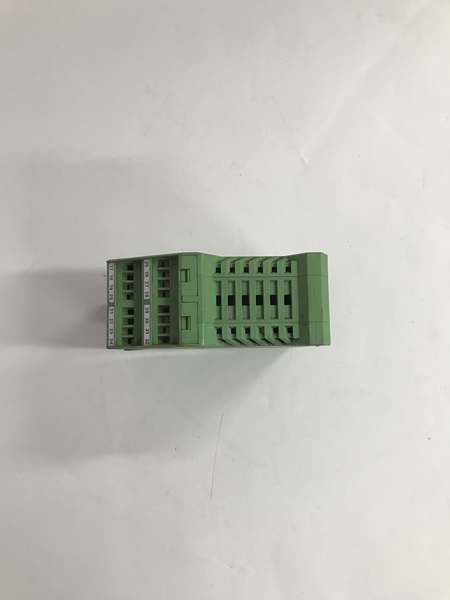
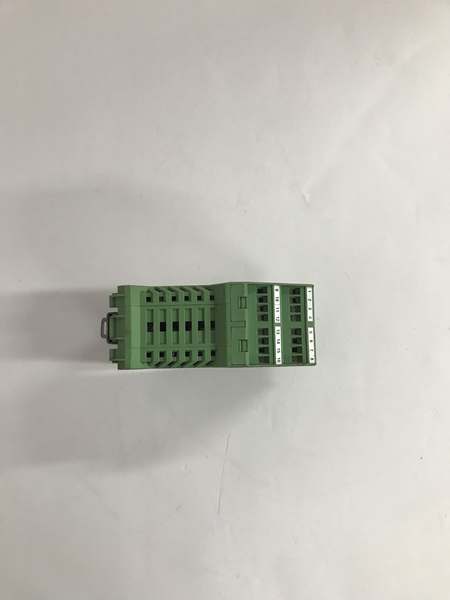
The amplifier’s compact DIN rail design (17.5mm width) saves valuable cabinet space, while the vents on top and bottom ensure proper cooling even in high-density enclosures. It interfaces seamlessly with Moog servo valves, providing up to 800mA of drive current—sufficient for most industrial applications. The ±10V input range on Input 1 makes it compatible with legacy control systems, while Input 2’s 4-20mA capability ensures integration with modern process automation.
For maintenance teams, this amplifier is a reliable workhorse—it features LED status indicators for power, signal presence, and fault conditions, plus test points for measuring critical signals without specialized equipment. The P+I control mode eliminates the need for external controllers, reducing system complexity and potential failure points. Its robust design withstands industrial environments, with wide temperature range (-20°C to +60°C) and vibration resistance (5g peak, 10-2000Hz).
In summary, the Moog G122-824A002 is the gold standard for P-I servoamplification in industrial electro-hydraulic systems—it combines flexible control modes, DCS-native integration, and rugged construction to deliver precise, reliable control of Moog servo valves in the world’s most demanding industrial applications.