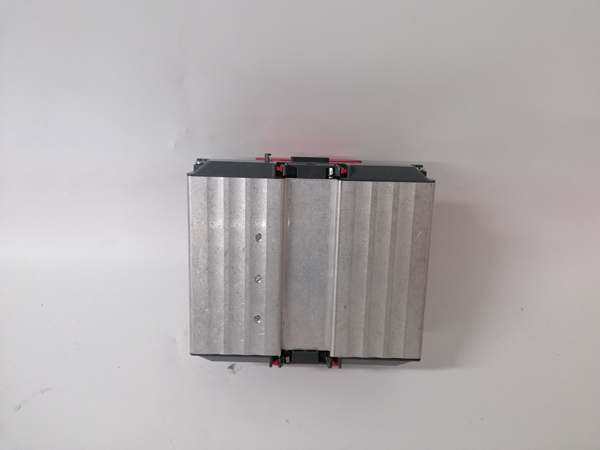
Description
Key Technical Specifications
Model Number: D136-001-007
Manufacturer: Moog Inc.
Product Family: D136 Series Motion Controllers (MSC I series)
Power Supply: 24 Vdc (± tolerance varies by source: 24-48Vdc range mentioned)
Rated Current: 10A
Output Power: 250W to 750W (varies by configuration)
Control Modes: Position, Velocity, Torque (Force)
Communication Protocols: EtherCAT, CANopen, RS-485, Ethernet, PROFIBUS DP
Analog I/O: High-resolution analog inputs/outputs (4-20mA, 0-10V, 0-5V)
Digital I/O: 8 digital inputs, 8 digital outputs (typical configuration)
Response Time: <1 ms ; <10 ms
Control Accuracy: ±0.1%
Processor: PowerPC-based microprocessor
Operating Temperature: -10°C to +60°C ; -20°C to +70°C ; -40°C to +70°C
Storage Temperature: -40°C to +100°C
Humidity: 5-95% non-condensing
Protection Class: IP20 ; IP65 (varies by enclosure)
Dimensions: 110mm × 70mm × 30mm ; 100mm × 50mm × 25mm ; 100mm × 80mm × 35mm
Weight: 0.5 kg ; 1.0 kg ; 2.5 kg ; 2.6 kg
Mounting: DIN rail or panel mount (industrial standard)
Programming: C/C++, LabVIEW support
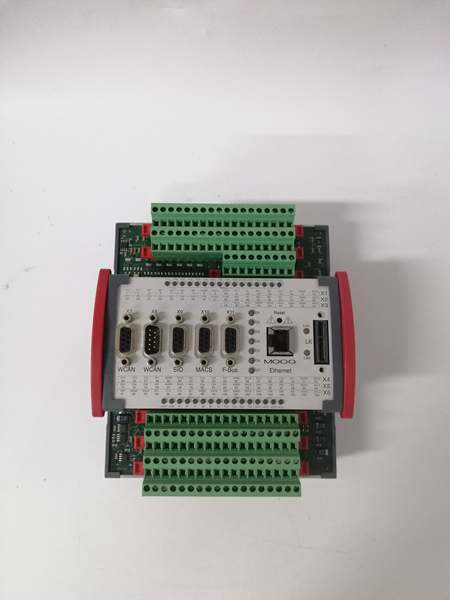
MOOG D136-001-008
Field Application & Problem Solved
In the field, the biggest challenge with precision motion control is coordinating multiple axes while maintaining tight synchronization and accuracy. Traditional PLC-based motion control struggles with high-speed, multi-axis coordination—scan times are too slow, and deterministic motion profiles are difficult to achieve. The D136-001-007 solves this by providing dedicated motion control processing with real-time deterministic performance, offloading the motion control task from the main PLC while maintaining seamless communication.
You will typically find this controller in high-precision industrial automation: CNC machine tools where sub-micron positioning is required, robotic systems with coordinated multi-axis motion, packaging machinery with high-speed synchronized movements, semiconductor manufacturing equipment (wafer handling, die bonding), and injection molding machines with precise clamp and injection control. It’s also used in aerospace test rigs, automotive production lines, and any application requiring precise control of servo motors or hydraulic servo valves.
Its core value is combining PLC functionality with high-performance motion control in a single modular package. Instead of separate PLC and motion controller communicating over a fieldbus, the D136-001-07 integrates both, reducing wiring complexity and eliminating communication latency between logic and motion. The multi-protocol support (EtherCAT, CANopen, RS-485) allows it to integrate with existing plant networks without protocol converters. The modular design means you can expand I/O or add axes by adding modules, rather than replacing the entire controller. For hydraulic applications, the “servo valve controller” capability provides precise flow and pressure control through proportional valves, bridging the gap between digital control and hydraulic actuation.
Installation & Maintenance Pitfalls (Expert Tips)
Power Supply Sizing is Critical—Don’t Undersize
The D136-001-007 has conflicting power ratings in documentation: 250W versus 750W . This likely reflects different hardware revisions or configuration options. A common field mistake is assuming the lower power rating and sizing the 24Vdc supply accordingly. If you have a high-inertia load or rapid acceleration profiles, the 10A peak current will overload a undersized supply, causing voltage sag and controller faults. Size your power supply for the peak current, not the continuous rating, and verify your specific hardware revision against the nameplate power rating.
EtherCAT vs. CANopen Wiring is Not Interchangeable
The controller supports multiple protocols, but the physical wiring and termination are different for each. EtherCAT uses standard Ethernet cabling (CAT5e/CAT6) with specific impedance requirements, while CANopen requires shielded twisted pair with 120-ohm termination resistors at both ends of the bus. I’ve seen technicians wire EtherCAT devices to CANopen ports because “they’re both communication ports,” resulting in immediate communication failure and potential hardware damage. Verify the protocol switch or software configuration before connecting cables, and use the correct cable type for each protocol.
Analog I/O Scaling Must Match the Application
The analog inputs accept 4-20mA or 0-10V signals , but the default scaling may not match your sensors. A common pitfall is connecting a 0-10V position feedback sensor and wondering why the controller reads 50% at zero position—the input might be configured for 4-20mA. Check the analog input configuration in the setup software before commissioning. Similarly, analog outputs driving servo valves must be scaled to match the valve’s flow characteristics; linear scaling on a non-linear valve causes position hunting.
Grounding and Shielding Are Non-Negotiable for Noise Immunity
The D136-001-007 has high-resolution analog I/O that is susceptible to EMI from VFDs, welding equipment, and servo drives. Use shielded twisted pair for all analog signals, with shields grounded at the controller end only. I’ve seen installations where analog cables were run in the same conduit as motor power cables, causing position jitter and erratic motion. Keep analog signal cables separate from power cables by at least 300mm, or use steel conduit for isolation. The RS-485 communication also requires proper termination—120 ohms at both ends of the bus—to prevent signal reflections.
Firmware Version Mismatches Cause Communication Failures
When using EtherCAT or CANopen, the controller firmware must be compatible with the master device (PLC or industrial PC). A common field issue is upgrading the PLC’s EtherCAT master stack without updating the D136-001-007 firmware, resulting in “slave not found” errors or intermittent communication drops. Always check firmware compatibility matrices before upgrading any component in the network. Keep a backup of the current firmware and configuration file before performing updates—if the update fails, you need a recovery path.
Servo Valve Tuning Requires Understanding Hydraulic Dynamics
If using this controller for hydraulic servo valves , the PID tuning is fundamentally different from electric servo motors. Hydraulic systems have compliance (oil compressibility), lag (valve response time), and non-linear flow characteristics. A common mistake is applying electric servo tuning parameters to hydraulic systems, resulting in oscillation or instability. Start with conservative gains (low proportional, minimal integral) and increase slowly while monitoring for oscillation. The “response time <10 ms” specification is for the controller, but your hydraulic valve may be slower—tune for the slowest component in the loop.
Environmental Ratings Vary by Configuration
The protection class varies from IP20 to IP65 depending on the enclosure option ordered. A common field error is installing an IP20 controller in a washdown environment or outdoor cabinet without additional protection. IP20 is for clean control rooms only; IP65 survives dust and water jets. Check the nameplate IP rating before installation. If you have an IP20 unit in a harsh environment, install it in a NEMA 4X enclosure with adequate cooling—derate the operating temperature by 10°C if the enclosure lacks ventilation.
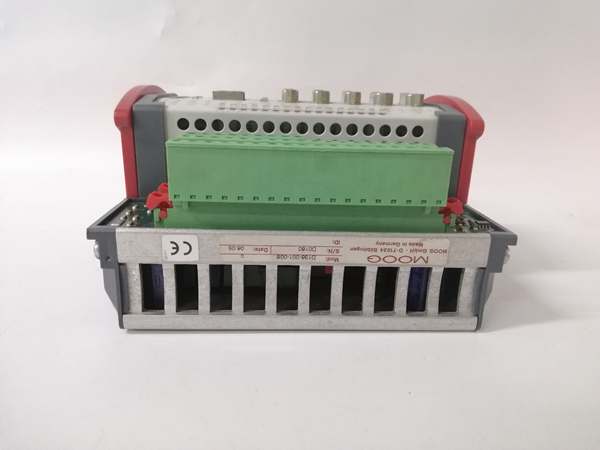
MOOG D136-001-008
Technical Deep Dive & Overview
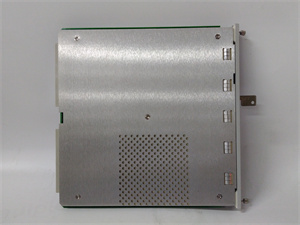
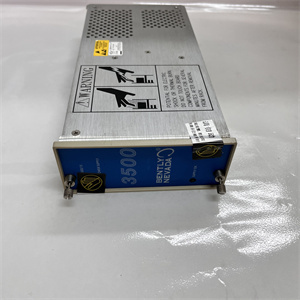
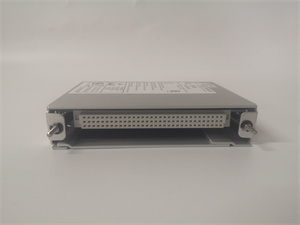
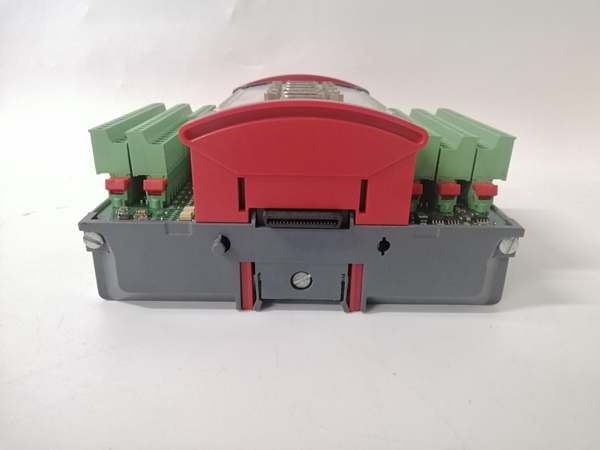
The Moog D136-001-007 is a modular, multi-axis motion controller from the D136 series (also referenced as MSC I series) , designed for high-performance industrial automation and servo control applications. It represents Moog’s approach to integrated motion control, combining PLC logic capabilities with dedicated motion control processing in a single hardware platform.
The control architecture centers on a PowerPC microprocessor running real-time control algorithms for position, velocity, and torque (force) control. Unlike general-purpose PLCs that execute motion control as a software task, the D136-001-007 has dedicated motion control hardware that provides deterministic, high-speed loop closure—essential for multi-axis coordination and high-dynamic-response applications.
The controller supports multiple motor technologies: traditional rotary servo motors, linear motors, and critically, hydraulic servo valves . For hydraulic applications, the controller outputs analog signals (typically ±10V or 4-20mA) to drive proportional or servo valves, closing the position or force loop via feedback from linear transducers (LVDTs) or pressure sensors. This bridges the gap between digital control precision and hydraulic power density.
Communication capabilities include EtherCAT (for high-speed, deterministic industrial Ethernet networks), CANopen (for robust, cost-effective fieldbus applications), RS-485 (for legacy system integration), and standard Ethernet . This multi-protocol support allows the D136-001-007 to function as a slave device in larger automation systems or as a standalone controller with local I/O.
The modular I/O design allows expansion of digital and analog I/O through add-on modules, accommodating applications from simple single-axis control to complex multi-axis systems with extensive sensor and actuator requirements. The controller can be programmed using standard languages (C/C++, LabVIEW) or Moog’s proprietary development environment, allowing customization of control algorithms for specialized applications.
From a system architecture perspective, the D136-001-007 functions as a distributed control node—intelligent enough to handle local motion control loops while communicating status and receiving high-level commands from a supervisory PLC or DCS. This distributed approach reduces central controller loading, improves system response time, and provides graceful degradation (local control continues even if communication to the master is lost).
The servo valve control capability is particularly significant for power generation, oil & gas, and heavy industrial applications where hydraulic actuation is preferred for its high force density and reliability. The controller’s ability to precisely meter hydraulic flow enables accurate positioning of large valves, turbine fuel racks, and press systems that would be impractical with electric actuation.