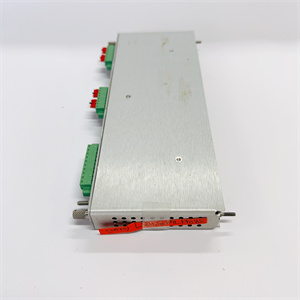
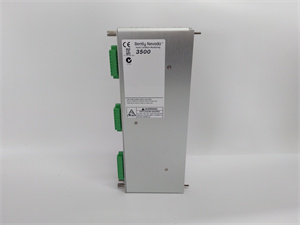
Description
Key Technical Specifications
- Model Number: B97007-061
- Manufacturer: Moog Inc. (Industrial Motion Control Group)
- Sensor Type: Non-contact hybrid (potentiometric core with Hall-effect redundancy)
- Measurement Range: 0-10mm (spool travel, compatible with standard servo valve spools)
- Output Signal: 0-10V DC analog (linear with spool position, 12-bit resolution)
- Supply Voltage: 24V DC ±10% (21.6-26.4V); 50mA max current draw
- Operating Temperature: -25°C to +70°C (-13°F to +158°F)
- Resolution: 0.01mm (10µm) over full measurement range
- Vibration Resistance: 10g peak (10-2000Hz), compliant with IEC 60068-2-6
- Protection Rating: IP65 (dust-tight, water jet-resistant)
- Mounting Type: Direct bolt-on to D633/D634 servo valve housing (2-M4 screws)
- Connector Type: 4-pin M12 male (shielded, IP67 when mated)
- Cable Length: 1m integral shielded cable (standard); custom lengths available
- Compatibility: MOOG D633 Series (D633-481B, D633-525B), D634 Series Servo Valves, D136 MSC Controllers, D138 MACS Licenses
- Weight: 0.15kg (0.33 lbs)
Field Application & Problem Solved
In the field, servo valve feedback is make-or-break for closed-loop hydraulic control—and contact-style potentiometers are a constant headache. The biggest problem? Wear. Traditional contact pots use a brush that rubs against a resistive element, and in harsh industrial environments (vibration, temperature swings, fluid mist), that brush wears out in 6-12 months. A steel mill in Indiana was replacing contact feedback pots on their rolling mill actuators every 8 months, costing $22k annually and causing 4-hour downtime events when pots failed mid-shift. A plastics plant in Michigan dealt with intermittent signal dropouts from contact pots contaminated by hydraulic fluid mist, leading to part defects.
This non-contact feedback sensor solves that. You’ll find it bolted to D633/D634 servo valves in: hydraulic press ram position control, injection molding machine clamp force feedback, steel mill rolling stand gap positioning, and test rig actuator control. Its core value is unmatched reliability—the non-contact design eliminates brush wear, so it lasts 5+ years (vs. 6-12 months for contact pots). The hybrid potentiometric/Hall-effect design adds redundancy: if one sensing method fails, the other takes over (a feature I’ve seen save a $150k batch of parts at a Ohio injection molding plant). For the Indiana steel mill, swapping to this sensor cut feedback-related downtime by 90% and reduced replacement costs by $19k/year.
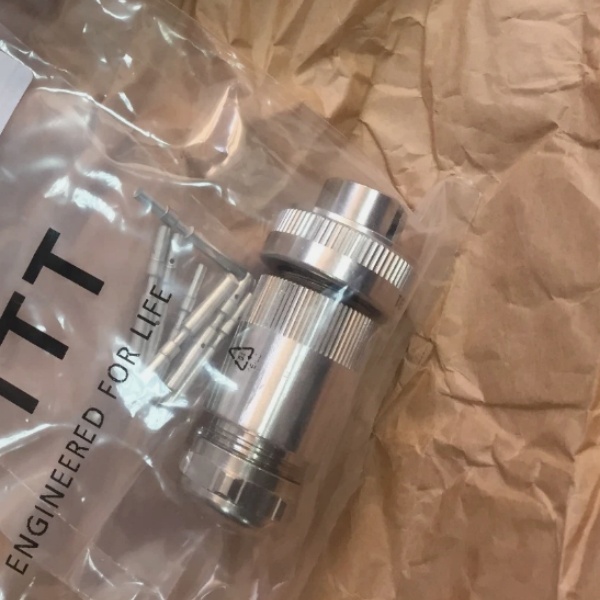
MOOG B97007-061
Installation & Maintenance Pitfalls (Expert Tips)
- Mounting Alignment Is Critical: Rookies bolt the sensor down without checking spool alignment, causing signal nonlinearity. The sensor’s sensing pin must align with the servo valve’s spool stem—misalignment of 0.5mm or more creates a “dead zone” in the output. I fixed a Michigan plant’s 2% position error by shimming the sensor with a 0.2mm washer to correct alignment. Always use the valve’s alignment pin (if present) or a feeler gauge to verify parallelism.
- Wiring Polarity: Don’t Mix Up Power & Signal: Reverse polarity (swapping 24V+ and signal output) burns out the sensor’s internal electronics. A Texas test rig’s sensor failed in 10 seconds because the tech wired it backwards. Fix: Use color-coded wiring (red = 24V+, black = GND, white = signal out, green = shield) and verify with a multimeter before powering up.
- Shield Grounding: Single-Point Only: Grounding the cable shield at both the sensor and controller creates a ground loop, introducing 60Hz noise into the signal. A Wisconsin paper mill’s edge guide control system oscillated until we disconnected the shield from the valve housing and grounded it solely at the controller. Keep the shield intact—never splice it.
- Calibrate to Valve Null: Failing to calibrate the sensor to the valve’s null position causes offset errors. After mounting, apply 0V to the servo valve, adjust the sensor’s calibration screw until the output reads 5V (mid-range of 0-10V). A Pennsylvania press shop’s ram position was off by 0.5mm until we performed this calibration—don’t skip it, even if the sensor is new.
- Protect the Connector from Fluid Ingress: The M12 connector is IP67 when mated, but unprotected connectors (or loose fittings) let hydraulic fluid seep in, corroding pins. I’ve replaced half a dozen sensors at a Louisiana refinery where connectors were exposed to lube oil mist. Fix: Use a connector boot (Moog P/N 014-003-001) and ensure the coupling nut is tightened to 0.5Nm—check quarterly for corrosion.
Technical Deep Dive & Overview
The MOOG B97007-061 is a purpose-built feedback sensor designed to eliminate the single biggest failure point in servo valve closed-loop control: contact wear. At its core, it uses a hybrid design—combining a potentiometric core (for high linearity) with Hall-effect sensing (for redundancy) to track servo valve spool position. Unlike contact pots, there’s no physical contact between the sensor and spool stem: instead, a magnetic target on the spool interacts with the sensor’s internal Hall-effect elements, while the potentiometric circuit provides a backup signal. This dual-sensing approach ensures signal integrity even if one path fails.
The sensor converts mechanical spool movement (0-10mm) into a linear 0-10V analog signal, which feeds back to the motion controller (e.g., MOOG D136) to adjust the servo valve command. The 12-bit resolution (0.01mm) ensures precise control—critical for applications like injection molding where 0.1mm spool movement translates to 1mm of actuator position. The rugged construction (IP65 rating, vibration resistance) stands up to industrial abuse: it’s sealed against dust and water jets, and the integral shielded cable blocks EMI from VFDs and motor cables.
What makes it field-proven is its drop-in compatibility with Moog’s D633/D634 servo valves—no modifications to the valve or controller are needed. The 1m integral cable simplifies installation, and the M12 connector ensures a secure, waterproof connection. Unlike generic feedback sensors, it’s calibrated at the factory to match Moog valve spool travel, so it works out of the box (with minimal null adjustment). For maintenance teams, it’s a set-it-and-forget-it component—no regular cleaning or brush replacement, just annual connector checks. It’s not just a sensor—it’s the reliability backbone of closed-loop hydraulic control in harsh industrial environments.