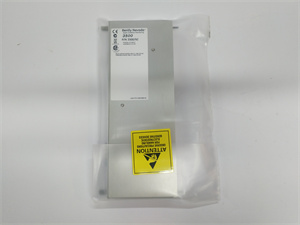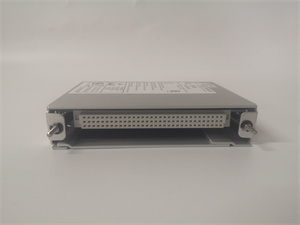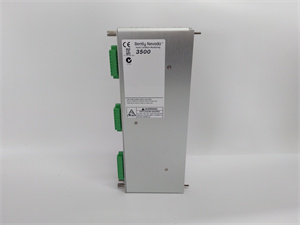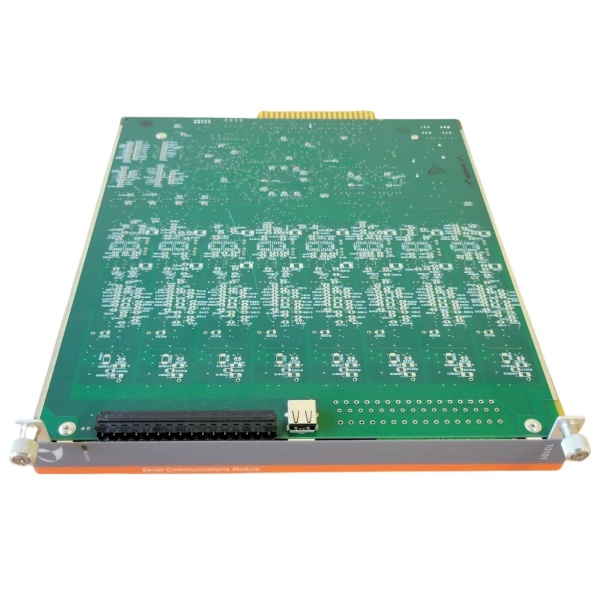
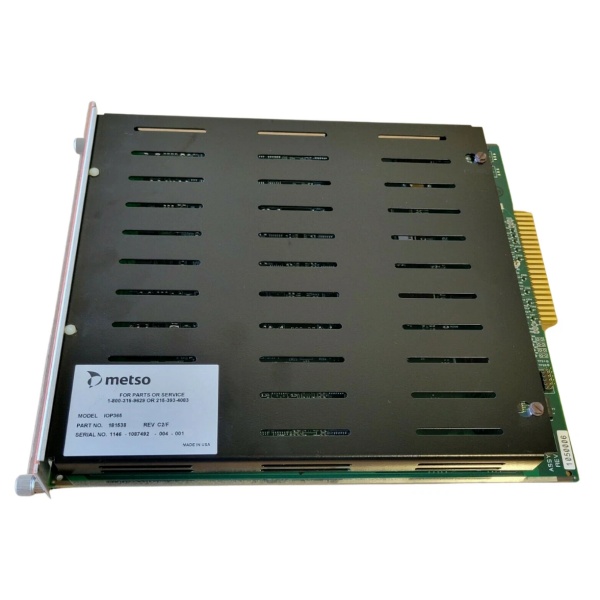
Description
Hard-Numbers: Technical Specifications
-
Processor: High-performance microprocessor (specific architecture not documented, likely ARM or x86-based)
-
Clock Speed: 1 GHz or higher (estimated based on “high clock frequency” specifications)
-
Memory: Large capacity storage (specific MB/GB not documented; “large capacity” per specs)
-
Communication Interfaces: Multiple standard interfaces (RS-232, RS-485, Ethernet, fieldbus protocols)
-
Programming Languages: Supports multiple languages (IEC 61131-3 likely: Ladder, Function Block, Structured Text, Instruction List)
-
Operating Systems: Supports multiple real-time operating systems (RTOS)
-
Input Voltage: 110V-380V AC (wide range power supply)
-
Current Range: 1A-30A (application dependent)
-
Power Consumption: 5W-130W (variable based on configuration)
-
Operating Temperature: 0°C to 60°C (standard industrial range)
-
Storage Temperature: -40°C to +85°C
-
Humidity: 0% to 90% RH non-condensing
-
Mounting: DIN rail (EN 60715 standard)
-
Dimensions: 110 mm × 40 mm × 23 mm (compact form factor per some sources)
-
Weight: 100 g (module only)
-
Connection: Terminal block or screw terminals
-
I/O Capacity: 16 to 256 points (depending on configuration and expansion)
-
Warranty: 1 year standard

The Real-World Problem It Solves
Distributed control systems in pulp mills, mining operations, and process plants need localized intelligence to handle signal conditioning, protocol conversion, and real-time control without burdening the main DPU. The IOP313 serves as a satellite processor—handling complex calculations, communication protocol stacks, and I/O management locally while maintaining tight integration with the central control system. It bridges the gap between dumb I/O modules and the main DPU, providing distributed processing power where needed.
Where you’ll typically find it:
-
Remote I/O racks in paper machine wet end sections, handling high-speed pulse counts from flow meters
-
Mining crushing circuits managing multiple analog loops and motor control centers
-
Bus expander modules (IOP371) and specialized turbine control interfaces (IOP341, IOP345) as the processing core
This module eliminates DPU processing bottlenecks by offloading communication handling and complex signal processing to the edge of the I/O network.
Hardware Architecture & Under-the-Hood Logic
The IOP313 functions as an intelligent I/O processor within the maxPAC architecture. Unlike simple I/O modules that merely convert signals, this CPU module executes control logic, manages communication protocols, and preprocesses data before sending it to the DPU.
Signal flow and processing logic:
-
CPU Core: The high-performance microprocessor executes control algorithms and communication protocol stacks. It handles tasks too complex for standard I/O modules but doesn’t require full DPU resources.
-
Memory Architecture: Large capacity memory stores the real-time operating system, application code, and data tables. Flash memory retains configuration and program logic during power cycles.
-
I/O Bus Interface: The module connects to the maxPAC I/O bus—an 8-bit parallel asynchronous bus capable of 10-microsecond transfers with parity checking and fault detection.
-
Communication Handling: Dedicated hardware manages serial (RS-232/RS-485) and Ethernet interfaces, offloading protocol processing from the main CPU. This enables multi-protocol support (Modbus, proprietary Metso protocols, fieldbuses).
-
Signal Processing: For specialized modules (pulse counting, turbine control, HART), the IOP313 handles high-speed signal conditioning, linearization, and diagnostic algorithms locally.
-
Expansion Capability: The modular design allows I/O point expansion from 16 to 256 points through additional I/O modules, with the IOP313 managing the distributed data collection and synchronization.
METSO IOP365
Field Service Pitfalls: What Rookies Get Wrong
Assuming It’s a Standard I/O Module
The IOP313 is a CPU module, not a simple analog or digital I/O card. It requires proper shutdown procedures, program backup, and configuration management like a full DPU. Swapping it like a disposable input module will lose application code and configuration.
-
Field Rule: Always back up the configuration and application program before replacing an IOP313. Use the Metso programming software to extract the program and document all communication parameters (baud rates, protocol settings, node addresses). The replacement module arrives blank—without the backup, you’re rebuilding the logic from scratch.
Ignoring the Multi-Protocol Configuration
The IOP313 supports multiple communication protocols simultaneously. If you replace one without documenting which ports are configured for Modbus RTU vs. Metso proprietary protocols, the new module won’t communicate with field devices or the DPU.
-
Quick Fix: Photograph the configuration screens before shutdown. Document the DIP switch or software settings for each communication port. If the “Active” LED blinks continuously after replacement (indicating no DPU communication), check that the I/O bus address matches the original—address mismatches are the #1 cause of “dead module” false alarms.
Mismatched Power Supply Ranges
The IOP313 accepts 110V-380V AC, but many maxPAC racks standardize on 24V DC. If you install an AC-powered IOP313 in a DC-only rack (or vice versa), you’ll destroy the module on power-up.
-
Field Rule: Verify the power supply voltage stamped on the module side label before installation. The wide input range (110-380V) is for standalone or remote installations, not rack-mounted applications. Check the rack power supply type (Model APS is 24V DC). If the module smells like burnt electronics after power-up, you just fed 120V AC to a 24V bus—replace the module and check your eyesight.