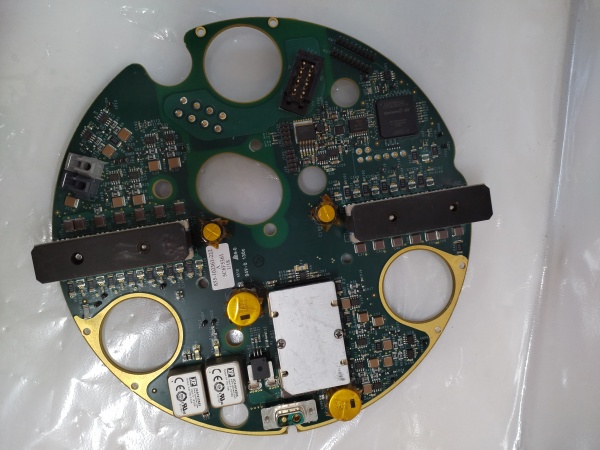
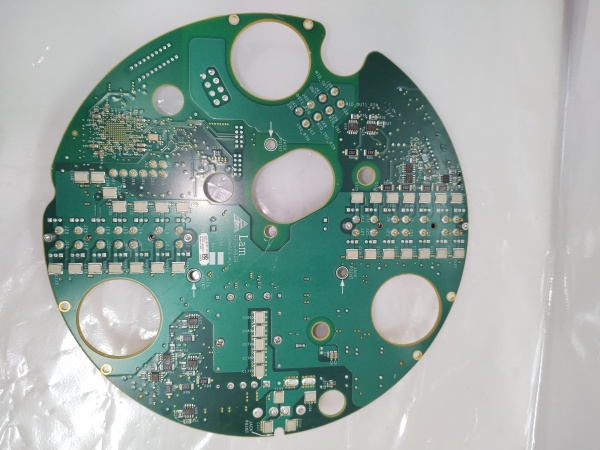
Description
Hard-Numbers: Technical Specifications
-
Input Voltage: 220V AC (±10%, 50/60 Hz)
-
Output Voltage: 12V DC (regulated)
-
Output Current: 10A (maximum continuous)
-
Output Power: 120W (nominal)
-
Conversion Efficiency: 95% (typical at full load)
-
Ripple & Noise: <2 mV peak-to-peak (ultra-low noise for sensitive analog circuits)
-
Power Factor: >0.95 (active PFC)
-
Line Regulation: ±0.5% (input voltage variation)
-
Load Regulation: ±1% (0-100% load step)
-
Transient Response: <50 µs recovery time (50% load step)
-
Operating Temperature: -40°C to +85°C (industrial range)
-
Storage Temperature: -40°C to +85°C
-
Dimensions: 100 mm × 100 mm × 50 mm (compact modular form factor)
-
Weight: 1.0 kg (module only)
-
Protection: Over-current, over-voltage, over-temperature (auto-recovery)
-
Isolation: 3000V AC input-to-output (reinforced insulation)
-
MTBF: >100,000 hours (MIL-HDBK-217F, ground benign)
-
Hot Swap: Supported (with appropriate backplane and ORing diodes)

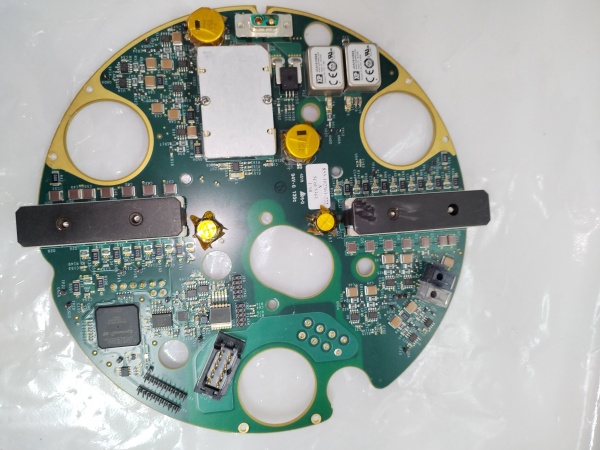
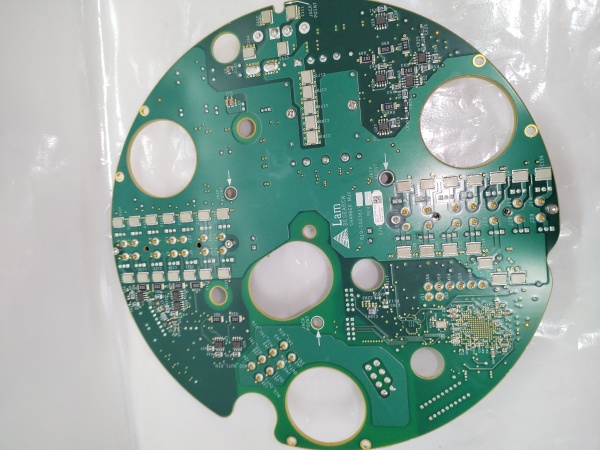
LAM 810-102361-222
The Real-World Problem It Solves
Plasma etch systems need ultra-clean DC power for sensitive analog controls—ESC bias circuits, RF matching network tuning, and sensor front-ends. Standard industrial power supplies generate too much ripple (10-50mV) that couples into RF measurements, causing etch rate drift and wafer scrap. The 810-102361-222 provides 12V at 10A with <2mV ripple—clean enough for 1nm precision etch processes.
Where you’ll typically find it:
-
Powering the ESC (electrostatic chuck) controller in LAM 2300/4500/9400 etch systems
-
Supplying clean 12V to RF match network DIP boards (810-017003-005) and QCM sensors
-
Providing redundant power to critical control subsystems via parallel operation (up to 8 modules)
This module eliminates power-induced process variation that causes wafer scrap in advanced logic and memory device manufacturing.
Hardware Architecture & Under-the-Hood Logic
The 810-102361-222 is a synchronous buck-derived AC-DC power supply with active power factor correction (PFC) and secondary-side synchronous rectification. It’s designed for continuous operation in Class 100 cleanroom environments with minimal airborne contaminants.
Signal flow and power logic:
-
Input Stage: 220V AC passes through EMI filter and bridge rectifier to the active PFC stage. The PFC controller shapes input current for >0.95 power factor and regulates bus voltage to ~380V DC.
-
Primary Conversion: A half-bridge or full-bridge topology switches at high frequency (typically 100-200 kHz) through an isolation transformer. The transformer provides 3000V AC isolation and voltage step-down.
-
Secondary Rectification: Synchronous MOSFETs rectify the transformer output, followed by an LC filter to achieve <2mV ripple. A secondary-side controller regulates the 12V output via optocoupler feedback to the primary.
-
Protection Circuits: Current sensing on both primary and secondary sides triggers hiccup-mode over-current protection. An NTC thermistor and thermal shutdown protect against overheating. All protections are auto-recovering—no manual reset required after fault clearance.
-
ORing Diodes: For parallel operation (up to 8 modules), internal ORing MOSFETs or external diodes prevent back-feeding when one module fails. Current sharing is achieved via droop compensation or active current-share bus (depending on revision).
-
Status Monitoring: A status pin or I2C interface (variant dependent) reports output voltage, current, temperature, and fault conditions to the system controller (810-015130-103 monitoring board).
LAM 810-102361-222
Field Service Pitfalls: What Rookies Get Wrong
Assuming It’s a Standard 12V Power Supply
This is not a commodity 12V supply—the <2mV ripple specification is critical for RF-sensitive analog circuits. Substituting a standard industrial supply with 20mV ripple will cause etch rate drift and wafer scrap that takes days to diagnose.
-
Field Rule: Verify the replacement unit has <2mV ripple specification, not just “low noise.” Check the LAM part number suffix—810-102361-221 is 24V output, 810-102361-223 is dual 6V. Installing the wrong voltage will destroy the ESC controller or RF match board. Always measure output ripple with a scope (20 MHz bandwidth) before connecting to sensitive loads.
Ignoring the Parallel Current Sharing
When multiple 810-102361-222 modules are paralleled for redundancy (common in 9400 PTX systems), they must share current evenly. If one module hogs the load, it overheats while the others loaf, leading to premature failure.
-
Quick Fix: Check the current share balance after installation. Measure individual module output currents with a Hall-effect clamp meter. If one module carries >60% of total load, verify the share bus wiring (usually a single wire between modules) is connected and the share resistors are matched. Unequal cable lengths between modules and the load bus can also cause imbalance—keep cable impedance symmetric.
Neglecting the Input EMI Filter
The 220V AC input has a specific EMI filter to meet SEMI F47 and CE conducted emission standards. If this filter is damaged (common during power surges or lightning strikes), the supply will inject noise back into the facility power, tripping other equipment.
-
Field Rule: If the supply fails after a power event, check the input filter components (common-mode chokes, X-capacitors, Y-capacitors) before replacing the entire module. The filter is often a separate subassembly—replace just the filter if the power stage is intact. Document the filter part number; it’s not always the same as the main supply P/N.