Description
Hard-Numbers: Technical Specifications
- Control Type: Single-axis or dual-axis joystick (configuration dependent)
- Input Voltage: 24VDC (18-36V range)
- Power Consumption: 8W nominal, 15W maximum
- Output Signals: 4-20mA analog, CANopen, or proprietary Kongsberg protocol
- Joystick Resolution: 12-bit (4096 positions per axis)
- Enclosure Rating: IP65 (front), IP20 (rear)
- Operating Temperature: -15°C to +55°C (+5°F to +131°F)
- Humidity Range: 10-95% RH (non-condensing)
- Mounting: Panel mount (flush) or desktop console
- Dimensions: 220mm × 150mm × 100mm (H×W×D)
- Weight: 2.5 kg (5.5 lb)
- Communication Interface: RS-485, CANopen, or Ethernet (variant dependent)
- LED Indicators: Power, Status, Fault, Communication

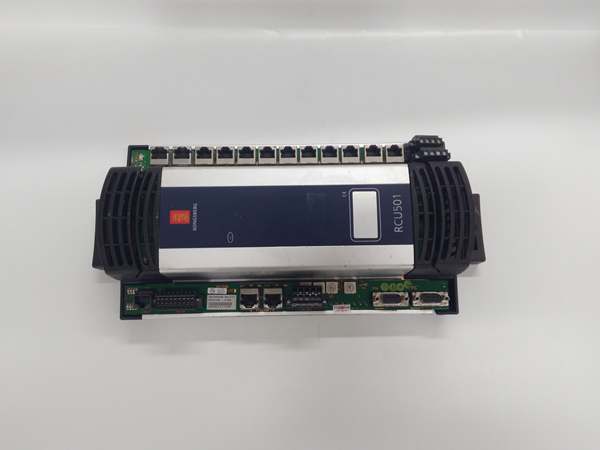
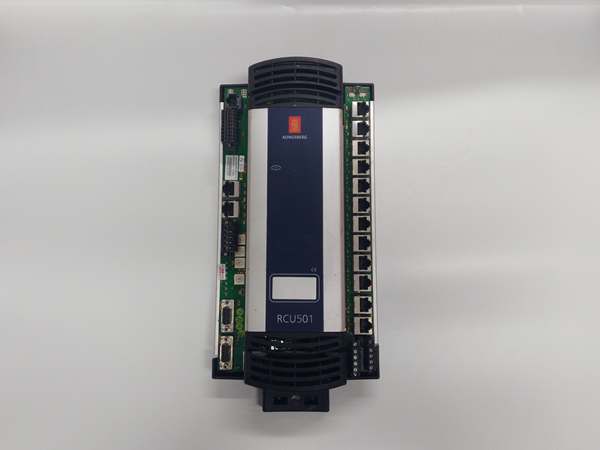
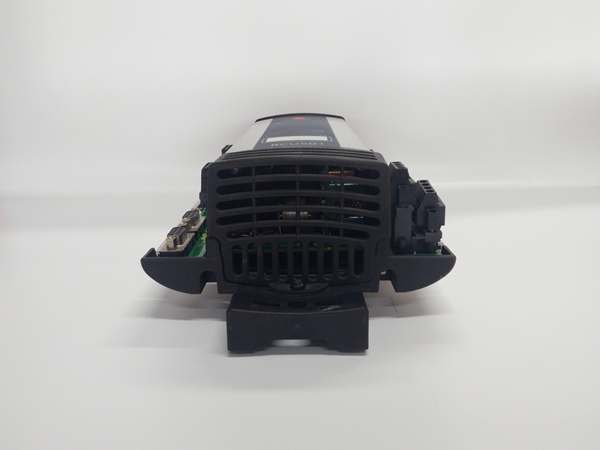
KONGSBERG RCU501
The Real-World Problem It Solves
Operators need precise, intuitive control of thrusters and propulsion systems from the bridge, and hard-wired switches or complex throttle arrangements don’t cut it in rough seas. The RCU501 provides joystick-based proportional control that gives smooth thrust modulation and positioning accuracy without requiring constant throttle adjustments.
Where you’ll typically find it:
- Dynamic positioning control stations on offshore support vessels
- Bridge consoles on tugs and workboats
- ROV control stations and offshore crane operations
The bottom line: It translates operator intent into precise thruster commands, giving manual control that feels natural even in challenging sea conditions—critical when positioning accuracy matters more than raw power.
Hardware Architecture & Under-the-Hood Logic
This unit is essentially a ruggedized joystick controller with onboard signal processing and communication interfaces. The joystick potentiometers provide analog position signals that are digitized and scaled into control commands. The onboard microcontroller handles deadband adjustment, scaling, and communication with the propulsion control system.
Signal flow breaks down like this:
- Joystick potentiometers output analog position voltage (0-5V per axis)
- ADC samples joystick position at 100 Hz update rate
- Microcontroller applies scaling, deadband, and gain parameters
- Control commands formatted as 4-20mA, CANopen, or proprietary protocol
- Communication interface transmits commands to propulsion controller
- Status LEDs indicate unit health and communication state
- Watchdog circuit monitors processor activity and forces safe state on fault
KONGSBERG RCU501
Field Service Pitfalls: What Rookies Get Wrong
Calibration DriftJoystick potentiometers drift over time, especially in salty marine environments. Operators complain that the unit doesn’t return to center or the response is sluggish on one side.
- Field Rule: Calibrate quarterly in harsh environments. Use the onboard calibration mode or the connected propulsion system’s calibration routine. Verify center position and full-scale output in both directions. Document the calibration values—joystick replacement means starting from scratch.
Improper Grounding on 4-20mA OutputsTechs wire the 4-20mA output loops incorrectly, causing ground loops or signal loss. The RCU501 expects the current loop to be powered externally, but some systems use the RCU as the current source.
- Quick Fix: Check your propulsion controller’s input type. If it’s a passive 2-wire input, the RCU powers the loop. If it’s a 4-wire active input, the propulsion controller powers the loop. Verify with a multimeter—current should flow in the correct direction. Ground the shield at one end only to avoid hum.
Moisture Ingress Through Rear ConnectorsThe front is IP65 rated, but the rear connectors are exposed. Techs mount the unit in damp consoles without sealing the cable entries, and moisture wicks into the unit, causing intermittent faults.
- Field Rule: Use IP68-rated cable glands on all rear connections. Apply silicone sealant to the connector backs where the cable jacket meets the connector. Install the unit with a slight downward tilt to prevent condensation pooling. If you see corrosion on the connector pins, replace the entire unit—cleaning rarely lasts in marine service.