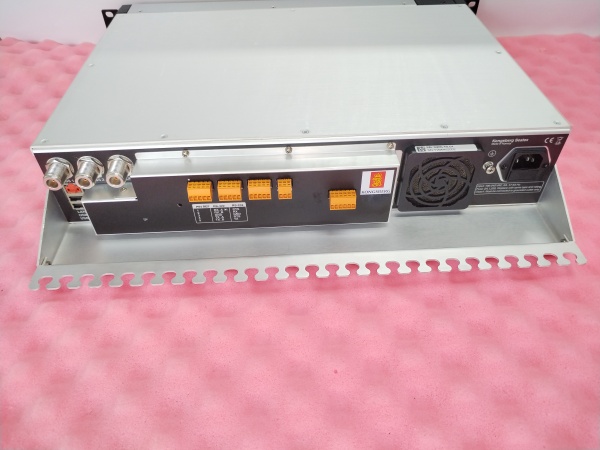
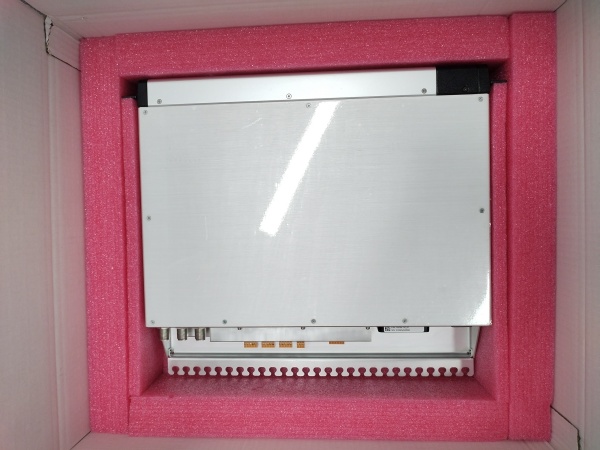
Description
Hard-Numbers: Technical Specifications
-
GNSS Constellations: GPS L1/L2 + GLONASS L1/L2 + SBAS (WAAS, EGNOS, GAGAN, MSAS)
-
Position Accuracy: <10 cm (95% CEP with Seastar G2 service); <1 m (95% CEP with DGPS/DGLONASS); <1 m (95% CEP with SBAS)
-
Velocity Accuracy: <0.05 m/s (95% CEP)
-
Output Rate: 1 Hz (standard); up to 10 Hz (configurable)
-
Acquisition Time: <60 seconds cold start; <30 seconds warm start
-
Correction Inputs: RTCM SC-104 v2.2, 2.3; Seastar proprietary; IALA beacon (built-in receiver)
-
Communication Interfaces: 3× Serial ports (2× NMEA output, 1× RTCM input), RS-232/RS-422 selectable; 1× Ethernet/LAN; 3× USB (software updates)
-
Data Output Formats: NMEA 0183 v3.0 (GGA, GLL, GSA, GST, GSV, VER, VTG, ZDA); SNMP v2.0 (alarm status)
-
Power Requirements: 100-240V AC 50/60Hz, max 60W (processing unit); 5V DC (GNSS antenna, from unit); 10.2V DC (IALA antenna); 12V DC (Spotbeam antenna)
-
Operating Temperature: -15°C to +55°C (unit, recommended +5°C to +40°C); -40°C to +85°C (GNSS antenna); -55°C to +70°C (IALA antenna)
-
Humidity: Max 95% RH non-condensing (unit); hermetically sealed (antennas)
-
Vibration: IEC 60945/EN 60945 (maritime standard)
-
EMC Compliance: IEC 60945/EN 60945 (immunity/emission)
-
Safety Standard: IEC 61010-1/EN 61010-1 (LVD)
-
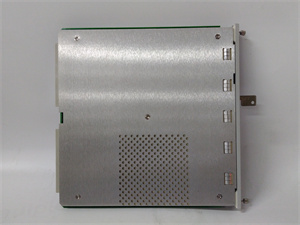
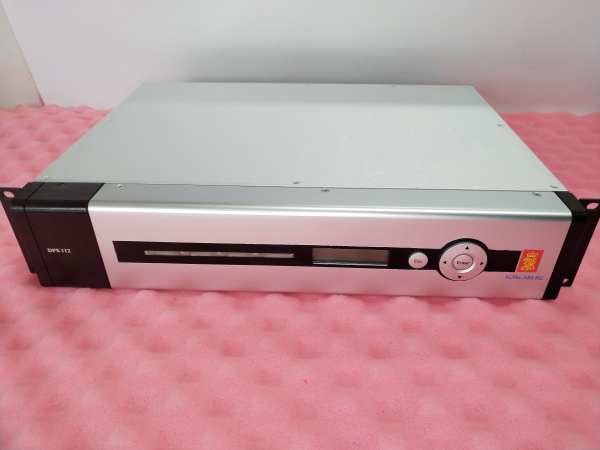
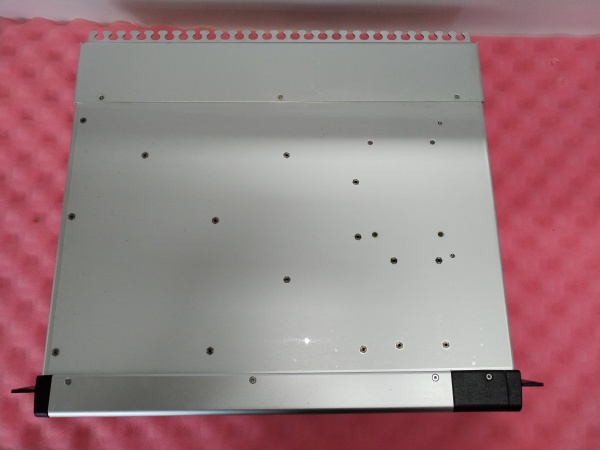
Dimensions: 89 mm × 444 mm × 357 mm (W × H × D, processing unit); 69 mm × 185 mm (GNSS antenna)
-
Weight: 5.8 kg (unit); 0.5 kg (GNSS antenna); 0.78 kg (IALA antenna); 1.4 kg (Spotbeam antenna)
-
Enclosure Rating: IP20 (unit, rackmount); IP67/IP68 (antennas, dependent on variant)

KONGSBERG DPS112
The Real-World Problem It Solves
Offshore drilling vessels and platform supply ships cannot maintain station using visual references or standard GPS—sub-meter accuracy is required to keep the vessel within a few meters of the wellhead or platform, regardless of wind, current, and waves. Standard GPS gives you 3-5 meter accuracy on a good day; the DPS112 pulls in L-band satellite corrections from Fugro’s Seastar G2 service to deliver decimeter-level positioning worldwide, independent of local reference stations.
Where you’ll typically find it:
-
Dynamic positioning (DP) systems on drillships working in 3000m water depth
-
Offshore construction vessels laying subsea pipelines with <1m accuracy requirements
-
Platform supply vessels (PSVs) conducting cargo operations alongside fixed platforms
This sensor eliminates the “position jump” that causes DP systems to alarm and vessels to abort operations, providing continuous sub-meter accuracy even when sky view is obstructed by vessel superstructure.
Hardware Architecture & Under-the-Hood Logic
The DPS112 functions as a multi-constellation GNSS engine with integrated differential correction capability. It’s not just a GPS receiver—it’s a complete positioning system with multiple RF front-ends, a dedicated processor, and multiple correction pathways.
Signal flow and processing logic:
-
RF Reception: Dual-frequency antennas (GNSS, IALA, Spotbeam) receive GPS L1/L2, GLONASS L1/L2, SBAS, and L-band correction signals. The L-band receiver (1.5 GHz range) pulls in Fugro Seastar G2 corrections via geostationary satellites.
-
Signal Processing: A multi-channel correlator tracks up to 24 satellites simultaneously across both constellations. Dual-frequency reception (L1/L2) allows ionospheric error modeling without external corrections.
-
Correction Integration: The processor blends RTCM corrections (from IALA beacons or local DGPS), SBAS corrections (WAAS/EGNOS), and Seastar G2 orbit/clock corrections. Seastar G2 uses Fugro’s global reference station network to calculate precise satellite orbits and clock errors, broadcasting these via L-band.
-
Position Calculation: Real-time kinematic (RTK)-like algorithms compute position using carrier-phase measurements. With Seastar G2, this yields <10cm accuracy; with standard DGPS, <1m.
-
Data Distribution: The processor outputs NMEA 0183 sentences via serial ports to DP computers, survey systems, and vessel networks. Ethernet provides SNMP status monitoring and remote configuration. USB allows field software updates without dismounting the unit.
-
Integrity Monitoring: Built-in RAIM (Receiver Autonomous Integrity Monitoring) checks for satellite anomalies. If GPS integrity is compromised, the system automatically weights GLONASS observations higher and flags the degradation to the DP system.
KONGSBERG DPS112
Field Service Pitfalls: What Rookies Get Wrong
Assuming All Antennas Are Interchangeable
The DPS112 uses three distinct antennas: GNSS (combined GPS/GLONASS), IALA (beacon receiver), and Spotbeam (L-band for Seastar G2). Each has specific gain patterns, filtering, and DC power requirements. Swapping a GNSS antenna onto the IALA port results in no beacon reception and “DGPS Timeout” alarms.
-
Field Rule: Label antenna cables during installation. The GNSS antenna has a 5V DC bias from the processing unit; IALA requires 10.2V; Spotbeam requires 12V. Check the antenna part numbers against the datasheet—Kongsberg uses specific TNC connectors and cable types (RG-214 or LMR-400). If the Seastar G2 service won’t acquire, verify the Spotbeam antenna has clear sky view to the southern sky (Fugro satellites are geostationary).
Ignoring the “Recommended” Temperature Range
The unit operates from -15°C to +55°C, but Kongsberg specifies +5°C to +40°C as “recommended.” In tropical installations with poor ventilation, the internal temperature climbs to 50°C+, causing oscillator drift and position jitter that looks like a satellite issue.
-
Quick Fix: Monitor the internal temperature via the diagnostic menu. If it exceeds +45°C, add forced ventilation or relocate the unit out of the engine room. The 60W power supply generates significant heat—ensure the 89mm × 444mm × 357mm chassis has 10cm clearance on all sides. If the position accuracy degrades from 10cm to 50