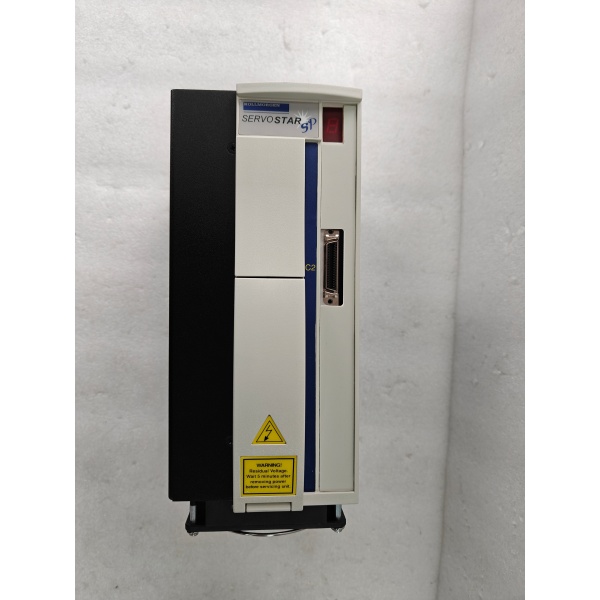
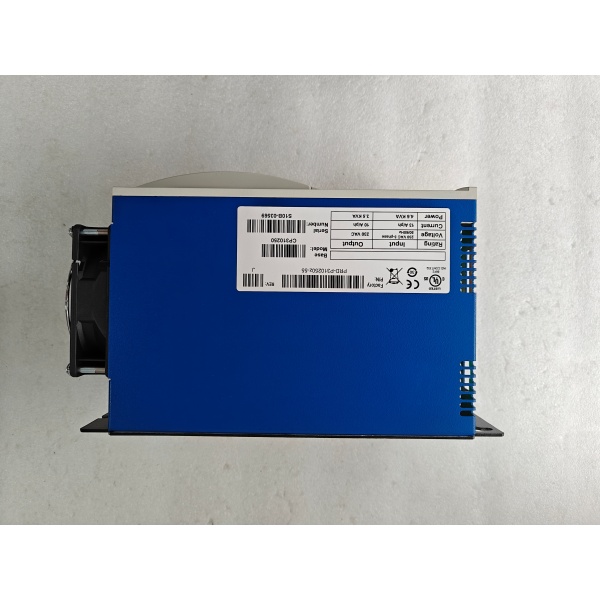
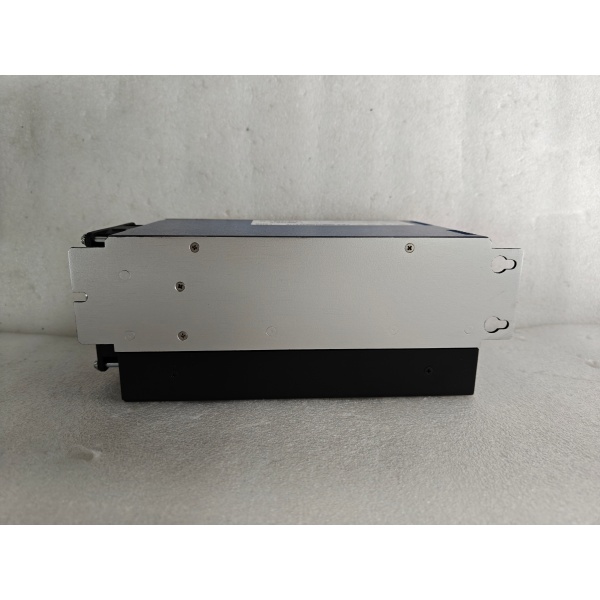
Description
Hard-Numbers: Technical Specifications
- Travel Length: 250mm (9.84 inches)
- Repeatability: ±0.02mm (typical), ±0.05mm (guaranteed)
- Maximum Speed: 2.5 m/s (depends on motor/drive combo)
- Maximum Acceleration: 30 m/s²
- Load Capacity: 50kg horizontal, 20kg vertical
- Belt Type: Steel-reinforced timing belt (AT10 or HTD profile)
- Drive Options: Direct-mount servo motor flange
- Mounting Surface: Precision-ground aluminum extrusion
- Position Feedback: Magnetic encoder scale or external motor encoder
- Operating Temperature: 0°C to +50°C (32°F to +122°F)
- Protection: IP54 standard (optional IP65 kit)
- Width Profile: 310mm (including motor mount)

KOLLMORGEN PRD-P310250Z-55
The Real-World Problem It Solves
You need linear motion that’s fast and repeatable enough for pick-and-place operations but doesn’t justify the cost of a ball screw or linear motor stage. The PRD-P310250Z-55 hits the sweet spot—belt drive gives you speed and low cost while the aluminum profile and bearing system deliver accuracy that satisfies 90% of general automation tasks.
Where you’ll typically find it:
- High-speed sorters in distribution centers
- Component insertion machines in electronics assembly
- Carton sealing stations in end-of-line packaging
The bottom line: It moves payloads quickly and accurately enough for most material handling jobs, keeping your per-axis cost well under a grand.
Hardware Architecture & Under-the-Hood Logic
This stage is a classic belt-drive linear actuator built around a precision aluminum extrusion with integrated linear guides. The carriage rides on recirculating ball bearings, and the drive belt loops around pulleys at both ends. A servo motor mounts directly to the front pulley, eliminating coupling backlash.
The mechanical path works like this:
- Motor torque transfers to the front pulley through a keyed shaft
- Timing belt engagement converts rotary motion to linear motion
- Carriage follows the belt path, constrained by linear guide rails
- Tensioning mechanism at the opposite end maintains belt preload
- End-终止 switches and hard mechanical 终止s prevent overtravel
- Optional magnetic strip provides position feedback for homing
KOLLMORGEN PRD-P310250Z-55
Field Service Pitfalls: What Rookies Get Wrong
Improper Belt TensionA loose belt causes position errors and reduces speed capability. An over-tightened belt kills bearings and prematurely stretches the belt. The tension spec is around 1-2% elongation, but most techs guess by feel.
- Field Rule: Use a belt tension gauge or the frequency measurement method—tap the belt and measure vibration frequency. For this belt pitch, aim for 80-120 Hz. Document the value after installation.
Ignoring Offset Load MomentsThe carriage can handle 50kg, but only if the load center is close to the carriage plane. Techs mount heavy tooling too far above or below the carriage, creating moment loads that wear bearings unevenly and introduce positioning errors.
- Quick Fix: Calculate your moment arm (force × distance from carriage center). Keep static moments under 10 Nm and dynamic moments under 5 Nm. You’re better off adding a counterweight than fighting physics.
Skipping Homing RoutineMagnetic encoder scales on these stages drift over time with temperature changes. Techs power-cycle and assume the stage knows where it is, then the carriage crashes into the end 终止 during rapid moves.
- Field Rule: Always execute a homing sequence after power-up, even if you think it hasn’t moved. The encoder needs to see the reference mark to reset position error. Teach your operators this—it’ll save you midnight service calls.