Description
Key Technical Specifications
-
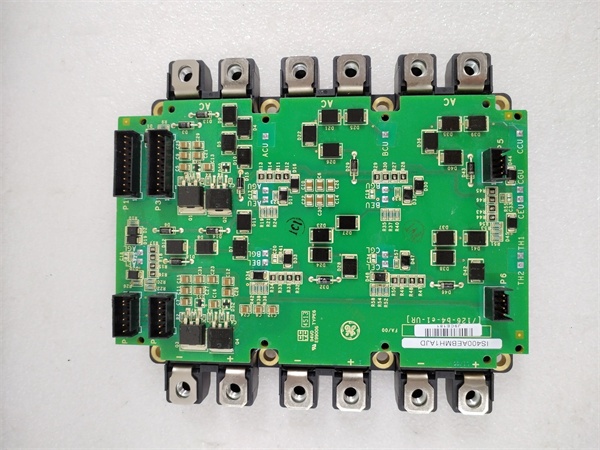
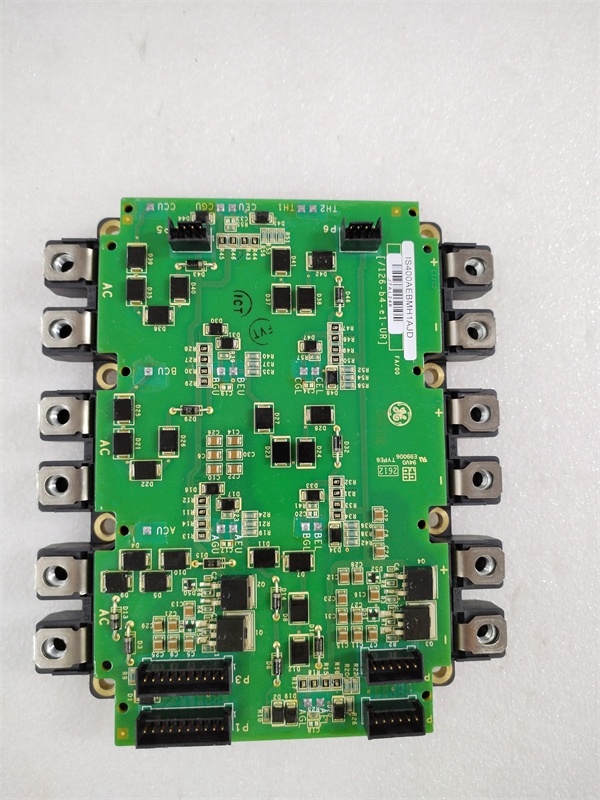
Model Number: IS400AEBMH1AJD
-
Manufacturer: GE Fanuc (Salem, VA)
-
Analog I/O: 8 differential channels, 16-bit, ±10 V or 4-20 mA jumper-select; 5 kHz bandwidth
-
Sensor Types: IEPE accelerometers, RTDs, thermocouples, velomitors—auto-ID via TEDS
-
Communication: Dual Ethernet 10/100 (ISBus), RS-485 Modbus-RTU, 19.2 k fixed
-
Processor: 32-bit ARM, 150 MHz, 4 MB battery-backed SRAM for trend buffers
-
Power Supply: 24 VDC ±10 %, ≤ 1.5 W typical; reverse-polarity protected
-
Isolation: 1500 Vrms channel-to-Earth, 500 V channel-to-channel
-
Operating Temperature: –40 °C to +85 °C (conformal-coated)
-
Dimensions / Weight: 173 × 112 × 13 mm, 0.12 kg (0.25 lb)

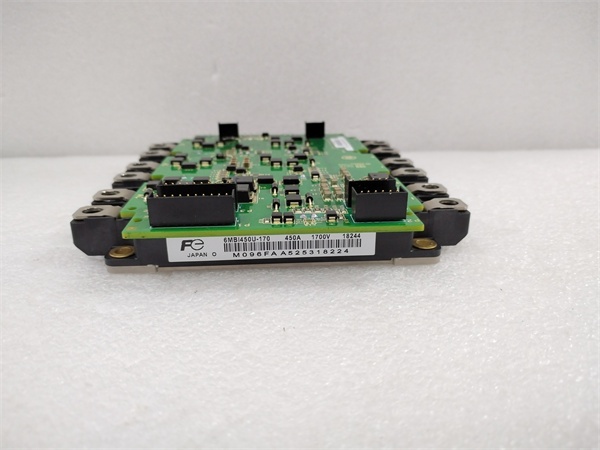
IS400AEBMH1AJD
Field Application & Problem Solved
A 7FA peaker doesn’t wait for a bearing to seize—it wants continuous FFT trending from every accelerometer on the #1 & #2 bearings. The IS400AEBMH1AJD lives in the Mark VIe rack, powers eight IEPE probes, computes RMS & peak-peak, and ships Ethernet packets to the HMI every 100 ms. When the card fails you lose vibration protection, the unit folds to manual, and you’re climbing again; swap the board, snap the two RJ-45s back in, and the trends re-appear—no re-cal, no firmware flash. Found in every Mark VIe-equipped gas turbine from 50 MW simple-cycle to 400 MW combined-cycle blocks. Value is early-warning: 0.1 % amplitude accuracy keeps API-670 alarm curves honest, so you schedule the outage before the shaft rubs.
A 7FA peaker doesn’t wait for a bearing to seize—it wants continuous FFT trending from every accelerometer on the #1 & #2 bearings. The IS400AEBMH1AJD lives in the Mark VIe rack, powers eight IEPE probes, computes RMS & peak-peak, and ships Ethernet packets to the HMI every 100 ms. When the card fails you lose vibration protection, the unit folds to manual, and you’re climbing again; swap the board, snap the two RJ-45s back in, and the trends re-appear—no re-cal, no firmware flash. Found in every Mark VIe-equipped gas turbine from 50 MW simple-cycle to 400 MW combined-cycle blocks. Value is early-warning: 0.1 % amplitude accuracy keeps API-670 alarm curves honest, so you schedule the outage before the shaft rubs.
Installation & Maintenance Pitfalls (Expert Tips)
Sensor power reversed—24 V on IEPE line cooks the accelerometer
The 8 analog headers are keyed alike but pin-outs differ. Land a 24 VDC contact on the IEPE header and you back-feed 24 V into the 18 V constant-current source—probe dies, card smells like fish. Meter pin-to-pin before you torque; the silk-screen “CH1-CH8” legend is your only guard.
The 8 analog headers are keyed alike but pin-outs differ. Land a 24 VDC contact on the IEPE header and you back-feed 24 V into the 18 V constant-current source—probe dies, card smells like fish. Meter pin-to-pin before you torque; the silk-screen “CH1-CH8” legend is your only guard.
Ethernet polarity reversed—link stays down, controller flags “AEBM COMM”
The two RJ-45s are auto-MDIX but the ISBus VLAN is polarity-sensitive. Flip TX/RX and the switch sees no link—turbine drops to manual. Always confirm green LED on switch port before you close the door.
The two RJ-45s are auto-MDIX but the ISBus VLAN is polarity-sensitive. Flip TX/RX and the switch sees no link—turbine drops to manual. Always confirm green LED on switch port before you close the door.
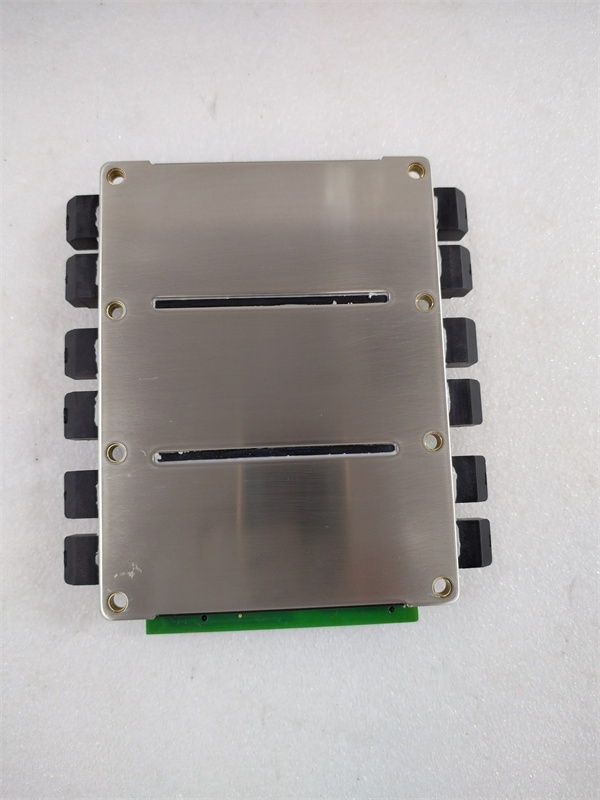
IS400AEBMH1AJD
Battery dead—SRAM loses trend buffer, bearing history blank
A 3 V lithium cell backs the 30-day trend buffer. When it drops below 2.2 V the FFT history blanks and you lose ramp-rate data. Cell is solder-tab; cut it out, add a CR2032 holder on the faceplate, and reload the config via Toolbox-ST—five-minute fix, no crane needed.
A 3 V lithium cell backs the 30-day trend buffer. When it drops below 2.2 V the FFT history blanks and you lose ramp-rate data. Cell is solder-tab; cut it out, add a CR2032 holder on the faceplate, and reload the config via Toolbox-ST—five-minute fix, no crane needed.
Conformal coat cracked—salt fog bridges the 2.5 V reference
The board is coated, but the RJ-45 edge is masked. If the coat cracks, salt bridges the precision reference and you see 5 % offset on every channel. Scrape the salt, hit the edge with 2100-FTG, and re-coat—problem gone for another decade.
The board is coated, but the RJ-45 edge is masked. If the coat cracks, salt bridges the precision reference and you see 5 % offset on every channel. Scrape the salt, hit the edge with 2100-FTG, and re-coat—problem gone for another decade.
Technical Deep Dive & Overview
IS400AEBMH1AJD is a micro-size vibration front-end frozen in 2000 silicon. A 16-bit ADC samples eight channels at 5 kHz; an ARM MCU runs FFT, computes RMS/peak-peak, and ships Ethernet frames to the HMI every 100 ms. Because the card carries both analog and network traffic you can swap it hot—just kill the 24 VDC supply first or you’ll arc-weld the two RJ-45s. Treat the IEPE coax like instrumentation cable and the board will keep the bearing trend flat for another thirty years
IS400AEBMH1AJD is a micro-size vibration front-end frozen in 2000 silicon. A 16-bit ADC samples eight channels at 5 kHz; an ARM MCU runs FFT, computes RMS/peak-peak, and ships Ethernet frames to the HMI every 100 ms. Because the card carries both analog and network traffic you can swap it hot—just kill the 24 VDC supply first or you’ll arc-weld the two RJ-45s. Treat the IEPE coax like instrumentation cable and the board will keep the bearing trend flat for another thirty years
.