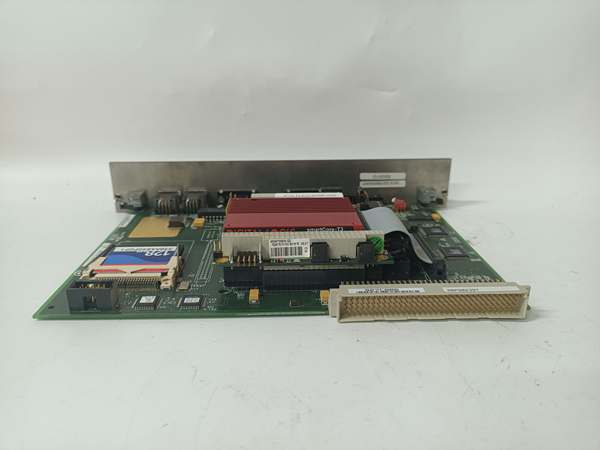
Description
Key Technical Specifications
| Parameter | Value |
|---|---|
| Processor | 1 GHz PowerPC 750FX |
| Cache Memory | 128 KB Level 2 (L2) Cache |
| RAM / Data Capacity | 64 MB |
| Flash Memory | 4 MB (For BIOS, OS, and Application Storage) |
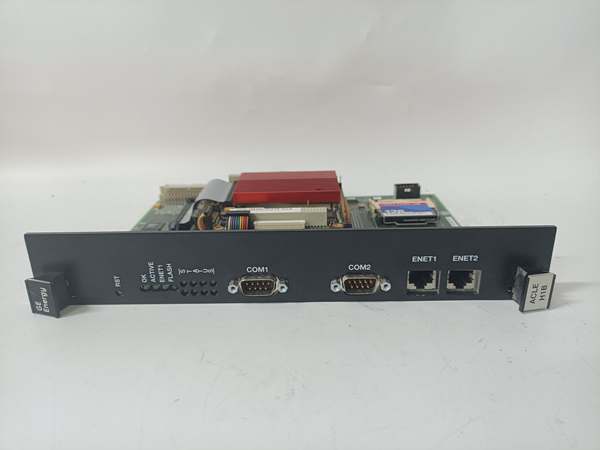
| Communication Ports | 2x 10/100 Base-TX Ethernet (RJ45), 2x CANbus, 1x USB, 1x SD Card Slot |
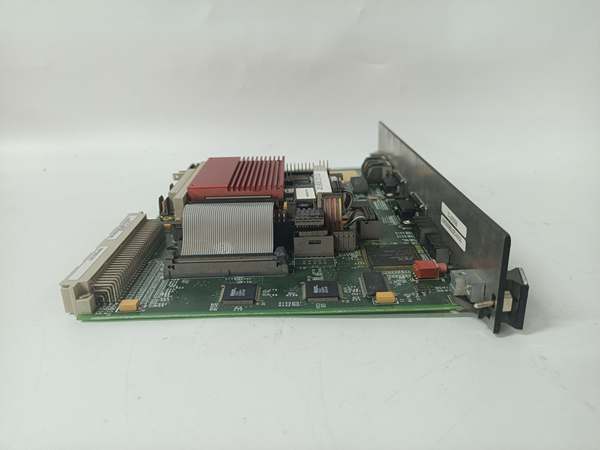
| Expansion | PCI Controller for high-speed bus communication |
| Mounting | DIN-Rail Installation (Occupies two half-slots in EX2100/Mk VIe rack) |
| Operating Temp | 0°C to +60°C (32°F to 140°F) |
| Storage Temp | -40°C to +85°C |
| Humidity | 5% to 95% (Non-condensing) |
| Dimensions | Approx. 23.5 cm × 10.8 cm (9.25 x 4.25 inches) |
| Weight | 0.57 kg (1 lb 4 oz) |
| Indicators | Active, OK, ENET, Status, Flash LEDs; Hardware Reset Switch |
| Compliance | CE, UL, Industrial EMC Standards |
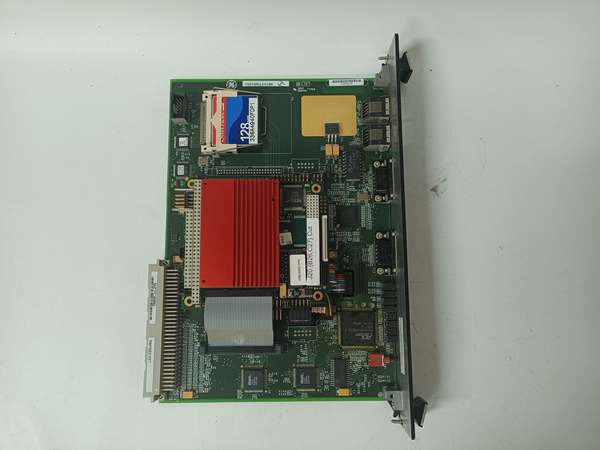
GE IS215ACLEH1B
Product Introduction
The is a mission-critical Application Control Layer Module (ACLE) engineered by GE for its renowned Speedtronic Mark VI, Mark VIe, and EX2100e excitation control platforms. Serving as the “brain” of the I/O pack, this microprocessor-based controller is responsible for executing the core application code, handling complex boolean and analog logic, managing I/O forcing, and orchestrating high-speed data exchange between the field devices and the central control room .
Built around a robust 1 GHz PowerPC 750FX processor with 128KB of L2 cache, the ACLE module delivers the computational horsepower required for demanding real-time turbine and excitation control tasks . Its rich set of interfaces—including dual redundant 10/100 Base-TX Ethernet ports, dual CANbus ports, a USB port, and an SD card slot—ensures seamless integration into both legacy and modern distributed control system (DCS) architectures . Encased in a rugged, compact form factor designed for DIN-rail mounting, the thrives in the harsh electrical and thermal environments of power generation plants, providing the reliability and deterministic performance essential for protecting multi-million-dollar rotating equipment .
Key Selling Points & Differentiators
- High-Speed Processing for Real-Time Control: Equipped with a 1 GHz PowerPC 750FX processor and 128KB L2 cache, ensuring ultra-fast execution of complex control algorithms and minimal latency in critical protection schemes .
- Redundant Communication Architecture: Features dual 10/100 Base-TX Ethernet ports and dual CANbus interfaces, enabling seamless network redundancy to prevent single-point-of-failure communication losses .
- Flexible Configuration & Data Logging: Supports online application configuration loading, non-volatile flash memory for program storage, and includes an SD card slot for extended data logging, event recording, and fast disaster recovery .
- Comprehensive Hardware I/O Management: Manages a wide array of I/O points, supports internal boolean forcing for debugging, and interfaces directly with the PCI bus for high-speed communication with other rack-mounted I/O modules .
- Rigorous Validation & Burn-In: Every refurbished unit undergoes a stringent 48-hour dynamic stress test. We validate processor performance, memory integrity, Ethernet/CANbus connectivity, and SD card read/write cycles under load. Includes a serialized test report and a 12-month warranty.
- Immediate Dispatch: We maintain a specialized inventory of Mark VI/EX2100e controllers and I/O packs. New surplus and tested units are ready for 24-hour worldwide shipping to meet your emergency outage and planned maintenance needs.
FAQ
- It acts as the main application controller (ACLE) within the I/O pack. It executes the turbine or exciter control application code, processes I/O data, performs logical operations, and manages network communications .
- Which GE control systems is this module compatible with?
The is designed for seamless integration into GE Speedtronic Mark VI, Mark VIe, and EX2100e excitation control systems .
- How is the module mounted, and how much space does it require?
It is designed for DIN-rail mounting and occupies two half-slots (one full slot width) in a standard EX2100 exciter or Mark VI/VIe I/O rack .
- What communication ports are available on the front panel?
The front panel features two 10/100 Base-TX Ethernet ports (RJ45), two CANbus ports, a USB port, and an SD card slot for configuration, diagnostics, and data logging .
- Does the 12-month warranty cover issues related to firmware corruption?
The warranty covers hardware failures under normal operating conditions. While the module includes robust non-volatile flash memory and CRC checks to prevent corruption, issues arising from improper firmware updates or power loss during a flash write cycle may require a case-by-case evaluation.

GE IS215ACLEH1B
Quality Transparency SOP
- Incoming Verification: Serial number traceability and cross-referencing against GE databases. Comprehensive visual inspection under magnification for burnt components, damaged Ethernet/USB ports, or bent pins.
- Functional Bench Test: Mounted in a dedicated Mark VI/EX2100 test rig. Power-on self-test (POST) is monitored, and the 1 GHz processor speed and 128KB L2 cache integrity are verified using diagnostic software.
- Signal Integrity & Stress Testing: Subjected to a continuous 48-hour dynamic stress test, including thermal cycling, forced Ethernet/CANbus packet flooding to test communication stack stability, and read/write endurance testing on the SD card slot.
- Firmware/Config Verification: Current firmware version and application code are backed up. The 4MB flash memory is checked for bad sectors.
- Final QC & Packaging: Final quality control sign-off completed and dated. Sealed in a custom anti-static bag with moisture absorption packets. Shipped in reinforced cardboard packaging with industrial-grade foam padding to prevent transit damage.
Transparency required: Test reports and video evidence of the bench tests are available upon request. We maintain a strict policy of never claiming “100% failure-free” as all industrial electronic components naturally degrade over time and under operational stress.
Technical Risk Avoidance
Improper Firmware/Application Code Loading
Risk: The stores the turbine’s or exciter’s application logic and configuration in its 4MB flash memory. Loading an incorrect firmware version or a mismatched application file can cause the controller to crash, lose communication with the I/O pack, or worse, send incorrect control signals to the turbine, potentially leading to a forced outage.
Prevention: Always verify the exact firmware revision and application checksum against the plant’s current control narratives and backup files before downloading anything to the controller. Maintain a strict change management log.
Anecdote: A controls engineer attempted to update a turbine controller with a newer firmware version that had not been fully validated for their specific excitation system. The mismatch caused a watchdog timer overflow, tripping the turbine on “Loss of Control.” It took an overnight session to rollback the firmware and restore the original configuration from the backup server.
Electrostatic Discharge (ESD) Damaging the SD Card Slot or Ethernet PHY
Risk: The features sensitive front-panel interfaces, including an SD card slot and Ethernet ports. Handling the module or inserting/removing an SD card without proper grounding can introduce lethal ESD to the delicate physical layer (PHY) chips. This can cause intermittent communication drops that are notoriously difficult to troubleshoot.
Prevention: Always handle the module and any storage media (SD cards) at a certified ESD-safe workstation. Wear a grounded anti-static wrist strap, and avoid touching the gold contacts of the SD card or the interior of the slots.
Anecdote: A technician replaced a controller and, while standing on an untreated concrete floor, inserted an SD card to load the configuration. The subsequent static discharge fried the SD card reader. The module passed initial diagnostics, but failed to boot the next time a power cycle occurred, resulting in an unplanned trip during a weekend peak demand period.
Loose DIN-Rail Mounting Leading to Vibration-Induced Failures
Risk: Because the mounts to the DIN rail using plastic clips rather than rigid screws, excessive vibration from nearby machinery (common in gas compressor stations or hydro plants) can cause the module to slowly work its way loose from the backplane connector over time. This leads to intermittent “Loss of I/O” faults.
Prevention: After installing the module onto the DIN rail, always give it a firm push to ensure the backplane connector is fully seated. Use the integrated locking tabs or add a small piece of industrial-grade foam behind the module if the panel is subject to high-frequency vibrations.
Anecdote: A power plant experienced sporadic “PCI Bus Error” alarms on a specific I/O pack. After swapping multiple communication cables and termination panels, the root cause was traced to a loose ACLE controller. The vibration from a newly installed cooling fan had gradually shaken the module out of its backplane socket by just 2 millimeters, enough to cause data corruption but not a complete loss of contact.
Practical Summary: Treat the as the central nervous system of your turbine or exciter control panel. Always double-check firmware compatibility before flashing, handle the SD card slot and ports with strict ESD precautions, and ensure the DIN-rail mounting is rock-solid to withstand industrial vibrations. Keeping the serialized test report and a verified backup of your application code on hand will ensure a swift recovery from any unforeseen issues.