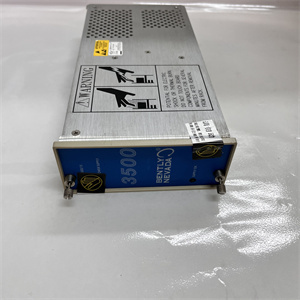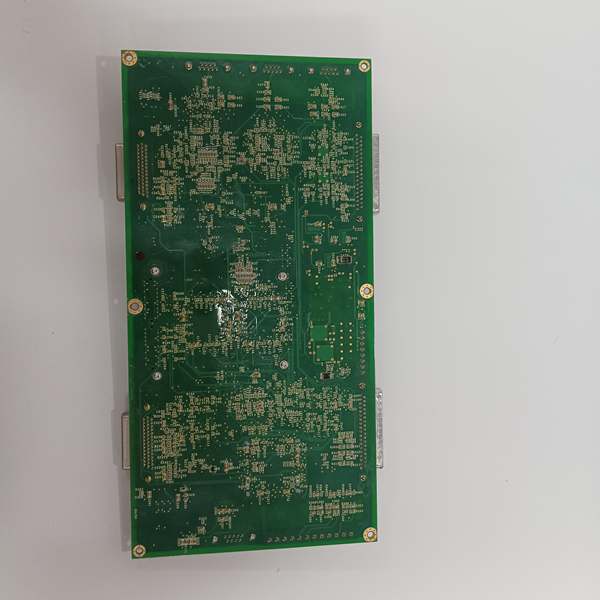
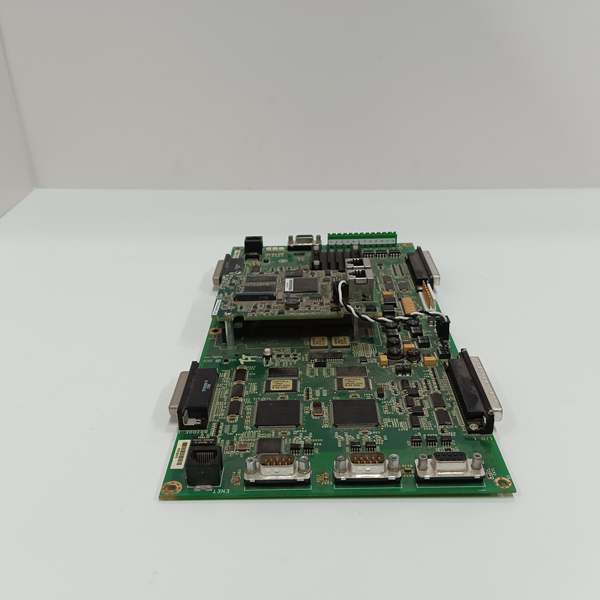
Description
Key Technical Specifications
| Parameter | Value |
|---|---|
| Input Voltage | 24V DC (±10%) via backplane |
| Operating Temp | -25°C to +60°C (-13°F to +140°F) |
| Storage Temp | -40°C to +85°C |
| Control Axes | 1 Axis (Single) |
| Feedback Resolution | 20-bit (LVDT / RVDT / Encoder support) |
| Output Signals | ±10V analog, 3A continuous PWM drive |
| Loop Update Rate | 500 µs |
| Communication | 1 Gbps Ethernet + VME64x backplane |
| Safety Rating | SIL 2 (IEC 61508) |
| MTBF | > 200,000 hours |
| Compliance | UL 508, CE, RoHS |
IS210MACCH1AGG
Product Introduction
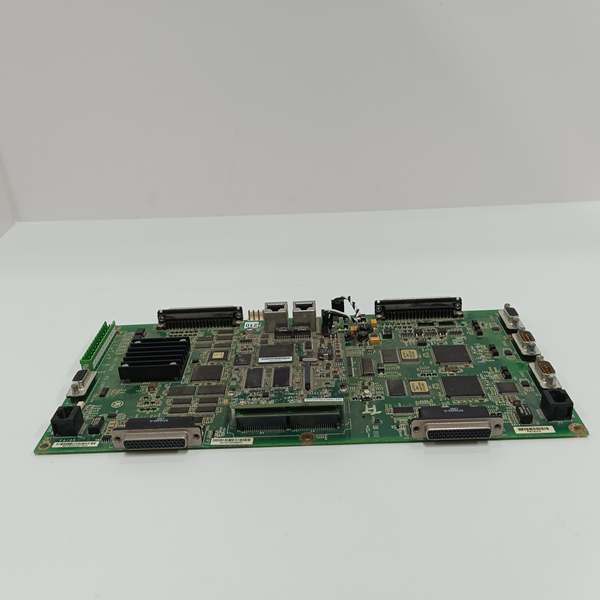
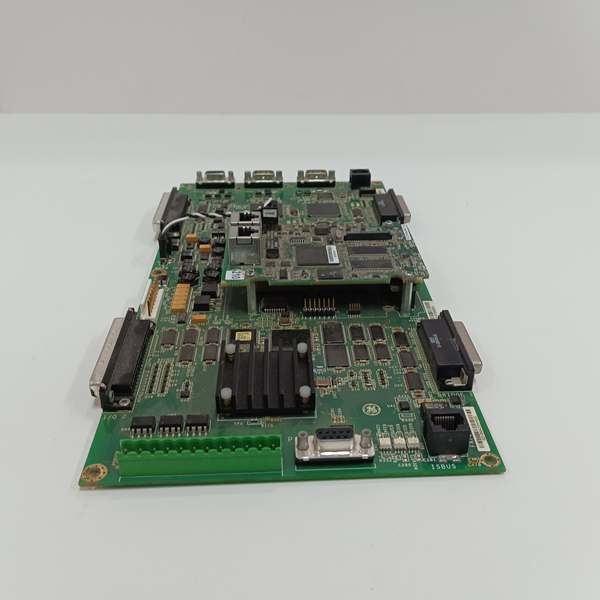
The is a high-performance Single-Axis Motion Control Module engineered for GE’s Mark VIe Speedtronic turbine control platforms. It is designed to deliver precision servo control for critical industrial applications, such as gas turbine fuel valves, compressor recycle valves, and hydro runner blades.
Featuring a 20-bit feedback resolution and an ultra-fast 500 µs loop update rate, this module ensures highly accurate positioning and smooth actuator operation even in highly dynamic environments. It incorporates an adaptive PID tuning algorithm that auto-calibrates for non-linear mechanisms, significantly reducing commissioning time and improving system stability. With robust built-in diagnostics, hot-swap support, and SIL 2 certification, the offers the reliability and deterministic performance required for mission-critical power generation and heavy industrial processes.
Key Selling Points & Differentiators
- Ultra-High Precision Control: Utilizes 20-bit feedback sampling to provide exceptional positioning accuracy for sensitive turbine control surfaces and throttle actuators.
- Adaptive PID & Auto-Calibration: Features auto-tuning capabilities that adapt to non-linear mechanical linkages, optimizing dynamic response without manual intervention.
- Deterministic High-Speed Performance: A 500 µs loop update rate ensures real-time responsiveness, which is critical for vibration dampening and rapid transient load changes.
- Rigorous Validation & Burn-In: Each refurbished unit undergoes a stringent dynamic burn-in test under load simulation to validate positioning accuracy, thermal stability, and communication handshakes. Includes serialized test report and 12-month warranty.
- Hot-Swappable Redundancy: Designed for high-availability systems, allowing for module replacement without shutting down the entire turbine or process (system redundancy dependent).
- Immediate Dispatch: New surplus and tested refurbished units are stocked in our distribution center for 24-hour shipping.
FAQ
- It serves as a dedicated single-axis servo controller. It processes position feedback (from LVDTs, RVDTs, or encoders), calculates the error against the setpoint, and drives the actuator to achieve precise valve or mechanism positioning.
- What type of feedback devices does this module support?
The module supports 20-bit high-resolution feedback inputs compatible with LVDTs (Linear Variable Differential Transformers), RVDTs (Rotary Variable Differential Transformers), and digital encoders.
- Is this module compatible with my existing Mark VIe rack?
Yes, the is designed for seamless integration into the Mark VIe backplane architecture. It communicates via 1 Gbps Ethernet and the VME64x bus. It is fully configurable using GE’s ToolboxST software[vitation:1].
- What happens if the module loses communication with the controller?
The features built-in fault response logic. In the event of signal loss or over-travel, it can execute a pre-programmed auto-safing routine to move the actuator to a predefined safe position.
- Does the 12-month warranty cover calibration drift?
The warranty covers hardware failures under normal operating conditions. Issues arising from improper external wiring, ESD mishandling, or physical stress during installation are excluded. Calibration drift due to internal component aging is covered.
- Can I mix this with older analog control cards in the same rack?
Yes, Mark VIe systems support mixed I/O environments. The can operate alongside legacy analog and discrete modules, with the controller managing the data coordination across the backplane.

IS210MACCH1AGG
Quality Transparency SOP
- Incoming Verification: Serial number traceability and cross-referencing against GE databases. Comprehensive visual inspection under magnification for burnt components, swollen capacitors, or damaged connector pins.
- Functional Bench Test: Mounted in a dedicated Mark VIe test rig. Power-on self-test (POST) monitored via ToolboxST. Analog outputs and PWM drive signals are verified under load using industrial-grade oscilloscopes.
- Motion Simulation & Stress Testing: Subjected to a continuous 24-hour dynamic load test, including simulated feedback loops and rapid setpoint changes to validate positioning accuracy, overshoot limits, and watchdog timer functionality.
- Firmware/Config Verification: Current firmware version recorded. Configuration files are backed up, and all DIP switch/jumper settings are documented.
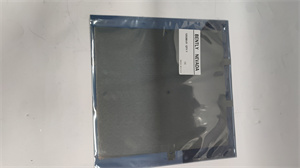
- Final QC & Packaging: Final quality control sign-off completed and dated. Sealed in a custom anti-static bag with moisture absorption packets. Surrounded by industrial-grade foam shock protection. Affixed with a “QC Passed” label.
Transparency required: Test photos and video evidence of the bench test are available upon request. We never claim “100% failure-free” as industrial components operate under immense stress.
Technical Risk Avoidance
Ground Loop & Signal Noise Interference
Risk: Servo systems and long analog cables are highly susceptible to electrical noise. Improper grounding can introduce ground loops, leading to erratic actuator movement, feedback jitter, or even catastrophic valve oscillation.
Prevention: Ensure all shielding on LVDT/RVDT/Encoder cables is grounded at a single point (typically the I/O rack). Never share ground wires with high-power motor drives or heavy machinery.
Anecdote: A power plant experienced severe chattering in a gas turbine fuel valve. The issue was traced to the servo feedback shield being grounded at both the sensor and the rack, creating a ground loop that injected 60Hz noise into the 20-bit feedback signal.
Mechanical Binding & Over-Travel
Risk: If the physical actuator encounters a hard stop or mechanical binding that the software limits did not account for, the resulting over-travel or excessive current draw can trip the module’s protection, causing a sudden loss of control.
Prevention: Always perform a mechanical calibration and verify the full range of motion physically before enabling full software control. Set conservative software limits initially.
Anecdote: During commissioning, a technician enabled the before verifying the mechanical stops. The actuator drove past its physical limit, bending the linkage and permanently damaging the LVDT feedback device.
Communication Latency in Cascade Loops
Risk: In cascade control strategies (e.g., pressure control driving a position slave), excessive communication latency between the master controller and the can cause instability or oscillations.
Prevention: Ensure the module is connected to a dedicated, high-priority 1 Gbps Ethernet port on the controller. Avoid routing servo traffic through heavily congested plant networks.
Anecdote: A compressor recycle valve exhibited slow, unstable oscillations. The root cause was traced to the servo command being sent over a shared plant Ethernet network with a 200ms latency spike, which destroyed the cascade loop’s phase margin.
Practical Summary: Treat the as a high-precision, high-speed servomechanism controller. Prioritize strict grounding practices, always verify mechanical travel physically before enabling software control, and ensure deterministic, low-latency network communication. Keep the serialized test report on file for audit trails and warranty claims.