Description
Key Technical Specifications
| Parameter | Value |
|---|---|
| Input Channels | 8 Differential Channels (Independently Configurable) |
| Input Signal Types | 4-20mA DC, 0-10V DC |
| Input Impedance | 250Ω (for 4-20mA), 100kΩ (for 0-10V) |
| Accuracy | ±0.1% of Full Scale (at 25°C) |
| Resolution | 16-bit |
| Sampling Rate | 100 Samples/Second per Channel |
| Power Supply | 24V DC (via Mark VIe Backplane) |
| Operating Temp | 0°C to +60°C |
| Storage Temp | -40°C to +85°C |
| Communication | Mark VIe Backplane Interface |
| Dimensions | 140mm x 100mm x 30mm (approx) |
| Weight | 0.5kg (approx) |
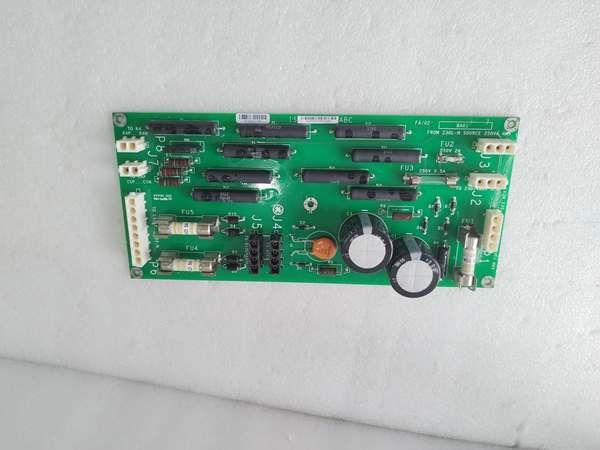
GE IS200WEORG1A
Product Introduction
In high-stakes power generation and turbine control, precise data acquisition is the foundation of predictive maintenance and operational safety. The is a high-performance Analog Input Module engineered specifically for GE’s Mark VIe systems. It acts as the critical interface between field sensors and the central controller, converting real-world analog signals into high-resolution digital data.
Designed for versatility, the “1A” hardware revision supports 8 differential input channels that can be independently configured for either current (4-20mA) or voltage (0-10V) inputs. Beyond standard process variable monitoring (like pressure and temperature), this module is frequently deployed in specialized Acoustic Monitoring Input Packages (SAMB) to capture high-frequency vibration and dynamic pressure data in Frame 6/7/9 gas turbines. By delivering noise-free, highly accurate data at 100 samples per second per channel, the BAPAH1A enables operators to detect subtle equipment anomalies before they escalate into catastrophic failures.
Key Selling Points & Differentiators
- High-Fidelity Signal Conversion: Offers ±0.1% full-scale accuracy with 16-bit resolution, ensuring the Mark VIe controller receives pristine data for critical control loops and protective relays.
- Dual-Purpose Versatility: Capable of handling both slow-moving process variables (temperature/pressure) and high-speed dynamic data acquisition for turbine acoustics and vibration analysis.
- Rigorous Signal Validation: Every refurbished unit undergoes a comprehensive channel-by-channel calibration test using certified signal generators, verifying linearity, accuracy, and backplane communication integrity. Includes a 12-month warranty.
- Not recommended for: Applications requiring the higher density of the 16-channel BAPAH2A, or systems operating outside the 0°C to +60°C ambient temperature range without proper climate control.
- Immediate Dispatch: New surplus and tested refurbished units are stocked in our Houston distribution center for 24-hour shipping.
FAQ
- Is the compatible with both Mark VI and Mark VIe racks?
Yes, the BAPA module is designed to integrate seamlessly into both Mark VI and Mark VIe control architectures. However, always verify the hardware key and firmware compatibility within your specific ToolboxST project file before installation.
- What types of sensors can I connect to this module?
The 8 differential channels support a wide array of industrial sensors, including 4-20mA loop-powered transmitters (pressure, flow) and 0-10V output devices (temperature transducers, accelerometers). Each channel is independently configurable.
- How is the module tested before shipment?
All units undergo our rigorous Quality Transparency SOP. This includes a live bench test where each of the 8 analog channels is stimulated with known current and voltage signals to verify 16-bit resolution and ±0.1% accuracy. Backplane communication with a simulated Mark VIe controller is also validated.
- Does the 12-month warranty cover calibration drift?
The warranty covers hardware failures and component defects under normal operating conditions. It does not cover gradual calibration drift over time or damage caused by over-voltage events exceeding the module’s specifications.
- Can I use this module for vibration monitoring?
Yes. With a 100 samples/second per channel sampling rate and support for 0-10V accelerometer inputs, it is well-suited for low-to-mid frequency vibration monitoring and is commonly used in GE’s Acoustic Monitoring Input Packages.
- What accessories are included with the module?
Each module ships with the original mounting hardware and connector keying plugs if applicable. Terminal blocks are included if they were part of the original assembly. Specific cables should be transferred from your existing unit or ordered separately.

GE IS200WEORG1A
Quality Transparency SOP
- Incoming Verification: Source traceability check and serial number cross-referencing. Visual inspection for burnt components, corroded pins, or damaged connector blocks. Accessories count verified.
- Signal Path Calibration: Mounted on a dedicated test rig. A calibrated signal generator injects precise 4-20mA and 0-10V signals into all 8 differential channels. A digital multimeter verifies the module’s ADC conversion accuracy against expected values.
- Communication Test: The module is inserted into a live Mark VIe backplane simulator. A ToolboxST session is established to verify backplane communication, hardware key recognition, and real-time data updates.
- Electrical Safety Tests: Insulation resistance measured using a 500V megger (must exceed 10 MΩ). Ground continuity strictly verified.
- Final QC & Packaging: Final quality control sign-off completed and dated. Sealed in an anti-static bag. Surrounded by industrial-grade foam shock protection. Affixed with a “QC Passed” label.
Transparency required: Test photos and video evidence of the bench test are available upon request. We never claim “100% failure-free” as industrial components operate under immense stress.
Technical Risk Avoidance
Ground Loop Interference
Risk: Connecting sensors with different ground references to the differential inputs can create ground loops, introducing noise, signal offset, and inaccurate readings.
Prevention: Ensure all connected field devices share a common ground reference. Utilize isolated power supplies for transmitters if necessary, and verify proper shielding and grounding of all signal cables.
Anecdote: A plant experienced erratic temperature readings on a gas turbine. Investigation revealed that two 4-20mA transmitters powering their loops from different power supplies created a ground loop through the BAPAH1A inputs.
Exceeding Input Voltage/Current Limits
Risk: Applying voltages above 10V or currents exceeding 20mA (even transient spikes from inductive loads) can permanently damage the analog-to-digital converter circuitry.
Prevention: Install external current-limiting resistors or voltage clamping diodes on the field wiring if the connected sensors are prone to transient voltage spikes.
Anecdote: An installer mistakenly connected a 24V solenoid feedback signal directly to a 0-10V input channel. The overvoltage condition instantly fried the input buffer chip.
Improper Shielding in High EMI Environments
Risk: Running analog signal cables parallel to high-voltage power cables without proper shielding can induce electromagnetic interference (EMI), corrupting the low-level analog signals.
Prevention: Always use shielded twisted-pair cables for analog inputs. Route signal cables separately from high-power lines, and ground the shield drain wire at only one end (typically the module end) to avoid ground loops.
Anecdote: A vibration sensor cable was routed alongside a VFD output cable. The resulting EMI caused the BAPAH1A to pick up false high-frequency noise, triggering nuisance turbine trips.
Firmware/Hardware Key Mismatch
Risk: Attempting to run a “1A” hardware variant with an incompatible firmware load will cause a hardware key mismatch, preventing the Mark VIe controller from booting.
Prevention: Always back up your ToolboxST project file before performing any module swaps. Verify that the replacement module’s firmware version matches the controller’s hardware definition file.
Anecdote: A technician swapped a faulty BAPA module but ignored the firmware revision. The controller detected a hardware key mismatch upon reboot and initiated a safe-state trip, halting power generation for 10 hours.
Practical Summary: Respect the 4-20mA / 0-10V input limits, maintain strict ESD protocols when handling the board, and always verify your system’s hardware key in ToolboxST prior to installation. Keep the serialized calibration report on file for audit trails and warranty claims.