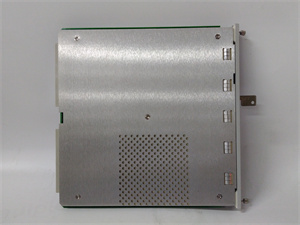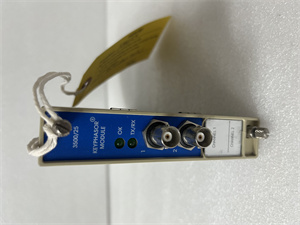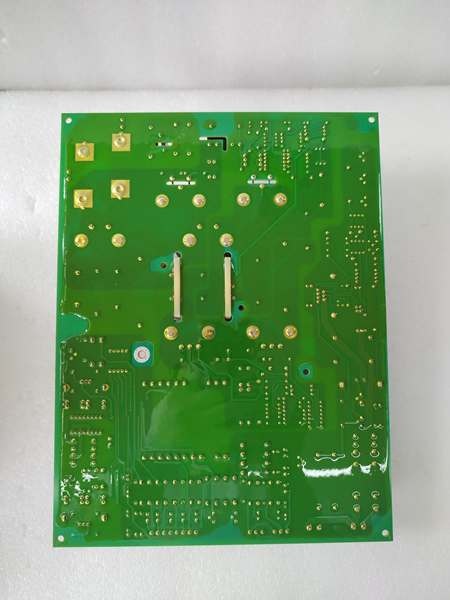
Description
Key Technical Specifications
| Parameter | Value |
|---|---|
| Input Voltage | 88-132V AC / 105-132V DC |
| Output Voltage | 24V DC Regulated |
| Output Current | 10A Continuous / 15A Peak |
| Operating Temp | -40°C to +70°C |
| Efficiency | >92% |
| Protection Features | Overvoltage, Undervoltage, Short-Circuit, Reverse Polarity, Transient Suppression |
| Functional Revision | 1B |
| Configuration Suffix | CA (Backup/Alarm Enhanced Variant) |
| Mounting | DIN Rail or Panel Mount |
| Communication | IONet / SPI Bus for Health Reporting |
| Dimensions | 30.5cm x 15.2cm x 5.1cm (approx) |
| Weight | 1.5kg (approx) |
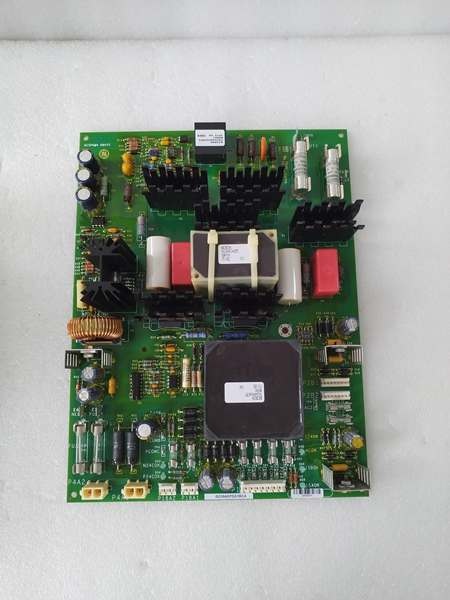
GE IS210AEPSG1AEC
Product Introduction
Voltage sags in industrial plants often trigger nuisance turbine trips. The addresses this by conditioning power and providing fast-transfer backup. It is used in LNG plants, offshore platforms, and pipeline compressor stations to maintain stable 24V DC power to Mark VIe controllers during grid disturbances.
Procurement teams specify this module for its deterministic response. It detects input anomalies in microseconds and switches to internal capacitive reserve. This prevents controller resets during brownouts. The “CA” suffix indicates specific firmware tuned for backup alarm logic, ensuring seamless integration with existing safety systems.
Key Selling Points & Differentiators
- Fast-transfer logic: Detects voltage sags in <1ms and maintains output without interruption.
- Tested and warranted: Each refurbished unit undergoes 24-hour load test. Comes with 12-month warranty.
- Not recommended for: New installations requiring latest firmware revisions; consult OEM for compatibility.
- Direct contrast: Compared to standard power supplies, this unit includes transient suppression meeting IEEE C62.41.
- Stock availability: Ships within 24 hours from Houston, TX warehouse.
FAQ
- Is this module compatible with my Mark VIe rack?
Verify your system’s hardware definition file. The CA suffix indicates specific firmware. Cross-check with GE documentation.
- What is the lead time if out of stock?
Typical lead time is 2-3 weeks for new surplus. Refurbished units ship within 24 hours.
- How do I know if my power supply is failing?
Look for “Input Voltage Sag” alarms in the Mark VIe logs. Front-panel LEDs indicate fault status.
- Can I replace a standard power supply with this?
Not without verifying firmware compatibility. The CA configuration includes specialized control loops.
- What warranty do you offer?
12 months on refurbished units. Includes return for replacement if bench test fails.
- I need a module for a hydrogen facility. Will this work?
This unit is designed for general industrial use. For hydrogen-specific applications, confirm with OEM for hazardous area certification.
- How is the module tested?
See our Quality Transparency SOP below.

GE IS210AEPSG1AEC
Quality Transparency SOP
- Incoming Verification: Source traceability check. Serial number validation against OEM records. Visual inspection for corrosion, damaged pins, and missing components. Accessories check (mounting hardware, manuals).
- Live Bench Test: Dedicated test rack with Mark VIe simulator. Power-on self-check. Communications handshake via IONet. I/O full-scale simulation: load test at 10A for 24 hours. Generate test report with timestamps.
- Electrical Tests: Insulation resistance measured with 500V megger (>10 MΩ). Ground continuity verified.
- Firmware Verification: Record firmware version. Backup DIP switch and jumper configuration.
- Final QC & Packaging: QC sign-off with date and initials. Anti-static bag sealing. Shock protection with foam inserts. Apply “QC Passed” label.
Transparency required: Test photos/video available on request. Never claim “100% failure-free”.
Technical Risk Avoidance
Firmware Mismatch
Risk: Installing this module in a system expecting a different suffix can cause hardware key mismatch and turbine trip.
Prevention: Always verify the full part number against your site’s Bill of Materials (BOM). Cross-reference with ToolboxST hardware definition files.
Anecdote: A technician once swapped a standard AEPSG for a CA variant. The controller rejected it, causing a 12-hour delay.
DIP/Jumper Errors
Risk: Incorrect jumper settings can lead to wrong output voltage or failure to communicate.
Prevention: Document the jumper configuration from the old module before removal. Compare with OEM manual.
Anecdote: A jumper left on “115V” instead of “230V” fried a module during power-up.
Terminal Incompatibility
Risk: Using wrong gauge wire or loose terminals causes overheating and voltage drop.
Prevention: Use 12 AWG minimum for 10A output. Torque terminals to 0.5 Nm.
Anecdote: A loose terminal caused a fire alarm during commissioning.
Power Budget Miscalculation
Risk: Overloading the 10A capacity leads to thermal shutdown.
Prevention: Calculate total load of connected I/O modules. Include 20% margin.
Anecdote: Adding extra I/O without checking power budget tripped the AEPSG repeatedly.
ESD Damage
Risk: Handling without grounding can destroy sensitive ICs.
Prevention: Use anti-static wrist strap. Work on grounded mat.
Anecdote: A module worked on bench but failed in rack due to ESD damage.
Practical Summary: Always match the exact suffix. Verify power budget. Handle with ESD precautions. Keep test report on file.