Description
Key Technical Specifications
-
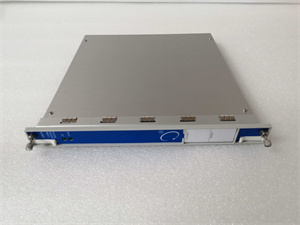
Model Number: IS200AEADH1ACA
-
Manufacturer: General Electric
-
Logic Voltage: +5 V @ 1 A, ±12 V @ 150 mA from VME back-plane
-
Analog Inputs: 8 differential, ±10 V or 4-20 mA jumper-select, 12-bit resolution, 5 kHz BW
-
Relay Outputs: 8 Form-C, 250 VAC / 30 VDC, 2 A resistive (on-board)
-
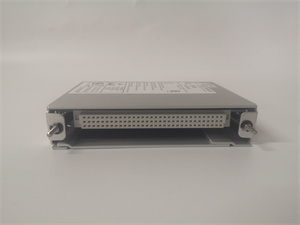
Connectors: 96-pin DIN VME, three 12-position pluggable terminal strips for field cables
-
Isolation: 1500 Vrms field-to-logic, 500 V channel-to-channel
-
Dimensions / Weight: 160 × 160 × 120 mm, 0.8 kg
-

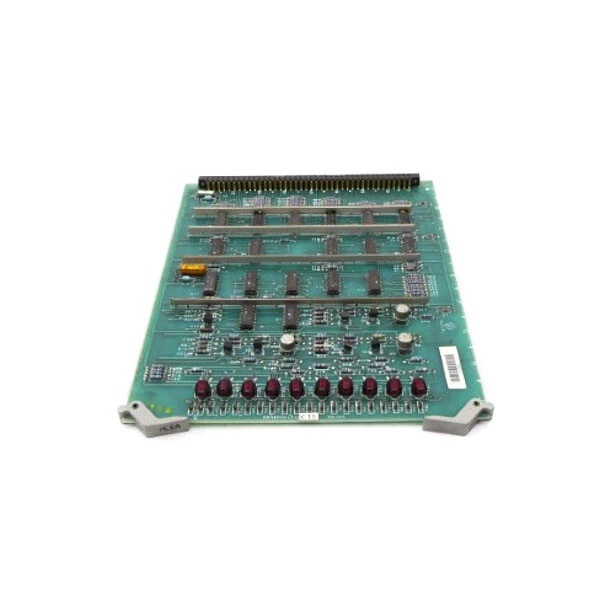
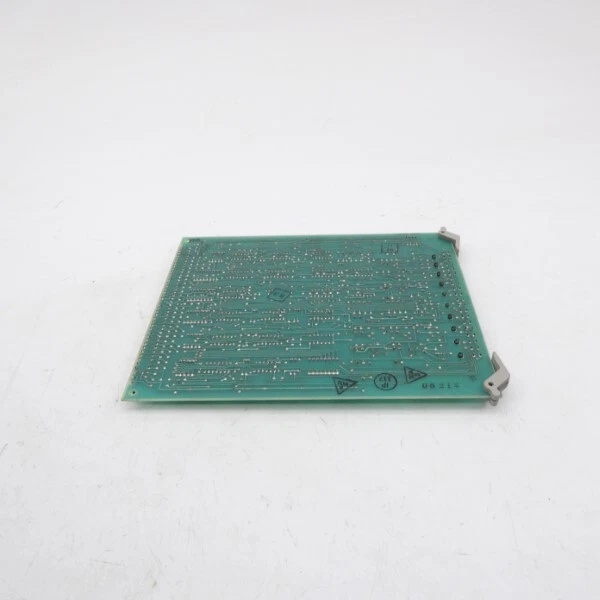
GE DS3800HLEA1C1B
Operating Temperature: –20 °C to +70 °C (conformal-coated)
Field Application & Problem Solved
A frame-7 peaker needs clean ±10 V for servo current, 4-20 mA for fuel pressure, and dry contacts for trip solenoids—all from one slot. The IS200AEADH1ACA lives in the Mark VI VME rack: it scales analog inputs, debounces the relays, and ships data to the CPU every 10 ms. When the card drifts—usually a precision divider opens—you see 3 % low servo current and trip on “SERVO FAULT DIFF”; swap the board, re-torque the three terminal strips, and the numbers snap back to original calibration. Found in every Mark VI cabinet from 50 MW peakers to 400 MW combined-cycle blocks. Value is density: analog scaling plus eight relays in one 0.8 kg package keeps the rack small and the wiring clean.
A frame-7 peaker needs clean ±10 V for servo current, 4-20 mA for fuel pressure, and dry contacts for trip solenoids—all from one slot. The IS200AEADH1ACA lives in the Mark VI VME rack: it scales analog inputs, debounces the relays, and ships data to the CPU every 10 ms. When the card drifts—usually a precision divider opens—you see 3 % low servo current and trip on “SERVO FAULT DIFF”; swap the board, re-torque the three terminal strips, and the numbers snap back to original calibration. Found in every Mark VI cabinet from 50 MW peakers to 400 MW combined-cycle blocks. Value is density: analog scaling plus eight relays in one 0.8 kg package keeps the rack small and the wiring clean.
Installation & Maintenance Pitfalls (Expert Tips)
Relay contact weld—trip solenoid stays energized
On-board relays are 2 A rated. If the trip-coil draws > 2 A inductive the contacts weld and the turbine can’t drop load on overspeed. Add an interposing relay or check coil spec—otherwise you’ll explain to the insurance guy why the unit overshot 120 %.
On-board relays are 2 A rated. If the trip-coil draws > 2 A inductive the contacts weld and the turbine can’t drop load on overspeed. Add an interposing relay or check coil spec—otherwise you’ll explain to the insurance guy why the unit overshot 120 %.
Terminal-strip reversal—+24 V on mV input cooks the amp
The three terminal strips are keyed alike but pin-outs differ. Land a 24 VDC contact on the thermocouple header and you stuff +24 V into a 100 mV input—trace burns open. Match the white wire-stripe to the silk-screen arrow before you torque.
The three terminal strips are keyed alike but pin-outs differ. Land a 24 VDC contact on the thermocouple header and you stuff +24 V into a 100 mV input—trace burns open. Match the white wire-stripe to the silk-screen arrow before you torque.
Conformal coat cracked—salt fog kills the 2.5 V reference
Board is coated, but the 12-pin edge is masked. If the coat cracks, salt bridges the precision reference and you see 5 % offset on every channel. Scrape the salt, hit the edge with 2100-FTG, and re-coat—problem gone for another decade.
Board is coated, but the 12-pin edge is masked. If the coat cracks, salt bridges the precision reference and you see 5 % offset on every channel. Scrape the salt, hit the edge with 2100-FTG, and re-coat—problem gone for another decade.
Missing shoulder washers—card arcs to rack
Four corner holes are through-plated. Forget the fiber washers and 125 V relay voltage arcs to rack, blowing a hole in the ground plane. Use original GE shoulder washers—torque to 8 in-lb, no more.
Four corner holes are through-plated. Forget the fiber washers and 125 V relay voltage arcs to rack, blowing a hole in the ground plane. Use original GE shoulder washers—torque to 8 in-lb, no more.
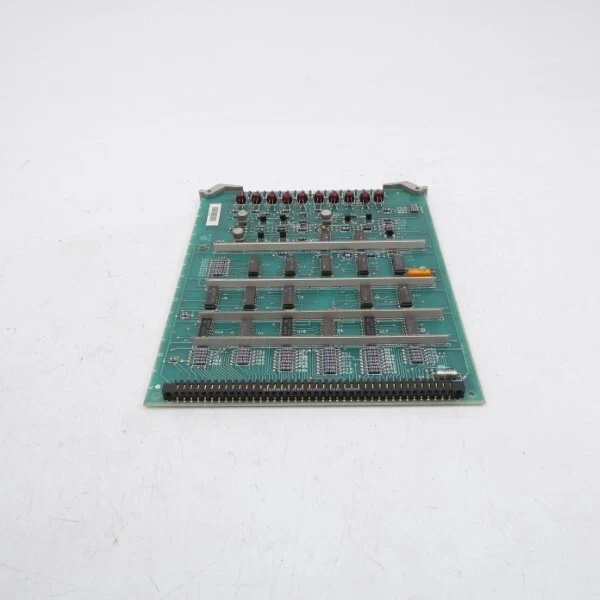
GE DS3800HLEA1C1B
Technical Deep Dive & Overview
IS200AEADH1ACA is a mixed-signal workhorse frozen in 2000 silicon. A quad 741 op-amp array scales analog inputs; a 12-bit ADC converts them; an FPGA latches data and drives eight on-board relays every 10 ms. Because everything is hardware-scaled you can swap it hot—just kill the 24 VDC relay supply first or you’ll arc-weld the terminal strips. Treat the analog coax like instrumentation cable and the board will keep the servo loop locked for another thirty years
IS200AEADH1ACA is a mixed-signal workhorse frozen in 2000 silicon. A quad 741 op-amp array scales analog inputs; a 12-bit ADC converts them; an FPGA latches data and drives eight on-board relays every 10 ms. Because everything is hardware-scaled you can swap it hot—just kill the 24 VDC relay supply first or you’ll arc-weld the terminal strips. Treat the analog coax like instrumentation cable and the board will keep the servo loop locked for another thirty years
.