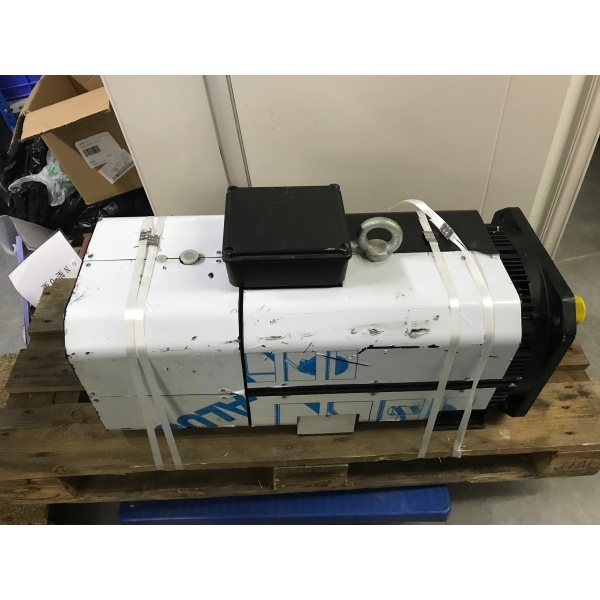
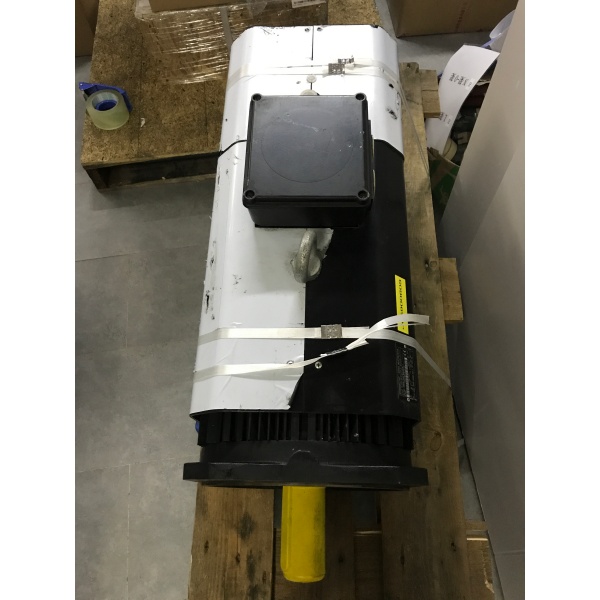
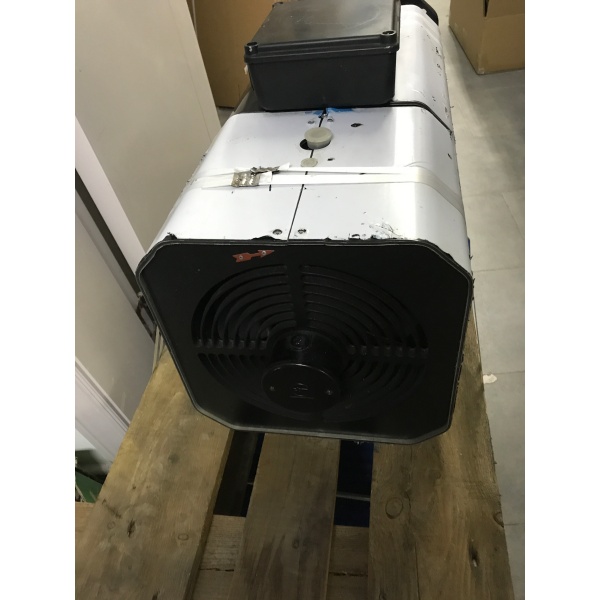
Description
Hard-Numbers: Technical Specifications
-
Motor Type: 3-Phase Asynchronous Induction Motor (squirrel cage rotor)
-
Frame Size: 160 mm (IEC standard)
-
Motor Length: B (shorter length, ~400mm overall)
-
Rated Power: 30 kW (at 1500 RPM, 40°C ambient, <1000m altitude)
-
Nominal Speed: 1500 RPM (base speed for constant torque)
-
Nominal Torque: 191 Nm (at 1500 RPM)
-
Peak Speed: 6000 RPM (maximum field-weakened speed)
-
Winding Code: BS03 (400V/50Hz or 460V/60Hz winding)
-
Voltage Rating: 3×AC 400V (50 Hz) / 3×AC 460V (60 Hz)
-
Mounting: B35 (flange and foot mounting – IEC standard)
-
Shaft Configuration: OR2 (shaft seal installed, balanced with entire key)
-
Cooling: Axial blower (external fan, 220 VA power consumption)
-
Blower Airflow: 1120 m³/h (B→A blowing recommended)
-
Blower Voltage: 3×AC 400V/460V (separate supply or tapped from main)
-
Feedback: High-resolution motor feedback (resolver or optical encoder, D2V1 = specific type)
-
Holding Brake: None (D2V1 suffix indicates no brake; B2N1 would have brake)
-
Bearings: Heavy-duty (20,000 hour L10 life with proper lubrication)
-
Vibration Grade: R (reduced vibration, per DIN ISO 2373)
-
Protection Class: IP40 (motor body), IP54 (blower housing)
-
Ambient Temperature: 0°C to +40°C (standard); up to +45°C with derating
-
Altitude: <1000m (standard); derate 10% per 1000m above
-
Power Connection: Terminal box (top-mounted, cable entry to right)
-
Weight: ~205 kg (complete with blower and terminal box)
-
Moment of Inertia: ~0.0065 kg·m² (rotor only)

2AD160B-B35OR2-BS03-D2V1
The Real-World Problem It Solves
CNC machine tools need spindle motors that deliver high torque for heavy cutting at low speeds (1500 RPM) but can also spin at 6000 RPM for high-speed finishing operations. DC motors can’t handle the speed range; standard AC motors lack the dynamic response. The 2AD160B-B35OR2-BS03-D2V1 is an asynchronous servo motor—it runs on standard AC induction principles but with servo-grade feedback and forced cooling that allows 4:1 constant power field weakening. This means 191 Nm from 0-1500 RPM, then constant 30 kW from 1500-6000 RPM.
Where you’ll typically find it:
-
Main spindle on 5-axis machining centers for aerospace component manufacturing
-
High-speed milling heads in automotive production lines
-
Precision grinding spindles where surface finish depends on constant surface speed
This motor bridges the gap between standard induction motors (cheap but dumb) and permanent magnet servos (expensive and torque-limited at high speed), providing a rugged, maintainable solution for demanding metal cutting.
Hardware Architecture & Under-the-Hood Logic
The 2AD160B is not a “smart” motor—it contains no drive electronics. It’s a high-performance electromechanical component designed to work with external servo drives (Indramat DDS, HDS, or IndraDrive series).
Signal flow and power logic:
-
Power Input: 3-phase 400V AC connects to the stator windings via the terminal box. The BS03 winding is optimized for 400V/50Hz operation with specific slot geometry for low harmonic distortion.
-
Cooling System: The axial blower mounts on the non-drive end (NDE), forcing air through the motor frame’s cooling fins. The blower runs continuously when the drive is enabled—if the blower fails, the motor must be derated or shutdown to prevent insulation damage.
-
Feedback Device: The D2V1 feedback (likely a resolver or high-resolution optical encoder) mounts to the shaft extension. It provides rotor position and speed data to the drive for vector control (field-oriented control).
-
Bearing System: Heavy-duty bearings support the shaft with 20,000 hour rated life. The OR2 configuration includes a shaft seal to prevent coolant ingress and is dynamically balanced with the full key installed (critical for vibration grade R).
-
Thermal Protection: Thermistors (PTC) embedded in the windings connect to the drive for overtemperature protection. The motor is self-ventilated by the external blower—no internal fan.
-
Field Weakening: Above 1500 RPM, the drive weakens the rotor flux to maintain constant power (30 kW) up to 6000 RPM. Torque drops proportionally (191 Nm at 1500 RPM → ~48 Nm at 6000 RPM).
2AD160B-B35OR2-BS03-D2V1
Field Service Pitfalls: What Rookies Get Wrong
Confusing the Model Number Suffixes
The part number is long and every character matters. “D2V1” vs “B2N1” changes everything—D2V1 has no brake and specific feedback; B2N1 has a 130 Nm holding brake. If you order the wrong suffix, the motor won’t fit the application or will lack the brake your Z-axis needs.
-
Field Rule: Always read the nameplate character-by-character. The “OR2” means shaft seal installed—if you see “OA2”, there’s no seal. The “BS03” is the winding code—BS06 or BS01 have different voltage/speed curves. Document every character in the maintenance log; when this motor fails at 2 AM, you need the exact match.
Ignoring the Blower Power Supply
The axial blower requires 3-phase 400V/460V—it’s not self-powered from the motor terminals. Many techs wire the motor power and forget the blower, or they wire the blower to the same contactor as the motor. When the drive disables the motor, the blower stops—but the motor is still coasting and needs cooling.
-
Quick Fix: Wire the blower to a separate maintained power source that stays on as long as the motor is above 100 RPM. Some drives have a “blower run-on” output—use it. If the blower fails during operation, the motor will overheat in 10-15 minutes at full load. Always check blower rotation direction (arrow on housing) and airflow with a tissue paper test during commissioning.
Overlooking the Shaft Load Limits
Heavy-duty bearings don’t mean infinite load capacity. The 2AD160B has specific radial and axial load limits (documented in the project planning manual). Exceeding these—common when customers add heavy pulleys or misalign couplings—accelerates lubricant consumption and causes premature bearing failure.
-
Field Rule: Check the shaft load calculations before blaming “bad bearings.” Radial load limit is typically around 3000-4000N at the shaft center, depending on speed. If the motor is driving a belt spindle with high tension, or if the coupling is misaligned, you’ll see bearing failures every 6 months instead of every 5 years. Use a laser alignment tool and verify belt tension with a gauge. If the application requires higher shaft loads, specify the “heavy-duty bearing” option (some variants) or add an external support bearing.