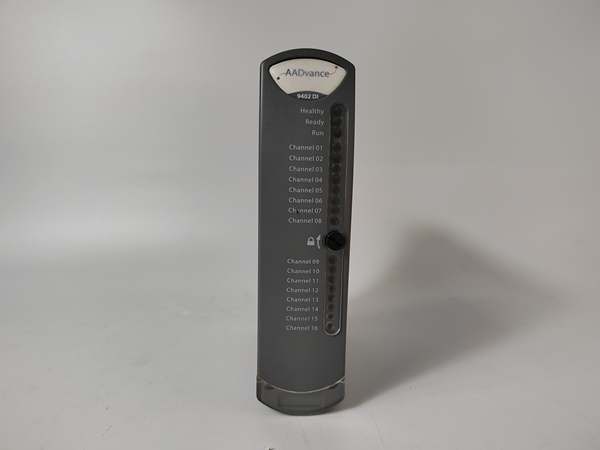
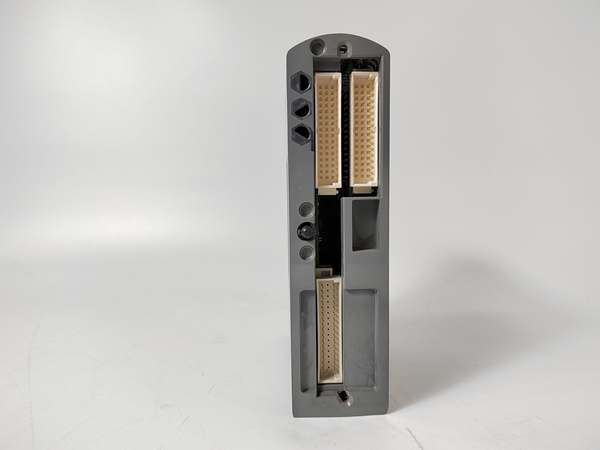

Description
Key Technical Specifications
- Model Number: TC-011-02-1M5
- Manufacturer: ICS Triplex (Integrated into Rockwell Automation)
- Cable Type: Duplex multimode fiber optic (OM1/OM2 compliant)
- Core/Cladding Diameter: 62.5/125μm (standard multimode)
- Cable Length: 1.5 meters (fixed length, no field termination)
- Connectors: LC-LC (duplex, ceramic ferrule, snap-lock design)
- Jacket Material: PVC (standard) / LSZH (low-smoke zero-halogen, optional)
- Operating Temperature: -40°C – 85°C (full temperature range)
- Storage Temperature: -40°C – 90°C
- Humidity Rating: 0% – 100% (including condensing environments)
- Attenuation: ≤3.5 dB/km at 850nm, ≤1.5 dB/km at 1300nm (typical)
- Bandwidth: 200 MHz·km (OM1) / 500 MHz·km (OM2) at 850nm
- Pull Strength: 150N (tensile), 50N (lateral)
- Bending Radius: 10mm (static), 30mm (dynamic)
- Certifications: UL 910 (smoke density), IEC 60332-1 (flame retardant), ATEX Zone 2 compliant
- Immunity: Complete EMI/RFI immunity (fiber optic medium)

Field Application & Problem Solved
In safety-critical industrial environments—refineries, LNG terminals, nuclear power plants—data links between controllers, remote I/O racks, and backplane components face two major threats: electromagnetic interference (EMI) from heavy machinery/VFDs and physical damage from vibration or harsh chemicals. Copper cables (Ethernet, serial) are prone to EMI-induced data corruption and signal degradation over distance, creating single points of failure in safety instrumented systems (SIS) where even microsecond delays or data errors can trigger catastrophic events. Additionally, generic fiber cables often fail in industrial settings due to fragile jackets or incompatible connectors, leading to unplanned downtime.
You’ll typically find the TC-011-02-1M5 used to connect Trusted controller chassis to remote I/O racks in large refineries (where cable runs between process units need EMI immunity), or linking AAdvance backplane components in power plant control rooms (where space constraints demand a 1.5m fixed length). For example, in an LNG terminal, this cable connects a Trusted TMR controller to a remote I/O rack located 100 meters away (paired with longer TC-011 variants), transmitting critical cryogenic temperature and pressure data without EMI interference from nearby compressors. In a chemical plant, it’s used to link redundant controller chassis in a safety shutdown system, ensuring seamless data synchronization even during electrical storms or VFD operation.
Its core value lies in reliability, EMI immunity, and industrial ruggedness. Unlike copper cables, fiber optics don’t conduct electricity, making them immune to EMI/RFI—critical in environments with high electrical noise. The pre-terminated LC-LC connectors eliminate field termination errors (a common source of fiber link failures), and the industrial-grade jacket resists oil, chemicals, and physical abrasion. For SIS applications, its fixed-length design ensures consistent signal attenuation, avoiding the variability of field-spliced cables. In regulatory audits, using ICS Triplex’s factory-certified cable proves compliance with SIL 3 requirements, as generic cables lack the rigorous testing for safety-critical use.
Installation & Maintenance Pitfalls (Expert Tips)
- Connector Cleaning: Non-Negotiable Before Installation: LC connectors are highly sensitive to dust and oil—even a single particle can cause signal loss or link failure. Rookies often skip cleaning, leading to “intermittent link down” faults. Use a lint-free fiber cleaning wipe with isopropyl alcohol to clean both the cable connectors and the device ports before mating. Verify cleanliness with a fiber inspection scope if available.
- Bending Radius: Never Exceed Limits: The cable’s minimum bending radius (10mm static, 30mm dynamic) is strict—crimping or bending the cable tighter than this crushes the fiber core, causing permanent attenuation. Avoid routing the cable around sharp edges (e.g., control cabinet corners) without a bend relief boot. Use cable ties with loop protectors to secure the cable, leaving slack at connectors to prevent strain.
- Connector Mating: Listen for the “Click”: LC connectors use a snap-lock mechanism—failing to fully seat the connector (no audible click) results in partial contact and signal degradation. Pull gently on the cable after mating to confirm it’s locked. Never twist or torque the connector while mating, as this damages the ceramic ferrule.
- Jacket Protection: Avoid Chemical Exposure: Standard PVC jackets are resistant to oil and water but degrade in contact with strong chemicals (e.g., solvents in refineries). If the cable is routed near chemical storage or processing areas, upgrade to the LSZH jacket option. I’ve seen PVC-jacketed cables fail within 6 months in chemical plants—LSZH adds minimal cost but extends service life to 10+ years.
Technical Deep Dive & Overview
The TC-011-02-1M5 is a factory-assembled fiber optic cable designed specifically for ICS Triplex’s Trusted and AAdvance safety systems. At its core, it uses duplex multimode fiber (62.5/125μm), which is optimized for short-to-medium distance industrial links (up to 2km at 850nm) and compatible with the optical transceivers in Trusted controllers and remote I/O modules. The duplex design (two fibers: one for transmit, one for receive) enables full-duplex communication, critical for real-time data exchange in SIS where both controller-to-I/O and I/O-to-controller signals must flow simultaneously.
The LC-LC connectors are a key industrial adaptation—their small form factor saves space in dense control cabinets, and the ceramic ferrules ensure precise alignment (≤0.3dB insertion loss typical), minimizing signal loss. Unlike SC or ST connectors, LC’s snap-lock mechanism resists vibration-induced disconnection, a common issue in refineries or power plants with heavy machinery. The cable’s jacket (PVC or LSZH) is rated for industrial use, with UV resistance for outdoor routing and flame-retardant properties to meet safety standards in enclosed control spaces.
What sets this cable apart from generic fiber assemblies is its factory certification. ICS Triplex tests each cable for insertion loss, return loss, and mechanical durability before shipping, ensuring it meets the strict performance requirements of TMR systems. Generic cables often have inconsistent attenuation or poorly terminated connectors, leading to unpredictable link behavior in safety-critical applications. Additionally, the cable’s full -40°C to 85°C operating range ensures reliability in extreme environments—from arctic LNG facilities to desert refineries—where generic cables may become brittle or lose signal integrity.
In practice, the TC-011-02-1M5 acts as a “bulletproof” data link. Its fiber optic medium eliminates EMI/RFI issues that plague copper cables, while the factory-assembled design removes human error from termination. For field service engineers, its greatest strength is simplicity: it’s a plug-and-play component with no configuration required, and failures are rare if installed correctly. In safety-critical systems, where downtime is catastrophic and data integrity is non-negotiable, this cable isn’t just a connectivity option—it’s a mandatory component that ensures the SIS can rely on consistent, interference-free communication.