Description
Key Technical Specifications
- Model Number: T9451
- Manufacturer: ICS Triplex (Emerson)
- Channel Count: 16 guarded digital output channels (8 channels per power group)
- Output Voltage: 20–32VDC (field-side power supply)
- Output Current: 1A per channel (continuous), 2A per channel (peak for 1s)
- Isolation: 2500V DC channel-to-backplane; 1000V DC channel-to-channel; 2500V DC power group-to-power group
- Operating Temperature: -40°C to 70°C (-40°F to 158°F)
- Power Consumption: 12W typical (backplane power), 28W max (field power at full load)
- Redundancy Architecture: Triple Modular Redundancy (TMR) with majority voting
- Diagnostics: Continuous channel self-test, open/short circuit detection, fuse status monitoring, output state verification
- Certifications: IEC 61508 SIL 3, ATEX, IECEx, FM, CSA
- Physical Form Factor: Single-slot rack-mounted, 266mm (H) × 31mm (W) × 303mm (D), 1.1kg (2.42lbs)
- Hot-Swap Capability: Supported (no system shutdown required for module replacement)

ICS TRIPLEX T9451
Field Application & Problem Solved
In safety-critical industrial environments—refineries, chemical plants, nuclear power auxiliary systems—the biggest headache is ensuring that digital output commands (to open/close valves, trigger alarms, or activate pumps) are executed reliably, even if a module component fails. Legacy digital output modules often lack built-in fault detection; a failed channel can lead to uncommanded actuator states, which trigger emergency shutdowns costing tens of thousands of dollars per hour. This module solves that problem with TMR redundancy and guarded output functionality: it verifies every output state and detects faults (shorts, opens, fuse blows) in real time, eliminating unplanned downtime from silent failures.
You’ll find this module in two primary field scenarios. First, in refinery emergency shutdown (ESD) systems, it controls the solenoid valves that isolate fuel or chemical lines when a hazard is detected—its SIL 3 rating ensures compliance with regulatory safety requirements. Second, in chemical plant batch processing systems, it switches the relays that activate mixers and transfer pumps; its channel isolation prevents cross-talk between high-current actuator circuits and the control system backplane.
The core value of the T9451 is twofold: it eliminates “silent failures” with continuous diagnostics (so you know a channel has failed before it causes a problem) and it removes the need for external safety relays—cutting down on wiring complexity and reducing the number of failure points in the control loop. Unlike non-guarded output modules, it won’t let you send a command to a failed channel; it flags the fault and defaults to a safe state (usually off), which is non-negotiable in high-risk environments.
Installation & Maintenance Pitfalls (Expert Tips)
Power Group Wiring is Non-Negotiable
Rookies often ignore the 8-channel power group split and wire all 16 channels to a single field power supply. This is a fatal mistake—if one power group experiences a short circuit, it will take out all 16 channels instead of just 8. Always wire each power group to a separate, fused field power supply. Label the power groups clearly in the wiring diagram, and verify continuity between the module’s power terminals and the supply before energizing the system.
Fuse Replacement Requires Exact Specs
Each channel has a 2A fast-acting fuse that’s accessible from the front panel. A common mistake is replacing these fuses with higher-amperage units to “prevent blowing.” Don’t do this—oversized fuses will not protect the channel from overcurrent, which can damage the module or the connected actuator. Use only the OEM-specified fuses (2A, 250V fast-acting, Littelfuse 322 series equivalent). Also, never replace a fuse without first identifying the root cause of the blow— a repeated fuse failure usually indicates a shorted actuator or damaged wiring.
Hot-Swap Needs a Pre-Replacement Check
Yes, the module supports hot-swapping, but rookies often yank it without checking the redundant system state. Before replacing, log into the Trusted controller HMI and confirm that the redundant T9451 module (if installed) is in “active” mode. If the system is running in single-module mode, a hot-swap will trigger a fault. Also, disable the output group in the controller software before removing the module—this prevents the redundant module from trying to drive the same actuators simultaneously, which can cause actuator chatter or damage.
Grounding Shields, Not Signals
The module has 2500V isolation, but improper shield grounding will introduce noise that causes false fault alarms. Use shielded twisted-pair cable for field wiring, and terminate the shield only at the module end—leave the field actuator end floating. Never ground the shield at both ends; this creates a ground loop that will trigger intermittent “short circuit” fault codes on the module.
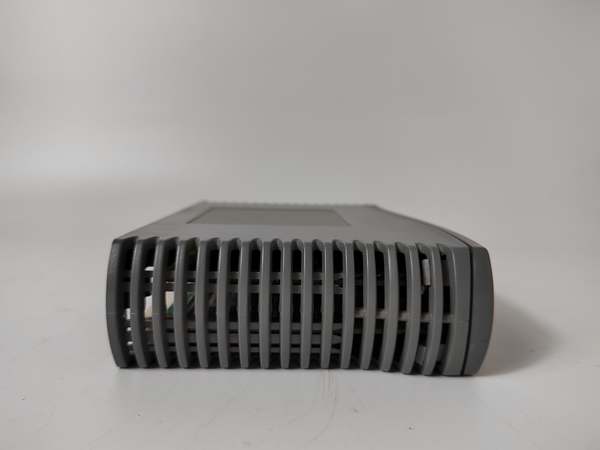
ICS TRIPLEX T9451
Technical Deep Dive & Overview
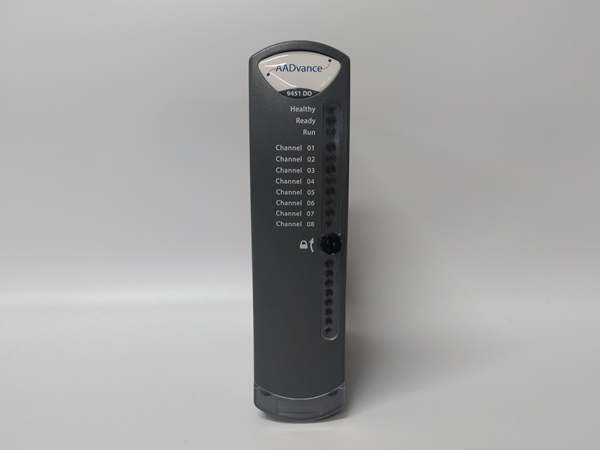
The T9451 is a single-slot intelligent guarded digital output module built for ICS Triplex Trusted TMR safety systems. At its core, it uses three independent processing channels—one for each TMR leg—that receive output commands from the controller, vote on the correct state, and drive the field-side relays. The majority voting mechanism ensures that a failure in one processing channel (e.g., a faulty relay driver) is ignored; only if two channels fail does the module trigger a system alarm.
Each of the 16 output channels is guarded, meaning the module continuously verifies that the output state matches the commanded state. If a mismatch is detected (e.g., the module sends a “close valve” command but the channel remains open), it flags a fault and defaults to a safe state (off) for that channel. The module also monitors for field-side faults: open circuits (broken wiring to the actuator) and short circuits (wiring touching ground or a live conductor) are detected within 10ms and logged with a time stamp for root cause analysis.
The module communicates with the Trusted controller via the redundant backplane using the proprietary Triplex protocol, with a latency of less than 5ms per command—critical for real-time safety system response. Its dual-core processor handles diagnostics and state verification, offloading this work from the main controller and keeping scan times low in large systems.
Unlike basic digital output modules, the T9451 is designed for harsh industrial conditions: its rugged enclosure resists vibration (up to 5g, 10–500Hz) and corrosion, and its wide operating temperature range lets it be mounted in field cabinets as well as control rooms. Its biggest strength is that it combines redundancy, diagnostics, and safety compliance in a single package—no external components required—which is why it’s a staple in my toolkit for ESD and safety instrumented system (SIS) installations.