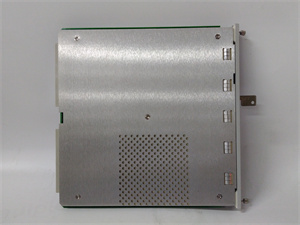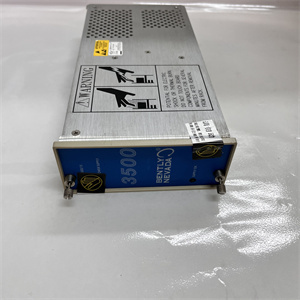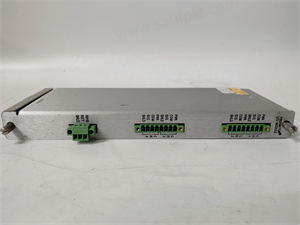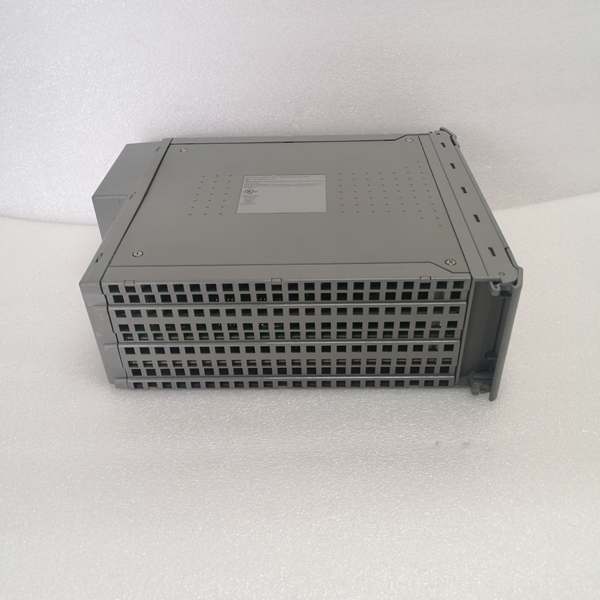
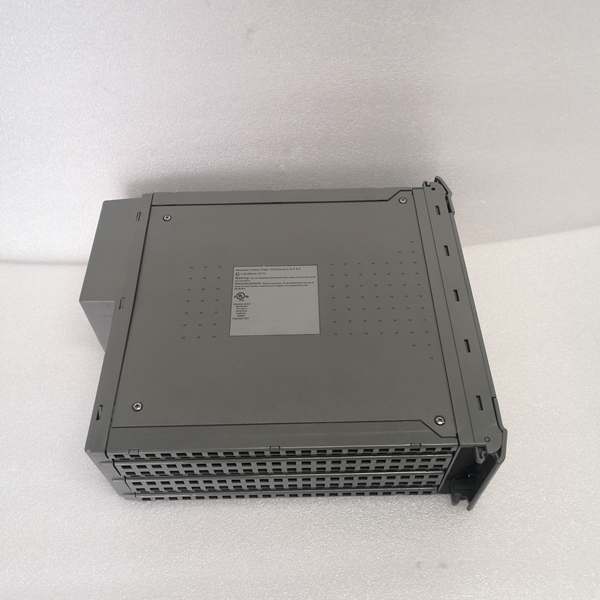
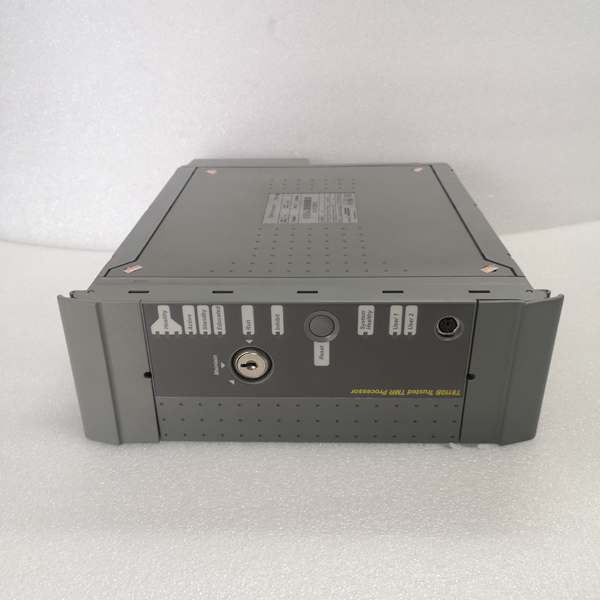
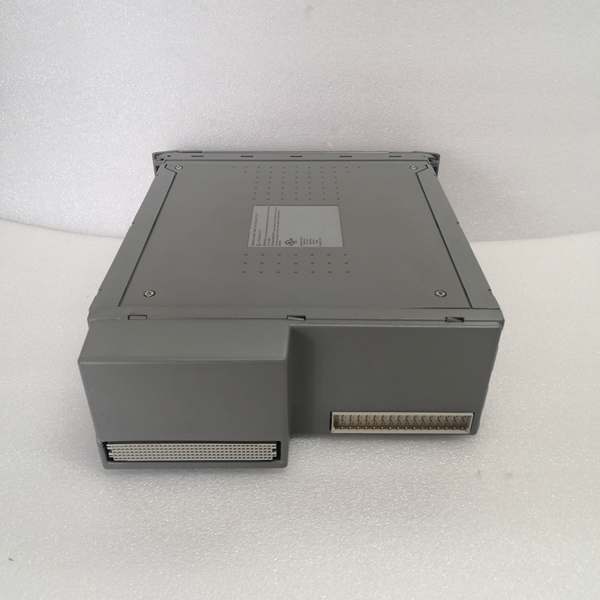
Description
Key Technical Specifications
- Model Number: T8800C
- Manufacturer: ICS Triplex (Integrated into Rockwell Automation)
- Input Channels: 40 discrete digital input channels (two-wire configuration)
- Operating Voltage: 24VDC nominal (18VDC – 32VDC field power supply range)
- Channel Protection: Independent 50mA fuse per channel
- Maximum Channel Current: 10mA per channel
- Power Consumption: 0.25W per channel (10W total max)
- Connection Interfaces: 5-way PWR TB (dual power), 12×3-way + 2×2-way TB2 (field signals), 96-way SK1/SK2 (module interface)
- Mounting: TS32/TS35 DIN rail (industry standard)
- Operating Temperature: 0°C – 60°C (standard), -20°C – 70°C (extended variant)
- Storage Temperature: -25°C – 70°C
- Humidity Rating: 10% – 95% non-condensing
- Certifications: IEC 61508 SIL 3, UL, CE
- Isolation: 250VAC channel-to-chassis isolation

Field Application & Problem Solved
In safety-critical industrial environments—refineries, petrochemical plants, power generation facilities—connecting field digital devices (limit switches, pressure transducers, temperature switches) to core control modules requires a robust termination solution that balances signal integrity, fault isolation, and ease of maintenance. The biggest challenge here is managing dozens of discrete signals without risking cross-talk, overcurrent damage, or system-wide failures from a single faulty channel. Legacy termination methods often use unprotected terminal blocks, leading to cascading issues when a single short circuit burns out an entire input module or corrupts critical safety signals.
You’ll typically find this FTA paired with Trusted T8403 digital input modules in systems controlling reaction kettles, pipeline valves, or turbine safety interlocks. For example, in a large refinery, the T8800C terminates 40 discrete signals from pump status switches and emergency stop buttons across a distillation unit, routing them cleanly to the T8403 module. Its per-channel fuses prevent a shorted switch wire from frying the expensive T8403 module, while the dual power input ensures no single power failure severs signal paths.
Its core value lies in practicality and safety: it centralizes field wiring, isolates faults to individual channels, and provides a standardized interface between rugged field devices and sensitive control electronics. In environments where downtime costs $10k+ per minute, the ability to quickly replace a blown fuse (without shutting down the entire system) or trace a signal via labeled terminals is invaluable. It eliminates the mess of individual wire nuts and unprotected connections, reducing wiring errors during installation and speeding up troubleshooting during outages.
Installation & Maintenance Pitfalls (Expert Tips)
- Fuse Replacement: Stick to Exact Ratings: Rookies often swap the 50mA channel fuses with higher-rated (100mA+) fuses to “prevent frequent blowing.” This defeats the module’s protection—overcurrent from a short circuit will bypass the fuse and destroy the T8403 module or field sensor. Always use original 50mA fuses; if fuses blow repeatedly, trace the field wiring for shorts, not upgrade the fuse.
- Dual Power Wiring: Don’t Skip Redundancy: The dual 24VDC power input (PWR TB) is not optional for safety systems. I’ve seen plants wire only one power feed to save time, leading to complete signal loss if that feed fails. Both power inputs should be connected to separate 24VDC power supplies (N+1 redundancy) to ensure continuous operation during a power supply fault.
- Terminal Block Mix-Ups: Label Before Wiring: The T8800C’s 14 terminal blocks (TB2) look identical at a glance. Wiring field signals to the wrong TB2 group will result in missing or cross-wired signals. Use heat-shrink labels on all field wires and cross-reference the wiring diagram to confirm TB2 assignments—this avoids 2+ hours of troubleshooting during commissioning.
- Shield Grounding: Single Point Only: Field signal wire shields should be grounded at the T8800C (single-point grounding) , not at the field device or both ends. Double-ended grounding creates ground loops that introduce noise, causing intermittent “ghost” signals (e.g., a switch showing “on” when it’s off). Use the module’s dedicated ground lug for shield termination.
Technical Deep Dive & Overview
The T8800C is a purpose-built field termination assembly designed to bridge the gap between rugged industrial field devices and the precision of ICS Triplex’s Trusted TMR control system. It functions as a “buffer” layer: each of the 40 input channels includes a 50mA fast-acting fuse and isolation circuitry, preventing fault propagation from the field to the core T8403 module. The two-wire configuration simplifies wiring—field devices draw power from the FTA’s 24VDC supply (ranged 18-32VDC to accommodate voltage drops in long cable runs) while sending digital on/off signals back to the control system.
Its DIN rail mounting and modular terminal blocks align with industrial installation practices, allowing integration into standard control cabinets without custom bracketry. The 96-way SK1/SK2 interface provides a secure, keyed connection to the T8403 module, ensuring signal integrity via gold-plated contacts that resist corrosion in harsh, humid environments. Unlike generic terminal blocks, the T8800C’s SIL 3 certification means it meets the strict fault-tolerance requirements of safety instrumented systems (SIS), where a single point of failure could lead to catastrophic consequences.
Under the hood, the module’s isolation circuitry (250VAC channel-to-chassis) suppresses electromagnetic interference (EMI) common in refineries and power plants, while the low 0.25W per-channel power consumption minimizes heat buildup in dense control cabinets. It’s not a “smart” module—no on-board processing—but that’s by design: its job is to terminate, protect, and route signals reliably, without adding complexity or latency to safety-critical circuits. For field service engineers, its greatest strength is simplicity: every component (fuses, terminals, power feeds) is accessible and replaceable, ensuring minimal downtime when issues arise.