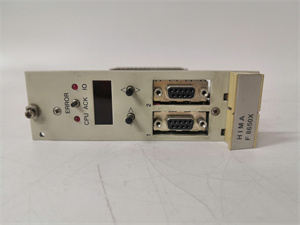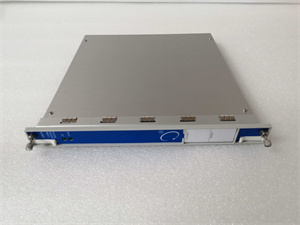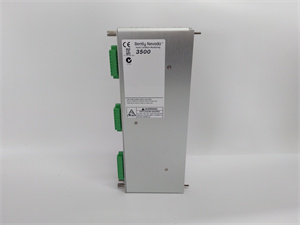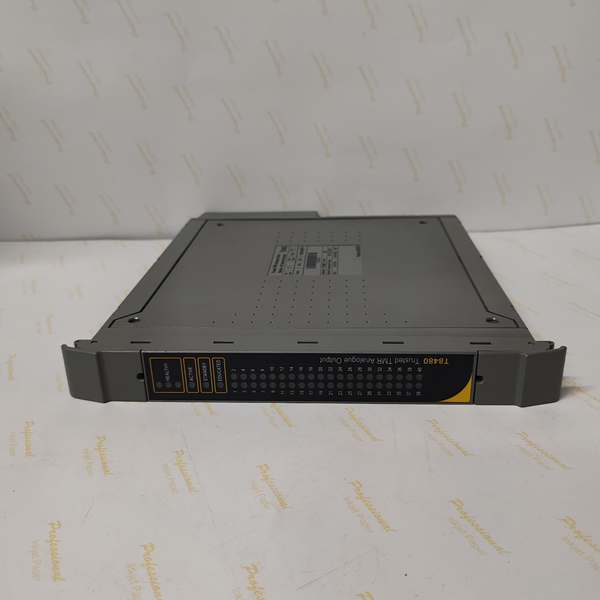
Description
Key Technical Specifications
- Core Architecture: Adopts 2oo3 (two – out – of – three) triplicated architecture within a single module. Three parallel functional units operate synchronously, compare results with each other to detect faults, which realizes high reliability and fault tolerance required by safety – critical systems.
- Safety Certification: Complies with IEC 61508 standard and obtains SIL 3 certification, as well as TÜV certification, which meets the safety requirements of high – risk industrial scenarios.
- Input & Output Performance: Compatible with speed sensors like proximity sensors and magnetic sensors. The speed measurement accuracy can reach ±0.1% of full scale, with a resolution of 0.01 rpm. The output is equipped with de – energize – to – trip relays, which can be set as normally open or normally closed contacts. The response time is ≤10ms, ensuring timely triggering of protection actions when speed is abnormal.
- Electrical Parameters: The nominal voltage range is 24 – 48VDC, the input current is 5mA, and the maximum power consumption is only 5W, which is energy – efficient.
- Communication Interface: Equipped with RS – 485 communication interface, which supports Modbus and other industrial protocols, facilitating data transmission and integration with the overall control system.
- Environmental Adaptability: The operating temperature range is -20°C to 70°C; the storage temperature can withstand -40°C to 85°C. It can work normally under 5% – 95% non – condensing humidity and can operate stably at an altitude of up to 2000m without derating. The protection level reaches IP65, which can resist harsh industrial environments.
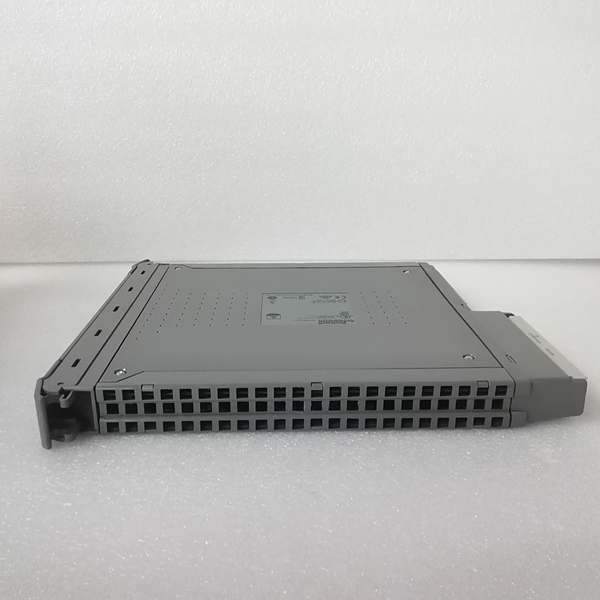
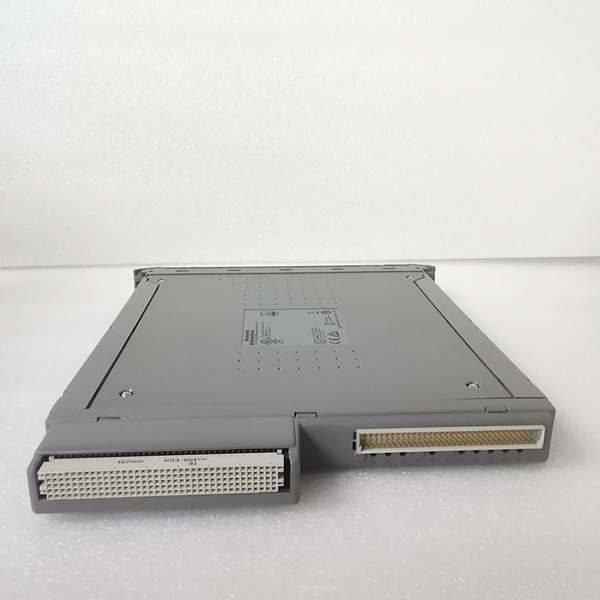
- Physical Dimensions: There are slight differences in the dimension data from different sources. One of the specifications is 266mm×31mm×303mm, and the weight is about 0.8 – 1.2kg, which is easy to install in the equipment chassis.
ICS Triplex PS01-B
Field Application & Problem Solved
Generic speed monitoring devices have two major drawbacks in such scenarios. On one hand, without redundant design, a single component failure will result in loss of speed monitoring data, making the system unable to respond to dangerous speed anomalies in time. On the other hand, poor anti – interference ability leads to large measurement errors, which may trigger false alarms or fail to detect real speed faults. For example, a chemical plant once used a common speed sensor module. Due to electromagnetic interference from nearby high – voltage equipment, the module falsely reported a turbine overspeed signal, resulting in an unnecessary emergency shutdown and a loss of nearly $50,000 in production.
The T8442C solves these pain points through its unique design. In a thermal power plant, it can monitor the rotational speed of steam turbines. Once the speed exceeds the set threshold, its de – energize – to – trip relay will act quickly to avoid turbine damage. In an offshore oil platform, it is used to monitor the speed of oil transfer pumps. The 2oo3 architecture ensures that even if one measurement unit fails, the other two can still accurately collect speed data, avoiding monitoring blind spots. In addition, its RS – 485 interface can transmit real – time speed data and fault information to the central control system, enabling operators to grasp the equipment status in real time. Its SIL 3 certification also helps enterprises pass industry safety audits smoothly and avoid non – compliance penalties.
Installation & Maintenance Pitfalls (Expert Tips)
- Sensor Matching Check: The module is compatible with multiple types of speed sensors, but it is easy to ignore the signal matching problem during installation. For example, when connecting a magnetic proximity sensor, it is necessary to confirm the sensor’s output signal amplitude and frequency range to match the module’s input requirements. If a high – frequency sensor is randomly matched with a low – frequency input channel, it will cause speed data distortion. It is recommended to check the sensor and module datasheets one – by – one before wiring.
- Wiring for Communication Stability: When connecting the RS – 485 communication line, use shielded twisted – pair cables. Avoid parallel routing with high – voltage power cables, and the distance between them should be at least 30cm. Ground the shield layer at a single point on the module side. Double – end grounding is easy to form a ground loop, which interferes with data transmission and may lead to delayed updates of speed data.
- Reasonable Setting of Alarm Thresholds: Many users set unified high and low speed thresholds for different equipment, which is inappropriate. For instance, the overspeed threshold of a small pump is much lower than that of a large turbine. Improper threshold setting will either cause frequent false alarms or fail to trigger protection in time. Use the configuration software to set personalized thresholds according to the equipment’s rated speed and safety specifications, and conduct multiple tests to verify.
- Regular Inspection of Redundant Paths: Relying on the TMR architecture, the module can automatically handle faults, but regular manual inspection of redundant paths should not be neglected. Use diagnostic tools to check whether the three internal functional units are consistent in speed measurement. If there is a deviation exceeding the allowable range, locate and repair the faulty unit in time. Otherwise, when another unit fails, the module will lose the redundancy protection capability.
ICS Triplex PS01-B
Technical Deep Dive & Overview
In terms of signal processing, the module is equipped with a high – performance signal conditioning circuit and EMI filter. It can filter out electromagnetic interference from industrial sites, ensuring that the speed data collected from sensors is stable and reliable. The ±0.1% full – scale accuracy and 0.01rpm resolution enable it to capture tiny speed fluctuations, which is crucial for early warning of equipment abnormalities. For example, slight speed jitter of a turbine may be a precursor to bearing wear. The module can detect this change in time and send an alarm to remind maintenance personnel to handle it before the fault worsens.
In terms of safety control, the de – energize – to – trip relay design conforms to the safety design principle of industrial systems. In case of power failure or module fault, the relay will automatically trip to cut off the dangerous equipment operation circuit, which is a passive safety protection measure that is more reliable than active control. Meanwhile, the built – in diagnostic function can monitor its own working status in real time, and promptly feed back faults such as circuit open – circuit and relay failure to the upper – level system, which shortens the troubleshooting time.
In terms of system integration, the module abandons the complex proprietary communication protocol and adopts the universal RS – 485 interface and Modbus protocol. It can be quickly integrated into the existing industrial control network without large – scale transformation of the original system, reducing the cost of system upgrading and transformation for enterprises. For field engineers, it can be configured and maintained through the matching upper – computer software, and parameters such as speed range and alarm thresholds can be adjusted flexibly, which greatly improves the convenience of use.