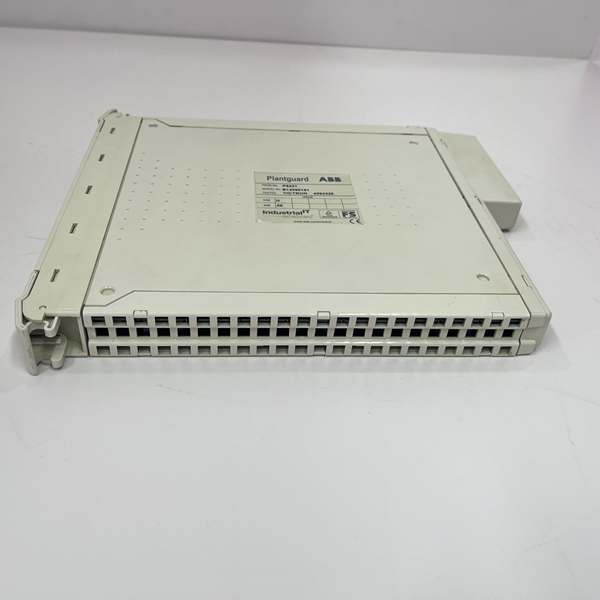
Description
Key Technical Specifications
- Model Number: T8243
- Manufacturer: ICS Triplex (Integrated into Rockwell Automation)
- Serial Ports: 4 x Configurable (RS232, RS422, RS485 half-duplex)
- Connector Type: 9-pin D-sub (DB9) for each port
- Protocol Support: Modbus RTU (Master/Slave), ASCII, RTU over RS485
- Data Rate: Up to 115.2 kbps per port
- Backplane Interface: Trusted TMR system backplane (64-bit parallel bus)
- Operating Voltage: 24VDC nominal (18VDC – 32VDC)
- Power Consumption: 6W typical, 9W max
- Operating Temperature: -20°C – 70°C (standard), -40°C – 75°C (extended conformal coating variant)
- Storage Temperature: -40°C – 85°C
- Humidity Rating: 5% – 95% non-condensing
- Certifications: IEC 61508 SIL 3, UL 508, CE, ATEX Zone 2 (conformal coated)
- Isolation: 2500VAC port-to-backplane, 1500VAC port-to-port
- Conformal Coating: Optional (IPC-A-610 Class 3) for corrosive environments
- Dimensions: 132mm x 107mm x 27mm (H x W x D)
- Weight: 0.35kg
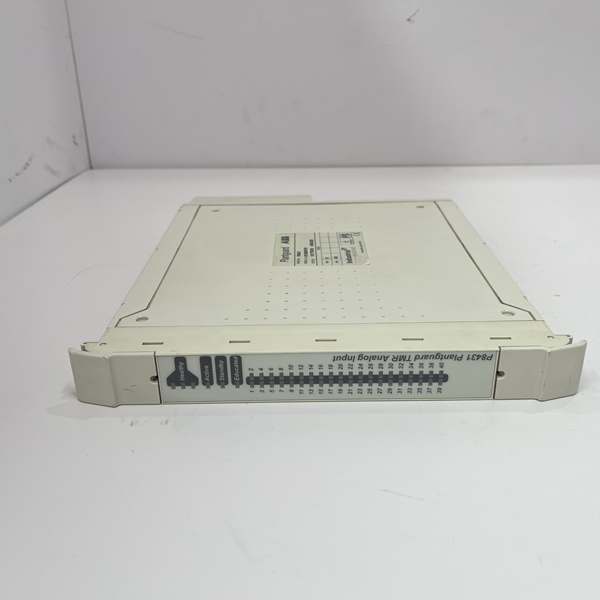
Field Application & Problem Solved
In safety-critical industrial environments—refineries, petrochemical plants, power stations—legacy serial field devices (pressure transmitters, flow meters, emergency stop HMIs) are still ubiquitous. The biggest challenge is integrating these older devices with modern Trusted TMR controllers, as most new communication modules prioritize Ethernet over serial ports. Using generic serial-to-Ethernet converters introduces latency, compatibility issues, and a single point of failure—critical flaws in safety instrumented systems (SIS) where data integrity and reliability are non-negotiable.
You’ll typically find the T8243 installed in Trusted controller chassis managing legacy equipment: in a refinery’s distillation unit, it connects RS485-based temperature transmitters to the SIS; in a power plant, it links RS232 emergency stop HMIs to the turbine protection system; in a chemical plant, it interfaces Modbus RTU flow meters to the Trusted controller for batch process control. For example, a petrochemical facility with 20-year-old pressure sensors (RS485 output) uses the T8243 to directly connect these sensors to the Trusted SIS, eliminating the need for external converters. This direct integration reduces latency (critical for emergency shutdowns) and ensures SIL 3 compliance, which generic converters can’t provide.
Its core value lies in seamless legacy integration with safety compliance. Unlike generic serial modules, the T8243 is designed specifically for Trusted TMR systems—no complex configuration or protocol translation is needed. Its four configurable ports (RS232/RS422/RS485) adapt to different device types, reducing the need for multiple specialized modules. For plants facing regulatory audits, its SIL 3 certification proves that serial communication paths meet safety standards, avoiding costly non-compliance penalties. Additionally, its port isolation prevents faults in one device (e.g., a shorted RS485 line) from affecting other ports or the controller backplane.
Installation & Maintenance Pitfalls (Expert Tips)
- Port Configuration: Match Device Specifications Exactly: Rookies often configure ports via software but ignore hardware settings (e.g., RS485 termination, parity bits). For RS485, enable the 120-ohm termination resistor in the Trusted Workbench—without it, signal reflections cause data corruption in long cable runs (over 100ft). Always cross-verify baud rate, parity, stop bits, and data bits with the field device’s manual—even a 1-bit mismatch will result in “no communication” faults.
- RS485 Wiring: Avoid Daisy-Chain Overcrowding: While RS485 supports daisy-chaining, connecting more than 32 devices per port (the module’s maximum) or using unshielded cable leads to signal degradation. Use shielded twisted-pair cable (24AWG minimum) for RS485, keep cable runs under 4000ft, and limit each port to 32 devices. Ground the shield at the module end only to prevent ground loops.
- Conformal Coating: Mandatory in Harsh Environments: In coastal plants, chemical facilities, or dusty power plants, the standard uncoated T8243 will fail within 18–24 months due to PCB corrosion or dust buildup. The optional conformal coating (IPC-A-610 Class 3) is not a luxury—it’s a necessity. I’ve seen plants save $5k+ in downtime by investing in coated modules upfront.
- Redundancy: Pair with Dual Modules for Critical Paths: For serial devices that control emergency shutdowns (e.g., E-stop HMIs), use two T8243 modules in parallel (one as primary, one as backup). Generic modules can’t be redundant, but the T8243’s backplane integration allows the Trusted controller to auto-switch to the backup module if the primary fails. Don’t rely on a single module for safety-critical serial paths—even with port isolation, a module failure will take all four ports offline.
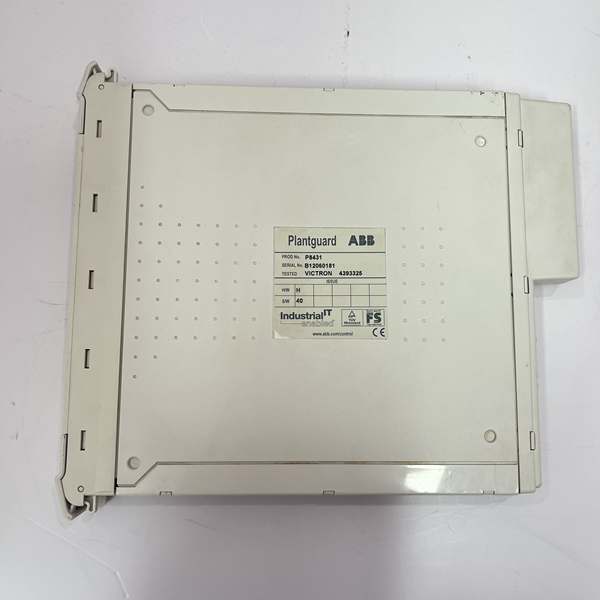
Technical Deep Dive & Overview
The T8243 is a purpose-built serial communication module designed to bridge legacy field devices with ICS Triplex’s Trusted TMR safety systems. At its core, it uses four independent UART (Universal Asynchronous Receiver/Transmitter) chips, each configurable via the Trusted Workbench software to support RS232, RS422, or RS485. Each port includes dedicated isolation circuitry (2500VAC port-to-backplane, 1500VAC port-to-port) to prevent fault propagation, a critical feature in industrial environments where electrical noise and short circuits are common.
For RS485, each port includes a software-enabled 120-ohm termination resistor—essential for matching impedance in long cable runs and reducing signal reflections. The module’s firmware is optimized for low latency, with a serial data processing time of <500µs per packet, ensuring real-time communication for safety-critical devices. It integrates seamlessly with the Trusted backplane via a 64-bit parallel bus, allowing the controller to access serial data without polling external converters, further reducing latency.
Unlike generic serial modules, the T8243 is part of the Trusted safety ecosystem—its firmware is updated alongside the controller, ensuring compatibility and security patches. Front-panel LEDs (power, port activity, fault) provide instant visibility into port health, simplifying troubleshooting. For example, a flashing activity LED confirms data transmission, while a solid fault LED indicates a port-level issue (e.g., short circuit, configuration mismatch).
The T8243’s greatest strength is its focus on industrial reality: legacy serial devices aren’t going away anytime soon, and safety systems can’t afford to cut corners on integration. It avoids unnecessary features (e.g., Wi-Fi, Bluetooth) that introduce complexity, focusing instead on reliable, compliant serial communication. For field service engineers, it’s a “set-it-and-forget-it” module—once configured correctly, it operates reliably for years, reducing maintenance headaches and ensuring safety compliance.