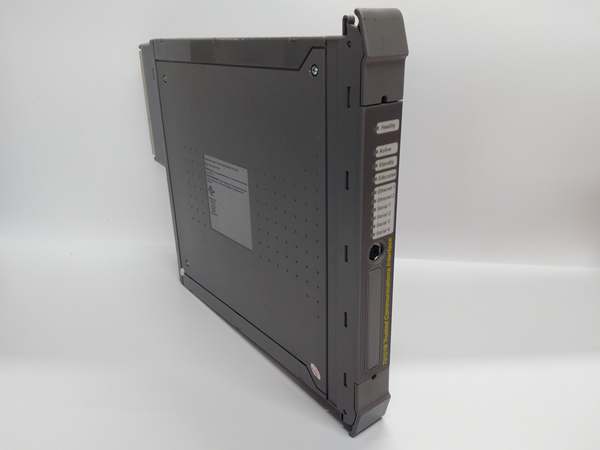
Description
Key Technical Specifications
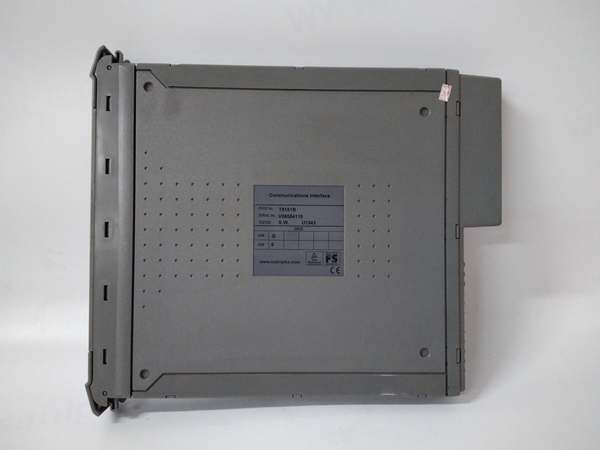
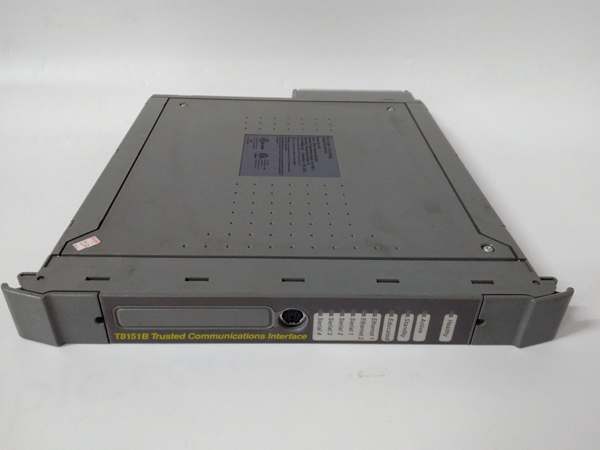
- Model Number: T8151B
- Manufacturer: ICS Triplex (Emerson)
- Communication Ports: 2 x 10/100 Mbps RJ45 Ethernet ports (redundant configuration supported)
- Supported Protocols: Modbus TCP/IP, Ethernet/IP, Trusted Network Protocol (proprietary)
- Isolation Rating: 2500V DC port-to-backplane; 1500V DC port-to-port
- Data Transfer Latency: <5ms (typical for Modbus TCP/IP)
- Operating Temperature: -40°C to 70°C (-40°F to 158°F)
- Power Supply: 20–32 VDC (redundant backplane-powered), 12W typical power consumption
- Redundancy Architecture: Dual-port redundant design with automatic failover
- Diagnostics: Port link status monitoring, protocol error logging, backplane communication health checks
- Certifications: IEC 61508 SIL 3, ATEX, IECEx, FM Class I Div 2, CSA
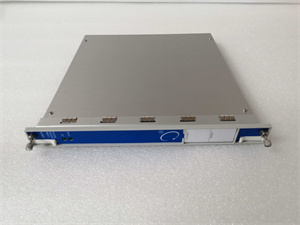
- Physical Form Factor: Single-slot rack-mounted, 266mm (H) × 31mm (W) × 303mm (D), 1.0kg (2.2lbs)
- Hot-Swap Capability: Supported (no system shutdown required in redundant setups)

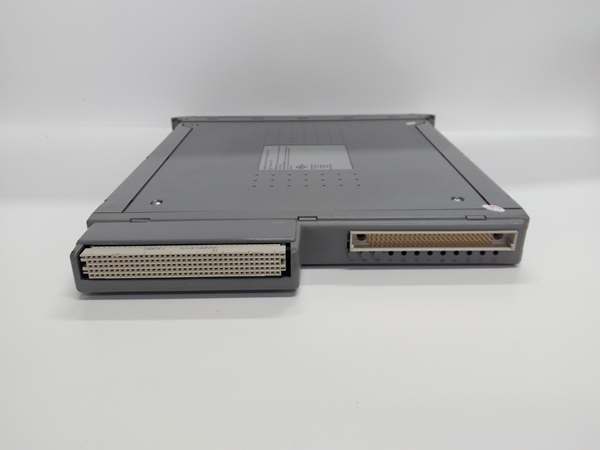
ICS TRIPLEX T8151B
Field Application & Problem Solved
In refineries, chemical plants, and power generation facilities, the biggest communication challenge is bridging the gap between the Trusted safety instrumented system (SIS) and the plant’s distributed control system (DCS) without compromising safety or introducing single points of failure. Legacy single-port communication modules create a critical vulnerability—if the port fails, the SIS can’t send safety alarms to the DCS, and operators lose visibility into critical safety events. Worse, non-safety-rated gateways can’t meet SIL 3 compliance requirements, exposing plants to regulatory penalties and safety risks.
The T8151B solves these problems. You’ll find it deployed in every modern Trusted SIS installation, acting as the critical link between the SIS and DCS/HMI systems. In refinery ESD systems, it transmits valve status, pressure alarm, and emergency shutdown signals to the DCS, giving operators real-time visibility into safety system health. In combined-cycle power plants, it converts Trusted protocol data to Ethernet/IP for integration with the turbine control PLC, ensuring seamless coordination between safety and process control systems.
Its core value is dual-fold: first, the redundant Ethernet ports eliminate single-point communication failures—if one port goes down, the module automatically fails over to the second port with zero latency, so operators never lose SIS visibility. Second, its SIL 3 certification ensures the module doesn’t introduce unsafe states into the safety loop, a requirement that non-safety-rated gateways can’t meet. Unlike generic protocol gateways, the T8151B prioritizes safety data transmission—critical ESD signals are sent with higher priority than non-essential status data, ensuring alarms reach the DCS before non-critical information.
Installation & Maintenance Pitfalls (Expert Tips)
Redundant Port Wiring Requires Separate Network Paths
Rookies often wire both Ethernet ports to the same network switch, defeating the purpose of redundancy. If that switch fails, both ports go down, and the SIS loses communication with the DCS. Always route each port to a separate, physically isolated network switch—one connected to the primary DCS network, the other to the backup DCS network. Label the ports clearly (Port 1 = Primary, Port 2 = Backup) in the wiring diagram, and verify port link status via the module’s front-panel LEDs before commissioning.
Protocol Configuration Must Match End-Device Settings
A common mistake is mismatching protocol parameters (e.g., Modbus slave ID, baud rate for serial fallback) between the T8151B and the DCS/PLC. This causes “communication timeout” faults that are hard to trace—especially if the module is configured for automatic failover. Always cross-verify protocol settings in the Trusted software with the DCS configuration: set the same slave ID, ensure TCP port numbers match (default 502 for Modbus TCP), and disable any unused protocols to reduce overhead. For Ethernet/IP setups, confirm the module’s device name matches the DCS’s scan list—typos here will break communication.
Hot-Swap Requires Communication Link Validation First
Yes, the T8151B supports hot-swapping, but pulling the module without checking the redundant port status is a recipe for downtime. Before replacement, log into the Trusted HMI and confirm that both Ethernet ports are active and the module is communicating via the primary port. If the module is running on a single port (backup port failed), a hot-swap will trigger a communication loss fault that could force the SIS into a safe state. Always ensure both ports are healthy before swapping, and disable the module’s communication group in the controller software to prevent failover loops during replacement.
Grounding Network Cables Prevents EMI-Induced Errors
The module’s high isolation rating doesn’t protect against electromagnetic interference (EMI) from nearby VFDs or high-voltage cables. Rookies often use unshielded Ethernet cables, leading to intermittent protocol errors and data corruption. Use shielded twisted-pair (STP) Ethernet cable for all port connections, and terminate the shield only at the module end—leave the switch end floating to avoid ground loops. Route STP cables away from power cables (minimum 30cm separation) to reduce EMI pickup, and use metal conduit for cables run in high-noise areas (e.g., near motor control centers).
ICS TRIPLEX T8151B
Technical Deep Dive & Overview
The T8151B is a dual-port redundant communication interface module engineered for Trusted Series safety instrumented systems, designed to enable safe, high-availability data exchange between the SIS and external control systems. At its core, it uses a dedicated communication processor that handles protocol conversion and redundant port failover, offloading this work from the main Trusted CPU to keep safety logic scan times low. The module’s dual Ethernet ports operate in a redundant active-standby configuration: the primary port handles normal communication, and the backup port takes over instantly (<1ms failover time) if the primary port loses link or experiences errors.
What makes the T8151B unique is its safety-focused design. Unlike generic gateways, it prioritizes safety-critical data transmission—ESD triggers, valve status, and alarm signals are assigned higher priority than non-essential status data, ensuring these messages reach the DCS before less critical information. The module also supports a serial fallback option (RS-232) for emergency communication if both Ethernet ports fail, a feature that’s lifesaver during network outages.
The T8151B communicates with the Trusted controller via the redundant backplane using the proprietary Triplex protocol, ensuring low-latency data transfer between the SIS and the communication module. Its built-in diagnostics continuously monitor port link status, protocol errors, and backplane communication health, logging faults with a time stamp for root-cause analysis. The module’s rugged industrial design—wide temperature range, vibration resistance (5g, 10–500Hz), and corrosion protection—makes it suitable for field mounting in harsh environments, eliminating the need for dedicated control room enclosures.
In summary, the T8151B is not a generic network gateway—it’s a safety-critical component that bridges the gap between the SIS and external systems without compromising reliability or compliance. Its redundant ports, protocol flexibility, and safety-focused design make it an indispensable part of any modern industrial safety system, ensuring operators always have visibility into SIS health and safety events.