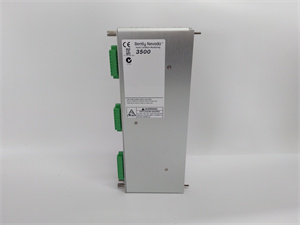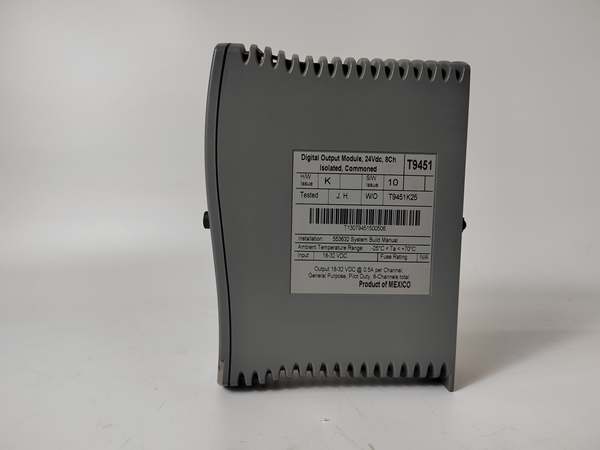
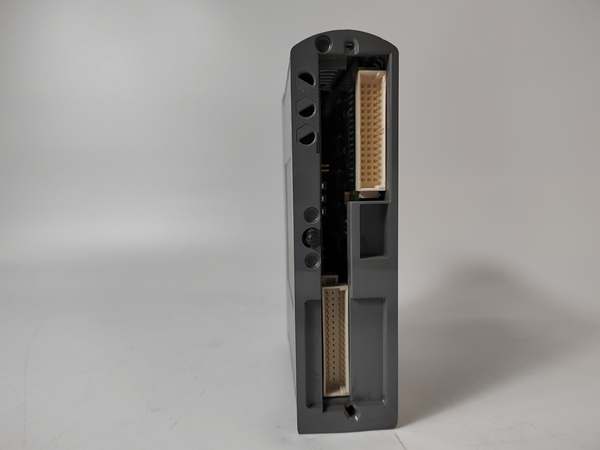
Description
Key Technical Specifications
- Interface & Communication Capabilities: It is equipped with multiple serial communication interfaces, including two configurable 2 – wire or 4 – wire RS422/485 interfaces and one fixed 2 – wire RS422/485 interface, which can flexibly adapt to different industrial communication connection requirements. It is also configured with a dedicated single connector for accessing IRIG – B 122 and IRIG – B 002 time synchronization signals, which can improve the time accuracy of distributed control systems after decoding. In addition, it has interfaces for processor diagnosis and power supply shutdown monitoring to facilitate real – time grasp of equipment operation status.
- Safety & Power Traits: It adopts the TMR architecture consistent with the Trusted series, and is equipped with active and standby processor fault connection functions. When the processor fails, it can timely feed back fault signals to ensure the stable operation of the system. The electrical isolation performance is excellent. The continuous reinforced isolation between the rear serial port, IRIG port and other ports and the chassis can reach 50V, and the basic isolation in fault state can reach 250V. It gets power supply directly from the Trusted TMR processor, with a power consumption of only 0.1W, which almost does not increase the power burden of the whole control system.
- Physical & Environmental Adaptability: It adopts a rack – mounted way and can be directly connected to the rear of the controller chassis, which is easy to install. Its dimensions are 138mm×120mm×108mm and its weight is about 877g, which is compact and does not occupy too much chassis space. It can operate stably in an environment with 10% – 95% non – condensing humidity. The operating temperature range is 0°C – +60°C, and the storage temperature range is – 25°C – +70°C, which can adapt to most industrial site environments.
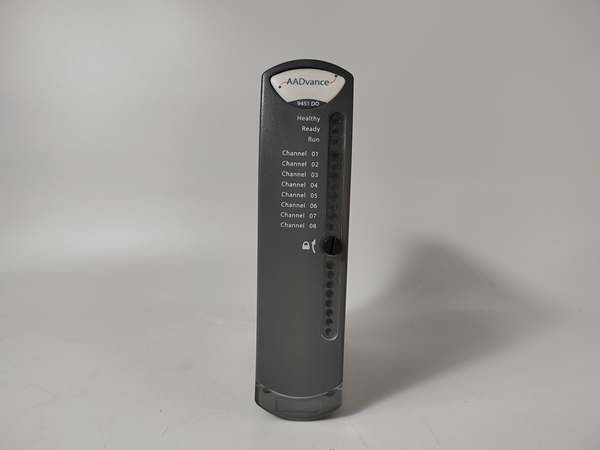
ICS Triplex T3484
Field Application & Problem Solved
- Power Plant Distributed Control System Time Synchronization: In the DCS of thermal power plants, multiple control subsystems such as boiler control and steam turbine control need to maintain high time consistency to ensure the coordination of various equipment operations. The T8121 module can be connected to the TMR processor of the central controller. By decoding the IRIG – B time synchronization signal, it can synchronize the time of each subsystem. This solves the problem of asynchrony caused by independent operation of each subsystem, avoids misoperation of equipment due to time deviation, and ensures the efficient and safe power generation of the power plant.
- Chemical Plant Safety Instrument System Communication Expansion: The safety instrument system (SIS) of chemical plants needs to monitor the operating status of various reactors and pipelines in real time. The T8121 module can expand the communication ports of the TMR processor. It connects the on – site sensors and actuators through RS422/485 interfaces, and realizes the data interaction between the field equipment and the central processor. Its fault monitoring function can promptly find the communication failure between the active and standby processors. Once a fault is detected, it can send an alarm signal, which helps the staff to deal with it quickly and prevents safety accidents such as leakage and explosion caused by the interruption of the monitoring system.
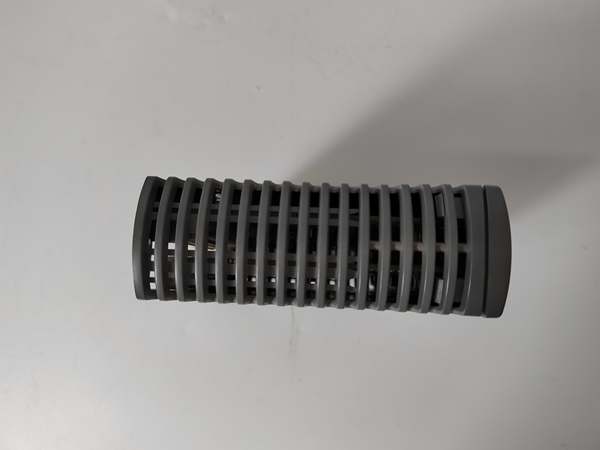
ICS Triplex T3484
Installation & Maintenance Pitfalls (Expert Tips)
- Correct Installation Position Confirmation: The module needs to be directly connected to the rear of the controller chassis. During installation, it is necessary to confirm that the installation position matches the T8110B and T8111 TMR processors. Incorrect installation position will lead to failure to establish normal communication with the processor. After installation, check whether the connection is tight to avoid poor contact due to vibration on the industrial site.
- Time Synchronization Configuration Check: When enabling the IRIG – B time synchronization function, it is necessary to select the corresponding signal mode (IRIG – B 002 or IRIG – B 122) on the system display and check the enable box. Meanwhile, the initial time of the real – time clock should be set manually, because the IRIG signal does not include year information. If the configuration is omitted, the time synchronization function will not work normally.
- Regular Interface and Status Detection: During daily maintenance, regularly check the working state of each RS422/485 interface and the IRIG – B signal interface. It is necessary to check whether there is corrosion or looseness of the connector pins. At the same time, combined with the processor’s LED indicator, confirm whether the module successfully receives valid IRIG signals. If the indicator does not flash normally, timely trace the cause of the signal transmission failure.