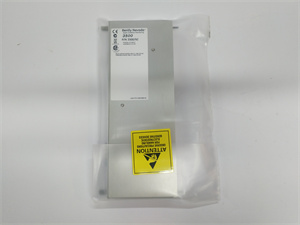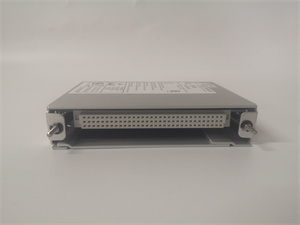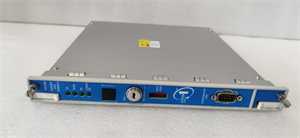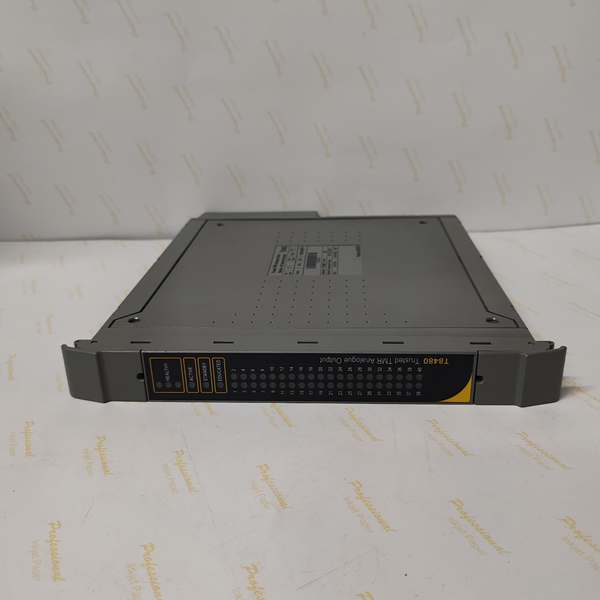
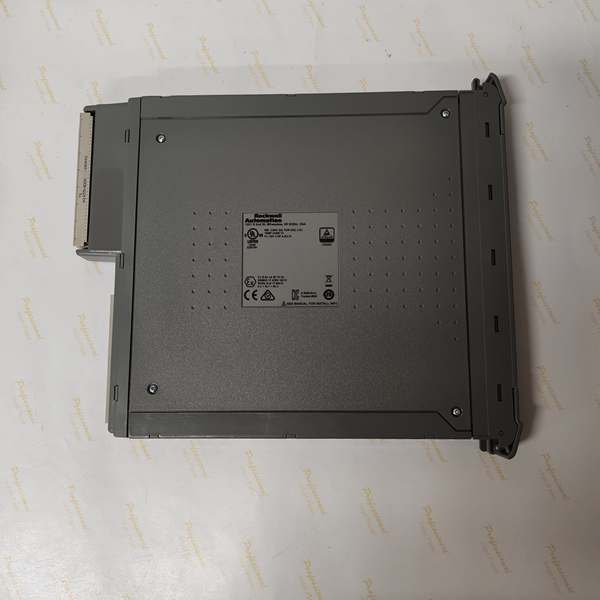
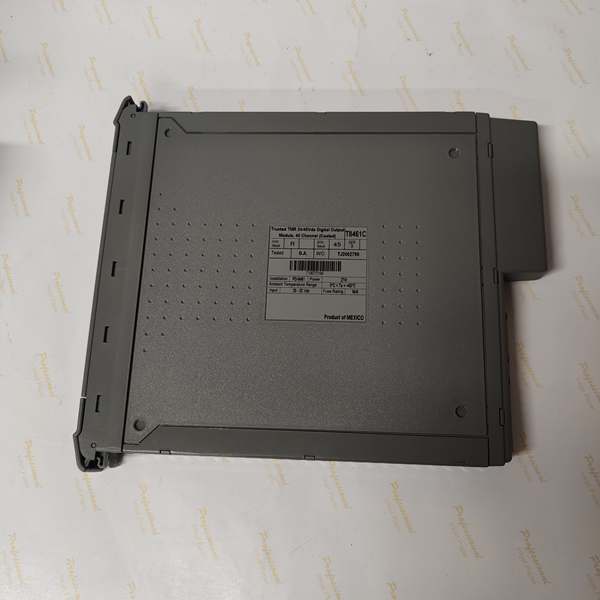
Description
Key Technical Specifications
- Communication & Time Synchronization: It is equipped with three RS422/485 communication ports, among which port 1 is a 2-wire connection, and ports 2 and 3 can be configured as 2-wire or 4-wire connections, which can flexibly adapt to different external communication connection requirements. It supports the decoding of IRIG – B 002 and IRIG – B 122 time synchronization signals. The former is the RS422/485 version signal, and the latter is the 1kHz amplitude modulation version signal, which can improve the time accuracy of distributed control systems. In addition, it also has the option to enable the Modbus master mode on the trusted communication interface.
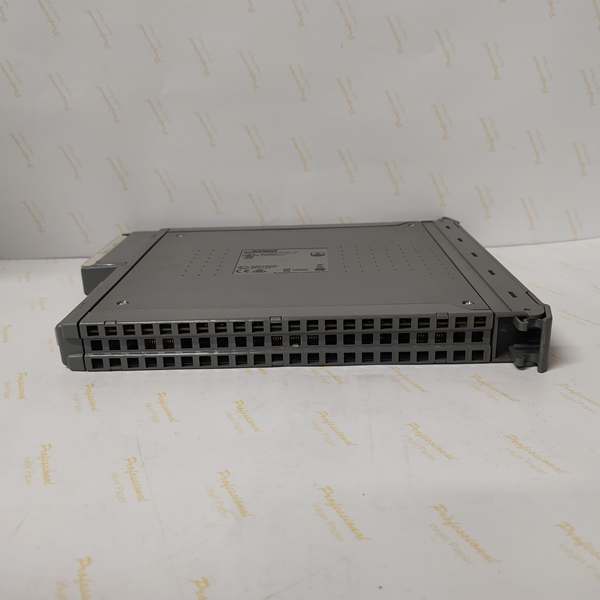
- Power Supply & Physical Traits. The module gets power supply directly from the Trusted TMR processor. There are differences in the weight data of different versions on the market, and the common weight ranges from 1kg to 2kg. The size of one of the versions is 210mm×160mm×35mm. It can be directly installed at the rear of the controller chassis, which is simple and convenient to install.
- Monitoring & Diagnostic Capabilities. It is designed with connection points for active and standby processor fault connections, which can realize the fault monitoring of active and standby processors. It is also equipped with a processor diagnostic interface and power supply shutdown monitoring connection points, which can timely feedback the working status of the processor and the power supply, helping maintenance personnel quickly locate problems.

ICS Triplex T8153C
Field Application & Problem Solved
The T8121 is an important interface bridge in the Trusted control system. In thermal power plants, the distributed control system needs to realize the time synchronization of multiple processors to ensure the consistency of data collection and control actions of each part. The T8121 can decode IRIG – B time synchronization signals to complete the time calibration of the system, avoiding control chaos caused by time asynchrony.
In large oil refineries, the Trusted controller needs to connect multiple external detection and control equipment. The T8121 provides multiple configurable RS422/485 ports to expand the communication capacity of the processor, solving the problem of insufficient communication ports of a single processor. At the same time, through its fault monitoring and diagnostic functions, it can promptly find the fault of the active and standby processors. Once a fault is detected, the system can carry out active/standby conversion in time to avoid the shutdown of the oil refining production line due to processor failure.
ICS Triplex T8153C
Installation & Maintenance Pitfalls (Expert Tips)
- Time Signal Configuration Confirmation. When using the IRIG – B time synchronization function, it is necessary to select the corresponding signal mode (IRIG – B 002 or IRIG – B 122) in the system display interface and check the enabling box. In addition, since the IRIG signal does not contain year information, the real-time clock of the system should be initially set to input the correct year to ensure the accuracy of time synchronization.
- Port Wiring Standardization. The module has multiple RS422/485 ports with different configurations. During wiring, it is necessary to distinguish the port functions clearly. For the configurable ports, the 2-wire or 4-wire connection mode should be determined according to the external equipment requirements. Wrong wiring will lead to communication failure. After wiring, a communication test should be carried out to ensure smooth signal transmission.
- Post-installation Function Verification. After installing the module at the rear of the controller chassis, it is necessary to verify whether each function is normal. For example, check whether the LED light on the processor front panel flashes once per second (indicating that a valid IRIG signal is detected) and whether the fault monitoring interface can normally receive the processor status signal. Only after confirming that all functions are normal can the module be put into formal operation.