Description
Key Technical Specifications
| Parameter | Details |
|---|---|
| Manufacturer | ICS Triplex (affiliated to Rockwell Automation) |
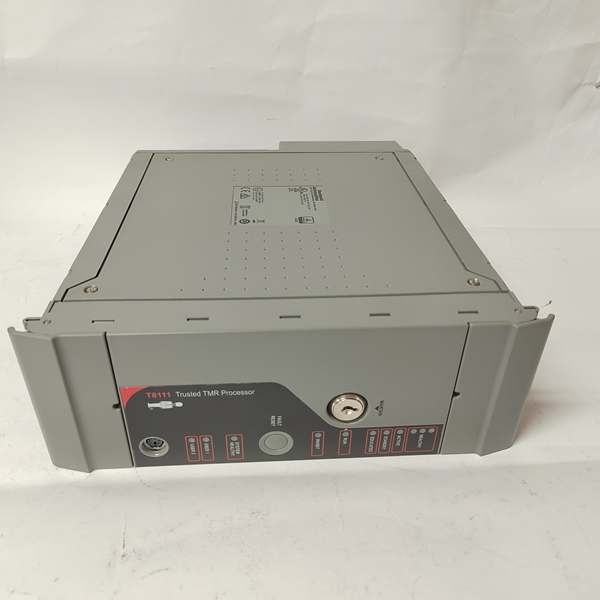
| Processor Configuration | Triple 800MHz PowerPC cores, adopting TMR architecture |
| Memory | 32MB RAM, 128MB flash memory |
| I/O Capacity | Basic 512 points, expandable up to 8,192 points |
| Processing Performance | Executes 1,500 safety instrumented functions (SIF) per second; voting resolution of 12μs for sensor – to – sensor conflict resolution |
| Power Supply | 20 – 32VDC, with redundant power input design; maximum load of 80W |
| Communication Protocols | Supports Modbus TCP, OPC UA, HART – IP, Profibus PA, etc.; equipped with front – panel RS232 serial diagnostic port |
| Environmental Adaptability | Operating temperature ranges from – 40°C to 70°C; shock resistance of 15g peak (11ms duration); conformal coating version for dust, moisture and corrosion resistance |
| Physical & Maintenance Traits | Weighs about 1.2 – 1.5kg; supports hot – swapping without the need to reload programs |
| Certifications | IEC 61508 SIL 3, ISA 84 SC3, ATEX, DNV, API 670 |
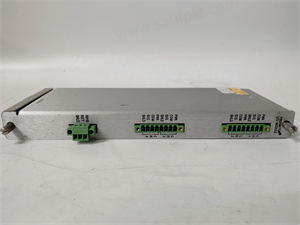
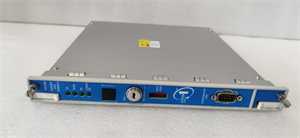
ICS TRIPLEX T8111C
Field Application & Problem Solved
In high – risk industries such as oil and gas, nuclear power, and chemical engineering, even a tiny failure of the control system can lead to catastrophic consequences like explosions, leaks, and environmental pollution. Traditional single – processor controllers are vulnerable to faults, which may cause control signal interruption. Meanwhile, the complex process of these industries requires the controller to process a large number of safety – related signals in real time and quickly respond to abnormal conditions.
The T8111C effectively addresses these pain points. In nuclear power plants, it serves as the core of the emergency shutdown system. Its TMR architecture ensures that the system can still stably monitor reactor parameters and trigger protective actions in time even if one processor fails, avoiding nuclear leakage accidents. In offshore oil platforms, its conformal coating design resists salt spray corrosion, and it connects with field sensors and actuators to control oil extraction and transportation processes, withstanding the harsh marine environment. In large chemical plants, it processes real – time data of temperature, pressure and other parameters in the reaction kettle. When abnormal values are detected, it immediately executes interlock logic to cut off the feed and prevent the reactor from over – reacting and exploding.
Its core value lies in the combination of high safety and reliability. The TMR architecture and majority voting mechanism eliminate single – point faults. The super – fast processing speed ensures no delay in safety response. Additionally, its predictive maintenance algorithms can identify potential equipment failures in advance, reducing unplanned downtime by 92% compared with conventional PLCs.
Installation & Maintenance Pitfalls (Expert Tips)
- Neglecting Conformal Coating Protection During Installation: For the conformal coating version, if tools scratch the coating during installation, the module will lose its dust – and moisture – proof capabilities in humid or dusty environments like chemical workshops. It is necessary to use special clamping tools during installation, avoid direct contact between hard objects and the module surface, and check the coating integrity after installation.
- Incorrect Redundant Power Supply Wiring: When connecting the redundant power supply, some installers connect two power supplies to the same circuit. Once the circuit fails, the module will lose power completely. The two power supplies should be connected to independent power distribution loops. After wiring, simulate a power failure test to confirm that the module can switch power supplies seamlessly.
- Hot – Swapping Without Confirming System Status: Although the module supports hot – swapping, pulling it out directly when the system is executing critical logic (such as emergency shutdown procedures) may cause logic interruptions. Before swapping, log into the system HMI to confirm that there are no ongoing safety – critical operations and that the three processor paths are in normal voting status. It is best to perform hot – swapping during non – peak production periods.
- Ignoring Time Synchronization Calibration: The module supports IRIG – B 002 and B122 time – synchronization signals. If time synchronization is not performed during installation, the time stamps of fault logs will be chaotic, making it difficult to trace the root cause of faults. After installation, connect the time – synchronization signal line and verify that the fault historian can record events with accurate time stamps.

ICS TRIPLEX T8111C
Technical Deep Dive & Overview
The T8111C is a flagship safety processor module based on TMR technology. Its core working principle is that three independent processors run the same safety logic program in parallel at the same time. During operation, the results of the three processors are compared in real time through a built – in voting mechanism. If one processor has a fault and outputs an abnormal result, the system will take the result of the two normal processors as the valid output, and the fault processing time is within 2 clock cycles, which ensures the continuity and correctness of the system operation.
What distinguishes it from ordinary industrial controllers is its safety – oriented integrated design. It integrates “safety – on – chip” technology, which can quickly detect potential faults. At the same time, it has strong network security performance. It implements IEC 62443 – 3 – 3 SL2 security standards, and dynamically updates the key every 5 minutes during Modbus TCP communication to prevent data leakage and malicious intrusion. In addition, its compatibility is outstanding. It can be seamlessly integrated with ICS Triplex’s T8110B, T8480 and other modules, and can also connect with legacy DCS systems, reducing the cost of system upgrading and transformation for enterprises.
In terms of software support, the module is compatible with all five IEC 61131 – 3 programming languages, which is convenient for engineers to carry out program development and debugging according to different project requirements. The embedded spectrum analysis function can predict the failure of solenoid valves and other equipment 72 hours in advance, providing a strong guarantee for the predictive maintenance of the system. In summary, the T8111C relies on its excellent redundancy design, fast processing speed and comprehensive safety performance, and has become an irreplaceable core component in the safety control system of high – risk industries.